


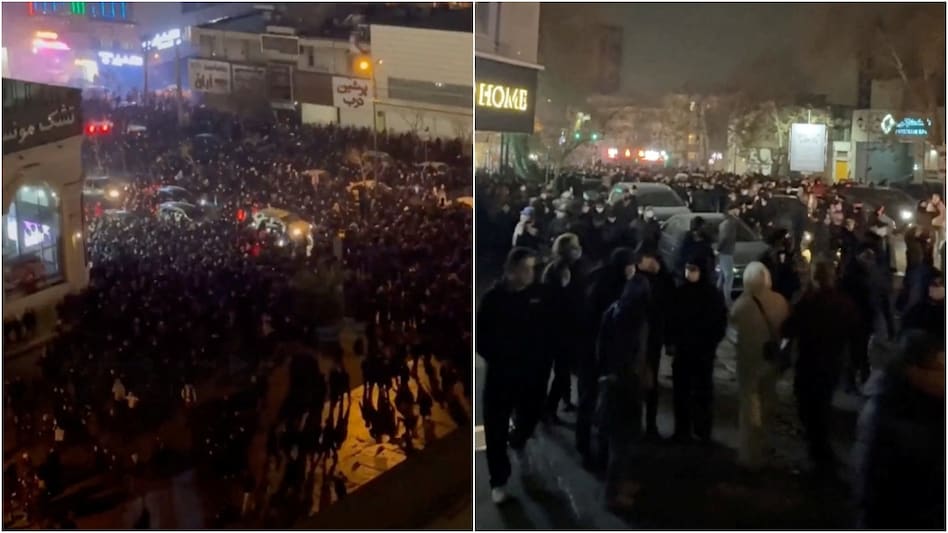
 ईरान में हो रहे पूरे आंदोलन को उन नारों से समझिए, जो इनकी आवाज बनी (Photo - Reuters/video grab)
Iran’s leadership on January 9 signalled an imminent crackdown on nationwide protests, openly defying US President Donald Trump’s pledge to support demonstrators as unrest intensified and the reported death toll climbed to at least 50.
Supreme Leader Ayatollah Ali Khamenei dismissed Trump’s warnings as hollow, accusing the US president of having hands “stained with the blood of Iranians,” even as crowds of regime supporters chanted “Death to America!” in footage aired by Iranian state television. State media later escalated its rhetoric, repeatedly branding protesters as “terrorists,” a label that has historically preceded violent security operations during previous waves of unrest.

 Rubio meets Mukesh Ambani at Jamnagar; talks span energy security, data centres, US collaboration
 Why festive sales are losing their sparkle this year
 Rubio at Jamnagar complex: Sergio Gor flags Reliance's investment in first new US refinery in 50 years
 'Impact has been very limited': MeitY on eMudhra security incident, says Indian DSC and eSign unaffected
 Major security flaw triggers action from Google and Apple against eMudhra certificates
 Love, Obsession & Horror: 5 New Films Releasing This Friday | Theater Releases This Week | Movies |
 U.S.-India Trade Deal: Why Markets Remain Cautious During Marco Rubio’s Visit
 Market Volatility: Pankaj Pandey Sees Buying Opportunities In Midcaps And Smallcaps
 Jio Platforms IPO Sees Record Demand, Subscribed 2.3 Times As QIB Bids Surge
 Sensex, Nifty Turn Volatile: Sharad Avasthi On What Investors Should Do Next
 Jio Platforms IPO: SBI Focused Fund leads mutual fund anchor allotments at ₹315 crore
 Jio IPO explained: Can subscriber scale and profit growth justify its premium valuation over Airtel?
 Planning to apply for Jio’s IPO? Check all the deatils here
 Bajaj Finance shares fall 4% as NBFC flags rise in overdue gold loans
 Rs 11 lakh crore investor wealth gone as market ends lower for second day
 Apple caps iPhone Duo orders at 2 per customer as foldable faces delivery delaysRubio meets Mukesh Ambani at Jamnagar; talks span energy security, data centres, US collaboration
 'Critical vulnerabilities': Govt websites in Europe shut down over PHP security scare
 GRAP 1 in Delhi-NCR: What is banned? Full list of restrictions
 'Gross negligence, unforgivable': eMudhra faces fury over security lapse, techies question leadership












