


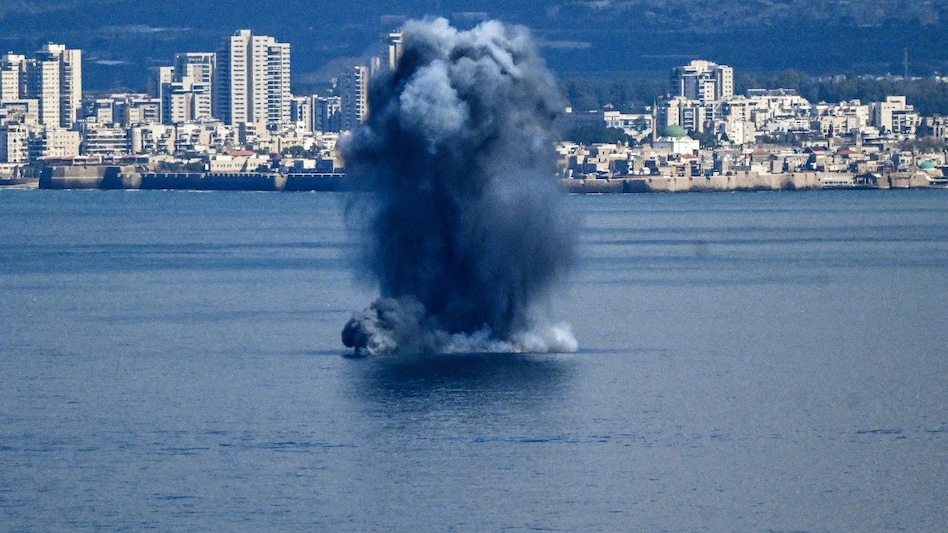
 Iran’s threats have focused on American military assets spread across key Gulf states.
 Tensions in West Asia have sharply escalated after Iran signalled retaliation for what it calls “Operation Epic Fury”, raising concerns over the safety of American military installations across the Gulf.
Six nations that host US forces — strategic partners long central to Washington’s security architecture in the region — now find themselves in the crosshairs as Tehran warns of consequences.

 AI revenue is surging at Indian IT firms, but how much is adding to growth?
 Festive spending in urban India to drop 6% to ₹1.97 lakh crore amid inflation: Survey
 India to overtake Japan as world’s fourth-largest economy in 2027: IMF projections
 BT Explainer: What the SC verdict on Yes Bank’s AT-1 bonds means for the lender and will it alter AT1 bonds as such?
 Stock market: India back on investors’ radar as they warm to ‘non-AI stories’, says HSBC
 Flying Cars Are Here? Elon Musk Shows Tesla Roadster Flying Through Air In Stunning Demo
 Ramakrishna P, CEO, India Mobile Congress Talks To Us About India’s Next Digital Frontier
 Market Recovery: Gaurang Shah Picks Banking, Defence, Power And Cement Stocks For Fresh Bets
 Will IDBI Employees Lose Jobs? DIPAM Secretary Arunish Chawla Clears The Air On Pension & Benefit
 Yes Bank AT1 Bond Verdict: What It Means For Bondholders, Lenders And Shareholders
 CCL Products shares fall 9% on Q2 results; brokerages see up to 30% upside
 PNB Q2 earnings: Net profit rises 13%, asset quality improves
  BT Explainer: What changes for investors post revision of new Closing Auction System
  PC Jeweller shares hit 52-week high; stock jumps 75% YTD; what analysts say
 Federal Bank Q2 earnings: Net profit at record high, asset quality improves Flying Cars Are Here? Elon Musk Shows Tesla Roadster Flying Through Air In Stunning DemoRamakrishna P, CEO, India Mobile Congress Talks To Us About India’s Next Digital Frontier
 Copper supply could peak before demand: Why a 30% shortfall is hard to fix
 India's $100 billion China trade deficit: Are non-tariff barriers blocking Indian exports?
 Radisson Blu, BigBasket, Flipkart face FSSAI action over food safety, misleading claims












