


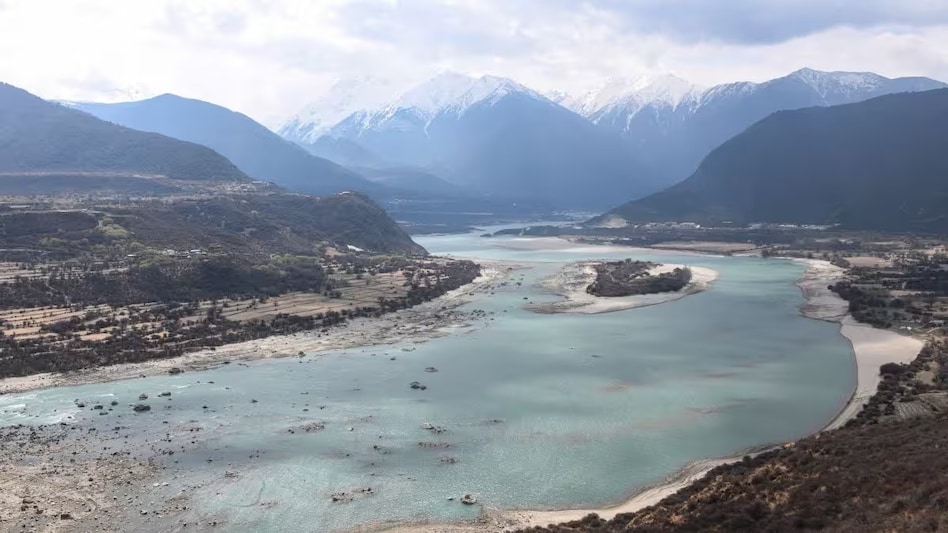
 The Yarlung Tsangpo flows into India as the Brahmaputra River before continuing into Bangladesh, making it a vital transboundary river.
 China's most ambitious hydropower project has encountered an unexpected hurdle—not from politics or funding, but from the ground beneath it. As construction advances on the massive dam planned across the Yarlung Tsangpo River in Tibet, Chinese geologists have warned that the site sits above an active fault line that could pose long-term risks to the project's stability.
The warning comes from a study published in the Chinese-language journal c, overseen by the state-backed China Geological Survey. The findings have added a new dimension to an engineering project already under international scrutiny because of its scale and strategic location.

 Five-day banking week: Panel to discuss proposal today; RBI, finance ministry to take final call
 Metals relief rally: As investors count losses, six stocks trading at 52-week highs; price targets and more
  Noel Tata on Tata Sons listing: ‘Hope RBI will engage with us and find a solution to avoid listing’
 Cabinet likely to take up Rabi MSP hike, ₹54,000 crore Green Energy Corridor-III, Ujjwala subsidy extension
 ₹25,000-crore SP Group liquidity plan separate from Tata Sons listing, says Tata Trusts
 Why Foreign Investors Are Betting On Mid & Small Caps Over Traditional Large Caps
 SEMICON India 2026: Global Chip Giants Announce Major India Investment Plans
 Ep17: How Mira Kapoor Is Building India’s Luxury Wellness Brand | Building A $4 Mn Wellness Business
 PROMO | 27 Years Of BT Golf | BT Golf 2026-27 Tees Off On 19 October 2026
 Supreme Court Questions High Medicine Prices At Corporate Hospitals | Essential Drugs Pricing
 Cupid shares hit record high: Multibagger stock zooms over 250% in six months
 German Green Steel IPO: Step-by-step guide to check allotment status, fresh GMP & more
 Power Mech shares rise 6% after Rs 549 crore order; stock up 33% in 2026 so far
 Infosys, TCS, HCL Tech, Wipro, TechM: Weakest Q2 results in 3 years? Share price targets
 KPI Green Energy shares climb 4% on Rs 2,410 crore wind asset acquisitions
 IRDAI insurance reforms: IBAI warns commission caps could hurt policyholders, jobs and growth
 ChatGPT now has a $500 monthly plan with 8x faster computing: What happens to the $200 Pro tier?
 Trump’s AI push: Tech giants agree to voluntary safety standards amid rapid AI developmentCupid shares hit record high: Multibagger stock zooms over 250% in six monthsFive-day banking week: Panel to discuss proposal today; RBI, finance ministry to take final call












