


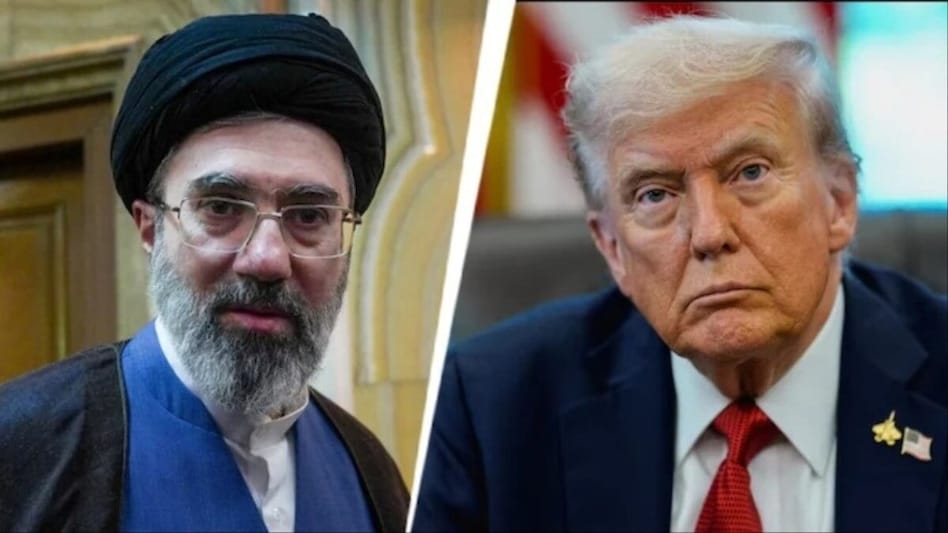
 Mojtaba Khamenei says Donald Trump was desperate to sign the peace deal
US-Iran peace deal: Iran's Supreme Leader Mojtaba Khamenei said President Donald Trump made the US-Iran deal to end the war in the Middle East "out of desperation" as the United States lifted its naval blockade of Iran and oil tankers resumed sailing through the Strait of Hormuz. US Central Command said on X that the blockade had ended "in accordance with the President's direction", while some US vessels would remain "in the general area".
The interim deal has taken effect, starting a 60-day period for further talks, though key issues remain unresolved. Trump said he expected a ceasefire on all fronts, including between Israel and Iran-backed Hezbollah in Lebanon, and hoped countries in the region would allow negotiations to continue. However, Israel continued its war against Hezbollah, raising doubts about the agreement's durability.

 'When India grows 7.8%, world sees fresh hope': PM Modi's big message amid global uncertainty
 NTPC and Adani apply under Rs 37,500 crore coal gasification scheme
 'India's fintech story has been amazing... A big champion of this is UPI': PM Modi
 Why Titan Company stock is top jewellery pick ahead of festive season
  Chandigarh suspends Uber, Rapido licences for 6 months for failing to comply with rules
 “Files Used To Get Stuck”: PM Modi Takes Dig At Delays, Hails 2,800 Km Freight Corridor
 Indegene’s Growth Story: Global Expansion, AI & The Future Of Healthcare Tech
 Ambareesh Baliga Turns Bullish On Specialty Chemicals, Bets On Archean Chemicals & Vinati Organics
 Gold Loan Rise Faces Risk? Ambareesh Baliga Flags Correction Threat For NBFCs
 Hindustan Copper Set To Rise 10-12% From Current Market Price
 Nifty 50 returns have been flat for 2 years. What should investors expect over the next 12 months? DSP mutual fund’s Sahil Kapoor explains
 Hindustan Copper shares jump nearly 5%; what's next on tech charts?Why Titan Company stock is top jewellery pick ahead of festive season
  Archean Chemical, Vinati Organics: Specialty chemical stocks to buy during correction
 Sensex slumps 555 points; Nifty briefly slips below 23,400 amid CAS volatility
 Bank strike on September 11: Unions refuse to withdraw call as talks with govt remain inconclusive
 'Please don't try this at home': Anand Mahindra reacts to Scorpio parked on two-storey rooftop
 'Look what Delhi has done to him': Dreams of education turn into nightmare for student’s family
 FDA suspends licence of IRCTC supplier, 3 ISKCON food establishments in Mumbai
 ChatGPT's cricket play gets bigger: AI giant joins Campa, SBI Life as BCCI sponsors












