Freedom of movement, Hormuz reopening: 14 crucial points in the US-Iran peace pact
The United States and Iran, along with their allies in the current conflict, would declare an immediate and permanent cessation of military operations on all fronts, including Lebanon, the document said.
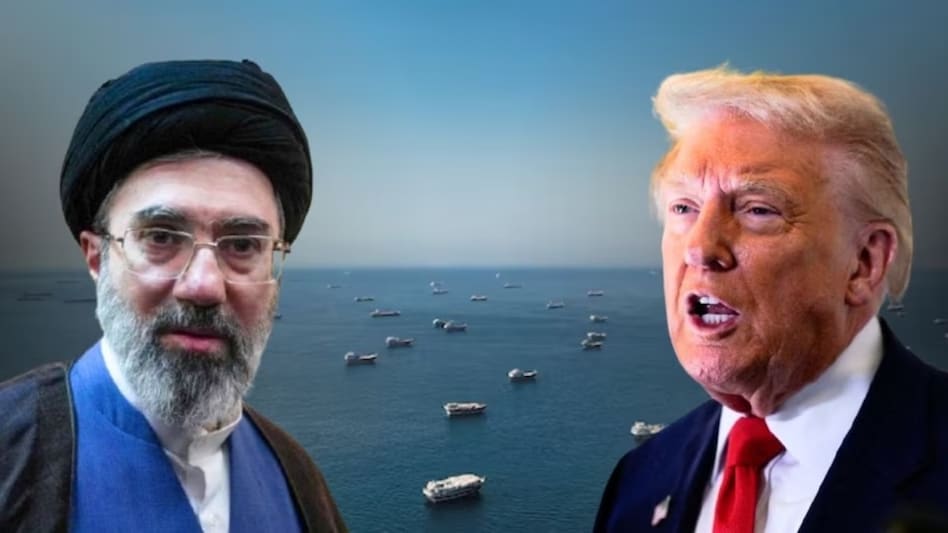 US-Iran peace deal: Trump signs agreement with 14 crucial points
US-Iran peace deal: The newly signed US-Iran agreement will immediately end military action from both sides and reopen the Strait of Hormuz. The end of the naval blockade, a reconstruction and economic package worth $300 billion, and uranium enrichment were also included in the document titled ‘Islamabad Memorandum of Understanding between the United States of America and the Islamic Republic of Iran’.
MUST READ | Trump signs MoU with Iran to end conflict, open Hormuz
Here’s what the document stated:
- The proposed US-Iran memorandum envisages the immediate resumption of commercial shipping through the Persian Gulf and the Strait of Hormuz, with Iran undertaking to facilitate the safe passage of commercial vessels free of charge for 60 days. Traffic would restart immediately and be fully restored within 30 days, subject to the removal of technical and military obstacles and de-mining efforts by Iran.
- The United States would simultaneously begin lifting its naval blockade of Iran upon signing the MOU, with a commitment to completely end the blockade within 30 days. Washington would also remove its forces from the vicinity of Iran within 30 days of a final agreement being reached.
- Iran would initiate discussions with the Sultanate of Oman and other Persian Gulf littoral states on the future administration and maritime services of the Strait of Hormuz, in accordance with international law and the sovereign rights of coastal states.
- The United States and Iran, along with their allies in the current conflict, would declare an immediate and permanent cessation of military operations on all fronts, including Lebanon, and commit not to launch military action or threaten the use of force against each other. The final agreement would formalise the permanent end of the war.
- Both countries would commit to respecting each other's sovereignty and territorial integrity and refrain from interference in each other's internal affairs.
- Washington and Tehran would seek to negotiate a final agreement within 60 days of signing the MOU, with the deadline extendable by mutual consent.
- The United States would work with regional partners to develop a reconstruction and economic development package worth at least $300 billion for Iran. The implementation mechanism would be finalised as part of the final agreement, and the US would provide the necessary licences, waivers and permissions for related financial transactions.
- The US would commit to ending all sanctions on Iran under an agreed schedule as part of the final deal. This would include UN Security Council-related measures, IAEA Board of Governors resolutions, and all primary and secondary US sanctions.
- Iran would reaffirm that it will neither acquire nor develop nuclear weapons. Both sides would negotiate a mechanism for dealing with Iran's stockpile of enriched material, with the minimum method envisaged being on-site down-blending under International Atomic Energy Agency supervision.
- The two countries would also discuss uranium enrichment and other nuclear-related issues within a framework to be agreed in the final deal.
- Until a final agreement is reached, both sides would maintain the status quo. Iran would not expand its current nuclear programme, while the US would refrain from imposing new sanctions or deploying additional forces to the region.
- Upon signing the MOU, the US Treasury would issue waivers allowing exports of Iranian crude oil, petroleum products and derivatives, as well as related services including banking, insurance and transportation, until sanctions are fully removed.
- The United States would also make available Iran's frozen or restricted funds and assets. Procedures for releasing and using these funds would be agreed during negotiations, with the funds made fully accessible for beneficiaries designated by Iran's central bank.
- A joint executive mechanism would be established to monitor implementation of the MOU and ensure compliance with the eventual final agreement. The final agreement would be endorsed through a binding United Nations Security Council resolution.
DON'T MISS | 'One hell of a problem for India': Taiwan crisis will be bigger than Hormuz
ABOUT THE AUTHOR
Business Today DeskBusiness Today brings you the latest news, views and analysis from the world of finance, economy, markets, corporates, startups, tech, and the digital economy. You can find everything from breaking news to deep dives to immersive essays and more on a variety of subjects across all formats - online, magazine, television, data visualisation, et al.
Published on: Jun 18, 2026 11:08 AM IST




 'Vietnam revised GDP by 25% in 2019': Economist explains why last year's estimate changed
 NITI Aayog launches new platforms to scale up electric truck adoption
 'Beginning first round of reductions': JLR confirms 4,000 job cuts over next 2 years
 Honda outsells Hero MotoCorp for second straight month in August
  India goes big on defence: Rs 1.10 lakh crore acquisition plan cleared. What Army, Navy, IAF will get
 Non-Local Electric Bus Software Is A National Security Risk, Warns Eka Mobility Chairman Sudhir Mehta
 Mounjaro Sales Surge 502%: Why GLP-1 Drugs Are Taking Over India’s Pharma Market
 Auto Stocks Outlook: Why Investors Should Be Cautious Despite New Model Launches And Strong Demand
 U.S.-Iran War, Elevated Crude Hit Indian Stocks: Can Nifty Reverse Its Downward Trajectory Now?
 Crude Oil, Gold & Silver: What’s The Next Big Move? | Kunal Shah
 Tata Steel, Hindustan Copper, Lloyds Engineering shares: Expert weighs in; names top pharma, broking bets
 Adani Power secures LoI to acquire GVK Energy; details here
 Two upper circuits for Sterlite Technologies shares as firm discloses FY29 targets
 Sensex falls 383 points, Nifty settles at 23,779; IT, metals among top drags
 APL Apollo Tubes, KDDL, Globus Spirits among 11 stocks to turn ex-dividend tomorrow
 Geopolitics Is Now A Business Priority
 Ahmedabad Gets A Major Aviation Boost: Why The Hub-And-Spoke Model Could Be A Game Changer
 Sustained Competitiveness Is The Key To Growth
 Maruti Baleno Facelift Launched At Rs 6.10 Lakhs












