What exactly happened?
According to China's state-run media, a nuclear-powered ballistic missile submarine belonging to the People's Liberation Army Navy (PLAN) launched a strategic missile carrying a dummy (simulated) warhead at 12:01 pm local time on July 6. The missile flew into the Pacific Ocean before landing in a designated area of international waters.
Senior Captain Wang Xuemeng, spokesperson for the Chinese Navy, described the launch as part of the country's annual military training programme, adding that relevant countries had been informed beforehand and that the exercise complied with international law. However, Beijing did not disclose where the submarine was operating, the distance travelled by the missile, or the exact missile model used.
Why this test is different
China has possessed submarine-launched ballistic missiles (SLBMs) for years, but it has almost never publicised operational tests involving its sea-based nuclear deterrent.
Military analysts say the public acknowledgement is the real headline.
Unlike previous missile launches that were either kept secret or detected by foreign intelligence, this test was announced by Chinese authorities themselves. That makes it the first publicly confirmed submarine-launched ballistic missile test by China and marks a notable shift in Beijing's strategic messaging.
A follow-up to 2024 missile launch
The latest launch follows another major milestone in September 2024, when China publicly announced the firing of an intercontinental ballistic missile (ICBM) into the Pacific Ocean — the country's first publicly acknowledged long-range Pacific missile test since 1980.
That earlier launch came from land. This week's test demonstrates the sea-based leg of China's nuclear forces, completing another important step in strengthening its nuclear triad. Analysts see the latest exercise as evidence that Beijing is becoming increasingly confident in showcasing strategic capabilities once kept behind closed doors.
Which missile was used?
China has not officially identified the missile. However, defence analysts believe it was most likely either the JL-2 or the newer JL-3 submarine-launched ballistic missile.
The JL-2 is estimated to have a range exceeding 7,000 km, while the JL-3 is believed to be capable of travelling more than 10,000 km and carrying multiple independently targetable nuclear warheads (MIRVs). Such ranges would allow Chinese submarines operating in the western Pacific to threaten targets far beyond Asia, including parts of the continental United States.
Why SLBMs matter
Unlike missiles launched from land, SLBMs are fired from nuclear-powered ballistic missile submarines (SSBNs), which can remain submerged for months while operating silently across vast stretches of ocean.
Their greatest advantage is survivability.
Even if an adversary destroys land-based missile silos and airbases, submarines hidden underwater can still launch a retaliatory nuclear strike. This ability is known as second-strike capability, one of the cornerstones of modern nuclear deterrence.
For that reason, submarine-based nuclear forces are often regarded as the most secure element of a country's nuclear arsenal.
China's expanding nuclear triad
China has spent the past decade rapidly modernising all three components of its nuclear forces:
- Land: New missile silos and mobile intercontinental ballistic missiles have strengthened China's land-based deterrent.
- Air: Strategic bombers capable of delivering nuclear weapons over long distances continue to expand the air-based leg of the nuclear force.
- Sea: A growing fleet of nuclear-powered ballistic missile submarines equipped with increasingly capable JL-series missiles forms the sea-based leg of China's deterrent.
According to recent international assessments, China is also expanding its nuclear warhead stockpile at one of the fastest rates among nuclear powers while improving submarine technology, command-and-control systems and long-range missile capabilities.
Regional concerns
The launch has drawn swift reactions across the Indo-Pacific. Australia called the test "destabilising", arguing that it comes amid China's rapid military build-up and a lack of transparency surrounding its strategic intentions.
New Zealand also criticised the launch, noting that it occurred in the South Pacific Nuclear Free Zone, established under the Treaty of Rarotonga. Wellington said it had been informed only hours before the launch and expressed disappointment that Beijing proceeded despite longstanding regional concerns.
Japan, too, voiced concern over China's expanding military activities and the implications for regional security.
The missile launch came on the same day that Australia and Fiji signed a new mutual defence agreement aimed at strengthening security cooperation in the Pacific.
Although China insists the launch was a routine annual exercise and unrelated to geopolitical developments, several analysts believe the timing sends a broader strategic message. By demonstrating an operational sea-based nuclear deterrent during a period of heightened regional security cooperation, Beijing underscores both its military reach and its willingness to signal capability to rivals and partners alike.
For strategic planners in Washington, Tokyo, Canberra and New Delhi, the launch reinforces the importance of anti-submarine warfare, missile defence systems and undersea surveillance as competition in the Indo-Pacific intensifies.


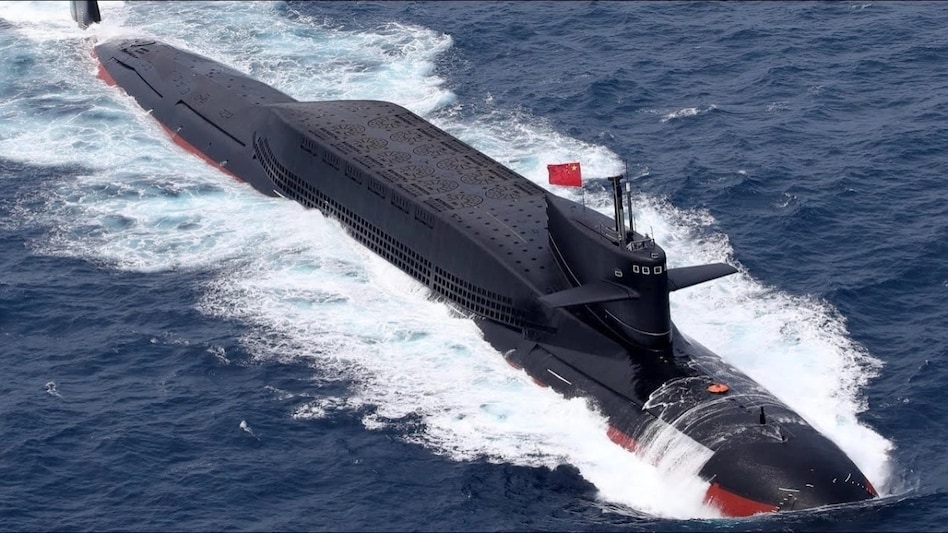 China has not officially identified the missile. However, defence analysts believe it was most likely either the JL-2 or the newer JL-3 submarine-launched ballistic missile.
  Anthropic says Claude now leads 26% of its AI R&D work: How fast is AI development accelerating?
 100% tariffs immediately? What Trump’s new Russia sanctions law means for India
 Russian oil & gas purchase: Trump signs Bill into Act targeting 100% tariffs on India, China
 'Tatas today are the face of India...': Former Solicitor General Harish Salve backs Tata Sons public listing
  Trump’s announces Greenland deal with Denmark: What it means for US military presence
 Corporate Vs Personal Health Insurance: Which Is Better On A Budget?
 Gold Price Outlook: Why Gold Could Rise Despite Global Interest Rate Hikes | Silver Market Update
 Health Insurance: Why Claim Settlement Ratio Is Not Enough When Choosing The Right Insurer
 “Unacceptable And Unprofessional”: MEA Rejects Pakistan’s Claims Over INS Kolkata Collision
  Commodity Trading For Beginners: How MCX & NCDEX Work | Trading Basics | Money Today
 Jindal Supreme, SS Retail, Hero Motors IPOs subscribed up to 181 times on final day; details here
 Sensex, Nifty post sixth weekly loss; TCS, Titan among top laggards, slip up to 4%
 How AI collapse could benefit Indian equity market; Jefferies' Christopher Wood explains
  Banks are no more secular growth story, prefer NBFCs: Chris Wood
 Jefferies' Christopher Wood sees gold at $10,000 'sooner or later'; likes India's small, midcaps
 H-1B visa: Trump admin extends $100,000 employer fee till Sept 2027, tightens job-replacement rules
 MDR on UPI: 'Unanimous report was submitted,' says Parl finance panel chief on Manish Tewari's claims
 Is Europe preparing for war? Macron Russia warning, drone fears & UK emergency advice












