As the conflict entered its second week, Zakaria said the most dangerous element of the war lies in the differing objectives of the two main actors conducting it - Israel and the United States.
Also read: ‘Tolerate $200 oil’: IRGC warns Gulf states to rein in US, Israel as West Asia war escalates
"The most dangerous element of this war, however, is not that the lead actor is improvising like a saxophone player. It is that the two countries waging the war have separate and perhaps incompatible agendas," he said in his weekly show aired on CNN.
For Israeli Prime Minister Benjamin Netanyahu, Zakaria said, the campaign appears aimed at dismantling the Islamic Republic itself. He said Israeli operations have focused on systematically weakening Iran's state structures.
"The Israeli strikes are decapitating Iran's leadership, destroying its military forces, striking its leadership compounds, even hitting police facilities. It is, as the Wall Street Journal reported, methodically destroying Iran's police state, leaving the regime ripe for a collapse."
But such a collapse could create a dangerous power vacuum, he warned. "And on the current trajectory, Israel might well succeed in its objective. And that will likely result in a power vacuum in the country, which could invite revolt, but will almost certainly result in a civil war."
Zakaria warned that Iran's complex social composition and heavily armed security institutions could turn such instability into a prolonged conflict. He said the appropriate analogy would be Syria, a country that was mired in a civil war for more than a decade, with hundreds of thousands dead and millions of refugees.
Iran, he said, contains multiple ethnic groups and regional fault lines that could emerge if central authority breaks down. "It's filled with ethnic groups, Kurds, Armenians, Azeris, with ties to neighboring countries. They've lived peacefully together, but as history demonstrates, from the Balkans to Iraq, when order collapses, and a power vacuum develops, people retreat to their tribal groups and lose trust in others."
Iran's security forces could also sustain prolonged resistance against any new authority, Zakaria noted. "What would fuel this war is the fact that Iran's government has a vast cadre of dedicated soldiers, armed to the teeth, who will fight against any new government or group."
"Just as Saddam Hussein's army melted away after the American invasion and then much of it reappeared as an insurgency, so too one could imagine the IRGC fighting in different garbs to deny any new government the ability to control the country," he added.
Zakaria also cited Libya, where he said more than 14 years after Gaddafi fell, there is still no one group that controls the entire country. "It's much easier to destroy a state than to rebuild one."
While Israel may see instability in Iran as strategically beneficial, Zakaria argued it would pose risks for Washington and its partners in the region.
"For Israel, this is an acceptable outcome. It rids the country of its greatest foe, and if that produces chaos in Iran, so be it. But an Iranian civil war is not in America's interests," he said, adding that instability in Iran would threaten regional trade and energy flows that underpin the global economy.
"And it's not in the interests of America's closest Arab allies who depend on the region being stable and predictable so that oil, goods, money, and people can flow freely and easily through it," the commentator added.
The warning comes as the war is already affecting the region's energy infrastructure and shipping routes. Iran's retaliatory strikes across Gulf states hosting US bases have unsettled markets, while the closure of the Strait of Hormuz has sharply disrupted energy flows.
Oil prices surged above $114 per barrel on Monday, their highest level since 2022, as the conflict threatened production and shipping across the Middle East.
The Strait of Hormuz, bordered by Iran, carries oil and gas exports from Saudi Arabia, Kuwait, Iraq, Qatar, Bahrain, and the United Arab Emirates. Missile and drone threats have largely halted tanker movement through the narrow waterway. Several Gulf producers, including Iraq, Kuwait, and the UAE, have reduced output as storage facilities fill due to limited export capacity.
Zakaria said the US should focus on preventing the war from reaching a point where events become uncontrollable. "Washington needs to find a way to ensure that it secures the gains it has made in this war, a disarmed and defanged Iran, but without pushing the country into civil war," he said.



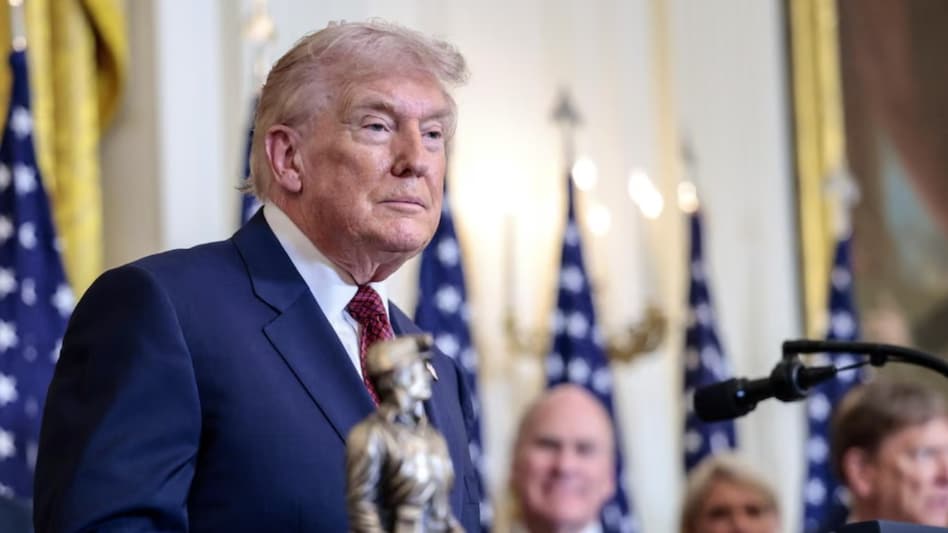 Iran could slide into civil war if regime collapses, warns Fareed Zakaria
 Japan’s semiconductor push in India: Why Japanese companies are betting on materials, equipment and technology
  How big is Apple Pay? US payment giant to enter India as UPI dominates digital payments
 Delhi airport gets its third runway operational; optimise aircraft movement
 Tata Sons crisis: Why the 1-1 split among Tata Trust nominees matters
 Disney taps Indian-origin former Character.AI CEO Karandeep Anand as its first CTO. Who is he?
 CEA On India’s 7.8% Growth, Rural Incomes And Government’s Job Creation Push
  Gold Price Outlook: Why Dollar Weakness Could Keep Gold And Silver Prices Attractive Ahead
 Gold vs Silver Investment Strategy: Is This The Right Time To Buy For Long-Term Returns?
 Corporate Vs Personal Health Insurance: Which Is Better On A Budget?
 Gold Price Outlook: Why Gold Could Rise Despite Global Interest Rate Hikes | Silver Market Update
 Jindal Supreme, SS Retail, Hero Motors IPOs subscribed up to 181 times on final day; details here
 Sensex, Nifty post sixth weekly loss; TCS, Titan among top laggards, slip up to 4%
 How AI collapse could benefit Indian equity market; Jefferies' Christopher Wood explains
  Banks are no more secular growth story, prefer NBFCs: Chris Wood
 Jefferies' Christopher Wood sees gold at $10,000 'sooner or later'; likes India's small, midcaps
 Lalbaugcha Raja receives ₹3.18 crore in 3 days: Check gold, silver and cash breakdown
 India faces fresh US tariff threat over Russian oil: What happens next? GTRI explains
 US sanctions bill may threaten India’s textile exports; CITI calls for urgent government engagement
 AI spending is surging, but when does it create value? Morgan Stanley’s ROIIC lesson for India












