












 The remarks signal a sharp escalation in Washington’s posture toward Havana as the United States moves to choke off the island’s economic lifeline from Venezuela.
  The remarks signal a sharp escalation in Washington’s posture toward Havana as the United States moves to choke off the island’s economic lifeline from Venezuela.
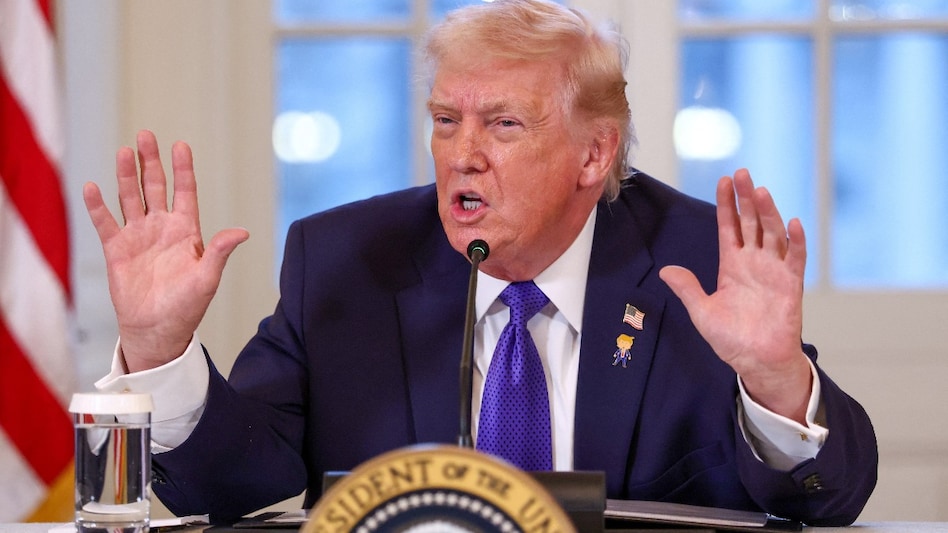
 US President Donald Trump has issued one of his strongest warnings yet to Cuba, signalling a sharp escalation in Washington’s posture toward Havana as the United States moves to choke off the island’s economic lifeline from Venezuela.
In a series of posts on his Truth Social platform on Sunday, Trump declared that Cuba would no longer receive Venezuelan oil or financial support, urging the Cuban leadership to “make a deal” with the United States before facing unspecified consequences.
“THERE WILL BE NO MORE OIL OR MONEY GOING TO CUBA – ZERO!” Trump wrote, adding, “I strongly suggest they make a deal, BEFORE IT IS TOO LATE.”
Targeting Havana’s Venezuela Dependence
Trump’s remarks appear aimed squarely at Cuba’s long-standing reliance on subsidised Venezuelan oil, a relationship that has sustained the Cuban economy for years despite US sanctions. According to the president, Havana’s support for Caracas went beyond ideology, alleging that Cuba provided “security services” to Venezuela’s leadership in exchange for energy and financial aid.
“Cuba lived for many years while getting large amounts of money and oil from Venezuela,” Trump said, asserting that this arrangement had now come to an end.
The warning follows aggressive US moves against Venezuela in recent weeks, including tightened sanctions, seizures of oil shipments and a military operation that resulted in the capture of deposed Venezuelan leader Nicolás Maduro.
Rubio signals broader pressure
US Secretary of State Marco Rubio, a longtime hardliner on both Cuba and Venezuela, reinforced the message with a thinly veiled warning that developments in Caracas could have implications elsewhere in the region.
“If I lived in Havana and I was in the government, I’d be concerned at least a little bit,” Rubio said earlier after the US operation on Venezuela, suggesting that the precedent set in Venezuela could extend beyond its borders.
Trump, speaking at a press conference, described Cuba as “an interesting case” and portrayed the country as being in deep economic distress. “That system has not been a very good one for Cuba. The people there have suffered for many, many years,” he said, adding that the United States ultimately wanted to “help the people.”
Havana pushes back
Cuban President Miguel Díaz-Canel had responded sharply, condemning the US operation in Venezuela as criminal and destabilising. Addressing thousands at a mass rally in Havana, he rejected Washington’s framing of the raid as a law-enforcement action.
“Latin America is not the backyard where the United States does as it pleases,” Díaz-Canel declared, accusing Washington of undermining regional stability.
The Cuban leader described the early-morning assault on Venezuela as “cowardly, criminal, and treacherous,” and demanded proof of life for Maduro following reports of his transfer to US custody. He dismissed US claims linking the operation to narcotics trafficking, arguing that no evidence had been presented.
Instead, Díaz-Canel accused Washington of pursuing Venezuela’s vast oil reserves through what he called an act of “state terrorism,” drawing a controversial comparison to Israel’s military campaign in Gaza.
The exchange underscores rising tensions across the Americas as the Trump administration moves to reshape regional dynamics through economic pressure and military force. The United States has a long history of intervention in Latin America, a legacy that continues to shape reactions in Havana and beyond.
 Cabinet clears two new semiconductor units in Dholera, Surat, investment tops Rs 3,900 crore
 Mamata won't resign after Bengal defeat - what the law allows next
 Coinbase layoffs: Brian Armstrong says AI is reshaping work, trims 14% workforce
 Biocon gets a successor: Why Kiran Mazumdar-Shaw has chosen Claire Mazumdar
 US-Iran war: Govt may have prevented a consumer shock for now but every buffer has a cost
 Mutual Fund Strategy: Why You Shouldn’t Exit Underperforming Funds Too Soon
 "Badla Nahi, Badlav!": PM Modi Hails Violence-Free Election As Bengal Enters A New Era Of Peace
 India Vs Global Markets: Why Experts Still Prefer Domestic Mutual Funds
 Tehran Crisis: India Today Reports From Damaged Golestan Palace Amid Protests
 Stalin Defeated! The Unbelievable Rise Of Vijay That Has Shaken Indian Politics | TVK
 CreditAccess, Titagarh Rail, Quess Corp shares surge up to 17%; check targets, stop-loss levels and outlook
 Rupee closes at all-time low on renewed US-Iran tensions; analysts see more downside
  Jio Financial, Inox Wind, Indus Towers: How to trade these stocks? Expert strategy | Daily Calls on BTTV
 Kissht IPO subscribed 9.5 times on final day of bidding; GMP rises
 L&T Q4 FY26 results: Profit slips 3% to Rs 5,326 crore; announces final dividend, sets record date