


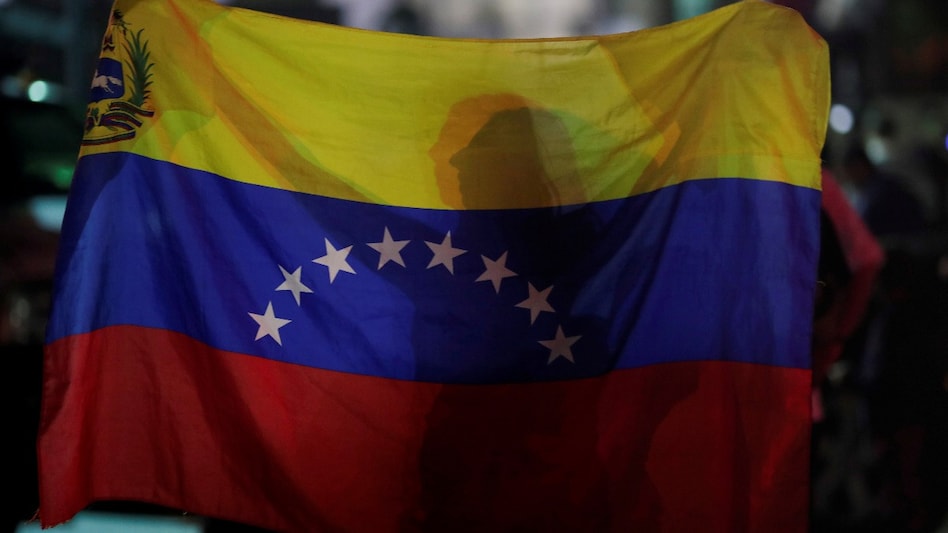
 Brahma Chellaney says US aggression in Venezuela is like East India Company's occupation of the subcontinent
The US’ aggression in Venezuela, wherein Washington captured President Nicolás Maduro’s and his wife Cilia Flores, to bring them to New York to face drug trafficking charges, is a throwback to imperial history, said geostrategist Brahma Chellaney who likened the entire episode with the British East India Company’s occupation of the subcontinent.
With Washington ‘in charge’, Venezuela is headed for “US vassalage”, said Chellaney, who said central to this arrangement is granting Trump access to the world’s largest proven oil reserves.
“The model is a throwback to imperial history: the way Britain’s East India Company established indirect control over India – then the world’s leading economy – before Britain turned it into outright domination, draining India of its wealth and resources,” said Chellaney.
VENEZUELA AND OIL
Venezuela holds approximately 303 billion barrels of oil, which accounts for about 17 per cent of the world’s known reserves, putting it ahead of Saudi Arabia among OPEC members, according to the London-based Energy Institute. Despite this significant resource base, Venezuela’s crude production remains far below potential, hindered by sustained mismanagement, limited investment, and international sanctions. The country’s reserves consist primarily of heavy oil in the Orinoco region, making extraction costly, though technically straightforward by industry standards.
Production peaked in the 1970s at nearly 3.5 million barrels per day, representing over 7 per cent of global output at the time. However, by the 2010s, daily crude output had dropped below 2 million barrels, and last year’s average of 1.1 million barrels per day amounted to roughly 1 per cent of global production – similar to levels seen in the US state of North Dakota.
Venezuela’s operational difficulties are compounded by unreliable electricity supply, which has frequently disrupted both mining and oil activities. As a founding member of OPEC alongside Iran, Iraq, Kuwait, and Saudi Arabia, Venezuela’s decline in output has drawn attention within the global oil industry.
“If developments ultimately lead to a genuine regime change, this could even result in more oil on the market over time. However, it will take time for production to recover fully,” said Arne Lohmann Rasmussen from Global Risk Management.
The US, once the primary market for Venezuelan oil, has been largely replaced by China as the main export destination over the past decade, following the imposition of US sanctions. Venezuela has accrued about $10 billion in debt to China, which emerged as the leading creditor during Hugo Chavez’s presidency.
To service these loans, Venezuela ships crude oil to China using three very large crude carriers that were previously jointly owned by Venezuela and China. In late 2019, two of these tankers were awaiting further instructions after a US blockade affected Venezuela’s export operations, as documented by PDVSA and shipping records.
Aside from oil, Venezuela’s government has promoted mineral extraction as an alternative revenue source. Recent government publications cite reserves and resources in coal (estimated at 3 billion metric tons), nickel (407,885 metric tons), and speculative estimates for gold, iron ore, and bauxite, though reporting inconsistencies complicate verification. However, the country does not have significant reserves of rare earth elements, which have gained strategic importance in global supply chains.

 Rs 4 Lakh crore investor wealth boost! Why stock market is back in green after four days
  Coforge shares gain ahead of Q1 results: Profit may rise 80-90%; Encore integration eyed
 RAF’s conduct during students’ Parliament march under review, say sources
  US-Iran pause attacks for second day; Trump 'giving talks some space' as Hormuz deal discussed
 New paper leak bill in Lok Sabha today, proposes harsher punishment; MPs given draft
 AI Data Centers, Aerospace & Gas Turbines: What's Powering Indo-MIM's Future Growth?
 Best Healthcare Stocks: Gaurang Shah's Outlook On Apollo Hospitals, Fortis & The Manipal Health IPO
 Is Indo-MIM's IPO Valuation Justified? Here's Why The Company Sees Strong Growth Ahead
 Treasury Bills Explained: Why T-Bills Are One Of The Safest Short-Term Investment Options
 FDs vs Markets: Where Should You Keep Your Short-Term Money?
 MV Electrosystems IPO opens on July 30; check price band, issue size, key dates & more
 IDFC First Bank share price up 10%; here's why | CLSA, Jefferies, HSBC, JPMorgan targetsRs 4 Lakh crore investor wealth boost! Why stock market is back in green after four days
  REC, JK Cements, HAL among top trading picks for short-term gains; check targets & moreCoforge shares gain ahead of Q1 results: Profit may rise 80-90%; Encore integration eyed
 Gold, silver prices today (July 27): Check latest rates in Delhi, Mumbai, Kolkata, other citiesMV Electrosystems IPO opens on July 30; check price band, issue size, key dates & moreIDFC First Bank share price up 10%; here's why | CLSA, Jefferies, HSBC, JPMorgan targetsRAF’s conduct during students’ Parliament march under review, say sources
  19-year-old scores 166 in NEET re-exam, dies by suicide in Maharashtra as toll from leak crisis grows









