But what exactly are flex-fuel cars, and how do they work?
What is a flex-fuel vehicle?
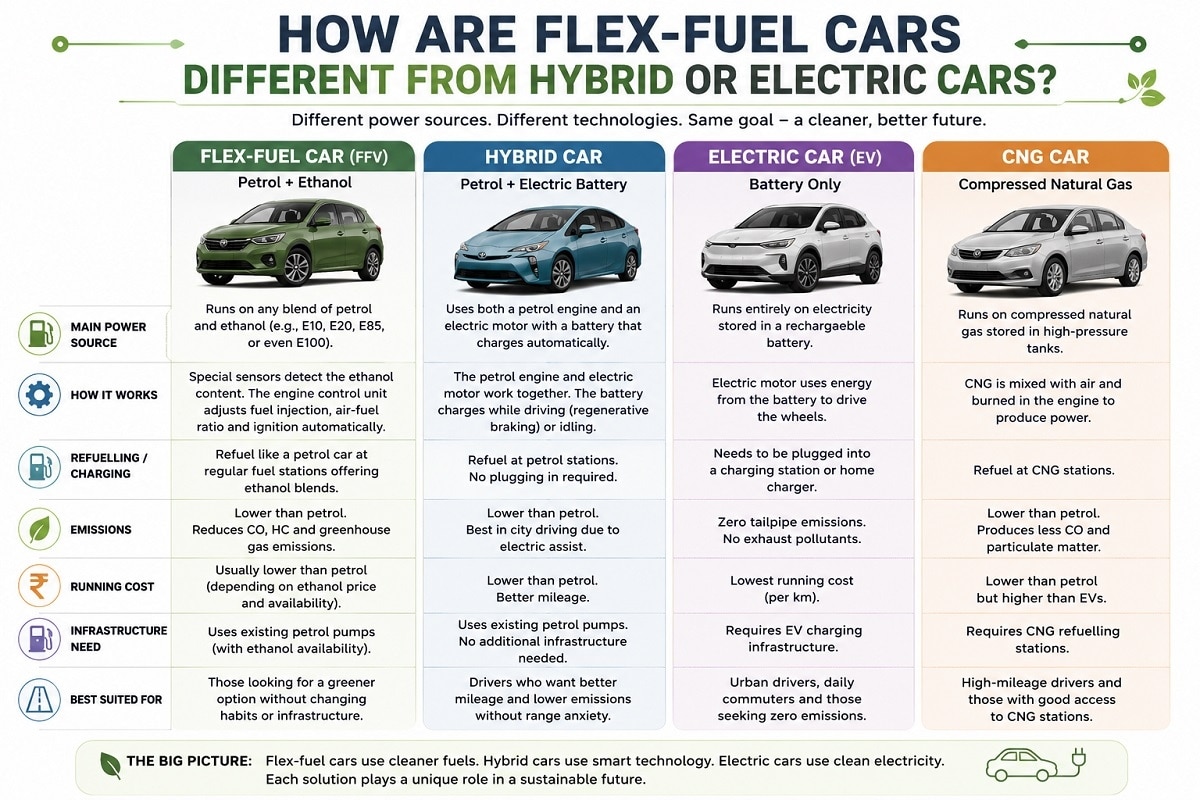
A flex-fuel vehicle (FFV) is an automobile designed to run on more than one type of fuel — typically petrol blended with ethanol. These vehicles can operate on regular petrol, high-ethanol blends, or any mixture of the two.
The most common blend globally is E85, which contains 85% ethanol and 15% petrol. However, some modern FFVs can even run on E100 — nearly pure ethanol.
The “E” in fuel grades refers to ethanol percentage:
- E10 = 10% ethanol, 90% petrol
- E20 = 20% ethanol
- E85 = 85% ethanol
- E100 = Nearly pure ethanol
Unlike conventional petrol cars that are calibrated for low ethanol blends such as E10 or E20, FFVs are engineered specifically to tolerate and efficiently burn higher ethanol content.
Ethanol is a biofuel produced mainly from sugarcane, corn, maize, and agricultural biomass. In India, ethanol is largely derived from sugarcane molasses. Because it is plant-based, ethanol is considered a renewable fuel. It burns cleaner than petrol and emits lower levels of carbon monoxide and greenhouse gases.
How do flex-fuel cars work?
The core principle behind a flex-fuel car lies in its specially designed internal combustion engine and fuel management system.
Sensors detect fuel composition: Flex-fuel vehicles are equipped with sensors that continuously analyse the ethanol-petrol ratio in the fuel tank.
The engine control unit (ECU) then automatically adjusts:
- Fuel injection timing
- Air-fuel mixture
- Ignition timing
- Combustion parameters
This allows the vehicle to seamlessly switch between petrol and ethanol blends without driver intervention.
Engine modifications in FFVs: Compared to standard petrol vehicles, flex-fuel cars include several modifications because ethanol behaves differently from petrol.
Corrosion-resistant components: Ethanol absorbs moisture and can corrode certain metals and rubber parts. FFVs therefore use:
- Stainless steel fuel lines
- Ethanol-resistant rubber hoses
- Special fuel tank coatings
- Higher Fuel Flow
Ethanol contains less energy per litre than petrol, meaning more fuel is required for the same power output. FFVs compensate with recalibrated fuel injectors and engine mapping.
Cold start systems: In colder climates, ethanol can be harder to ignite. Some FFVs use auxiliary systems to assist cold starts.
Advantages of flex-fuel cars
- Reduced oil imports: Countries like India import a large portion of their crude oil requirements. Ethanol blending can reduce dependence on expensive fuel imports and improve energy security.
- Lower emissions: Ethanol burns cleaner than petrol, helping reduce tailpipe emissions and greenhouse gases.
- Support for farmers: Large-scale ethanol production creates additional demand for sugarcane, maize, and other crops, potentially boosting rural incomes and the agricultural economy.
- Existing infrastructure advantage: Unlike electric vehicles, FFVs can use existing fuel stations with relatively minor infrastructure upgrades.
- Easier transition than EVs: Since flex-fuel cars still use conventional engines and refuelling systems, consumers do not need to depend entirely on charging infrastructure as with electric vehicles.
Challenges and Limitations
- Lower mileage: Since ethanol has lower energy density than petrol, vehicles running on high ethanol blends may deliver lower fuel efficiency.
- Limited fuel availability: High-ethanol fuel blends such as E85 and E100 are still not widely available in many countries, including India.
- Vehicle cost: Flex-fuel cars may cost slightly more than standard petrol vehicles because of specialised engine components.
- Food vs Fuel debate: Critics argue that large-scale ethanol production may divert agricultural land and crops away from food production and increase pressure on water resources.
- Engine compatibility: Regular petrol vehicles cannot always safely handle very high ethanol blends without modifications.
Why is India pushing flex-fuel cars?
India imports a large portion of its crude oil requirements, making fuel prices vulnerable to global volatility. The government sees ethanol blending as a way to reduce oil imports, improve energy security, and support domestic agriculture.
The push toward ethanol-based mobility is also aimed at:
- Lowering vehicular emissions
- Reducing the country’s fuel import bill
- Supporting sugarcane farmers and rural economies
- Expanding renewable energy adoption
India has already rolled out E20 fuel in several regions and plans to expand ethanol blending further nationwide.
Global use of flex-fuel cars
Countries like Brazil have successfully adopted flex-fuel technology on a large scale. Brazil’s automotive ecosystem relies heavily on ethanol-blended fuels, and several major automakers have sold FFVs there for decades. The success of Brazil’s ethanol model is often cited as an example for India as it seeks alternatives to fossil fuels while supporting its agricultural sector.
Flex-fuel technology is increasingly being viewed as a transitional solution in the global shift toward cleaner transport. While electric vehicles dominate long-term clean mobility discussions, ethanol-powered vehicles may provide a practical intermediate step for countries where EV charging infrastructure is still developing.















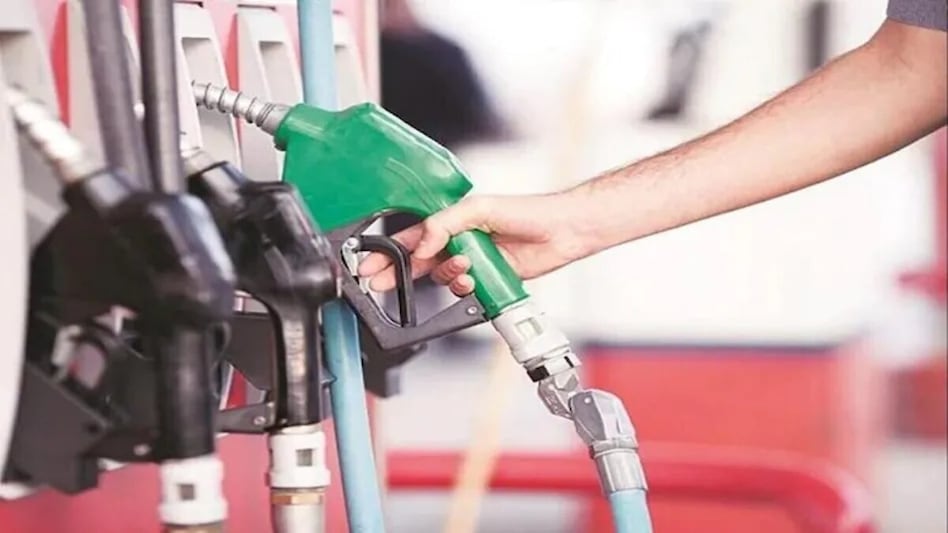 The government sees ethanol blending as a way to reduce oil imports, improve energy security, and support domestic agriculture.
  'AI models cannot be trusted': Microsoft warns of insider threats, expands Project Perception
 China announces export controls on tunnel boring machines. Challenge for India's infra push?
 Ferrari expects FTA to boost demand in India; plans new dealerships in Ahmedabad and Chennai by year-end
 Houthi attacks disrupt Saudi aviation: Riyadh airport restricts flights indefinitely
 Fewer seats, higher fares: Why flying home this festive season costs more
 PNB Reports Strong Q2FY27 Results; MD & CEO Ashok Chandra On Earnings And Growth Outlook
 Market Commentary | Axis, HDFC Bank & IT Stocks Bleed! Vaishali Parekh On Key Support Levels
 Cricket Diplomacy To Zero Tariffs: Why The India-New Zealand FTA Is A Total Win-Win
 How Many Mutual Funds Should You Hold? Expert Explains Portfolio Diversification And Fund Overlap
 Why Smartphone Prices Are Skyrocketing Despite Festive Discounts?
 Jio IPO draws 30 times anchor demand, brokerages see more upside in digital business
 Indian stock market outlook: Nikunj Saraf prefers large-caps, cautions against small-caps
 Hindustan Zinc Q2 earnings: Net profit zooms 149%, revenue at Rs 15,093 crore
  Muhurat Trading 2026: NSE, BSE announce Diwali timings; check full schedule
 ICICI Bank shares close lower after Q2 earnings; 3 brokerages remain bullish
 Apple announces 'Pro and Tell' event for next week: OLED MacBook Pro and other devices expected
 Apple HomeView may get a 360-degree robotic arm and 9-inch display: What it means for smart homes
 Saudi Arabia postpones in-person 'Davos in the desert' event amid Houthi attacks


