












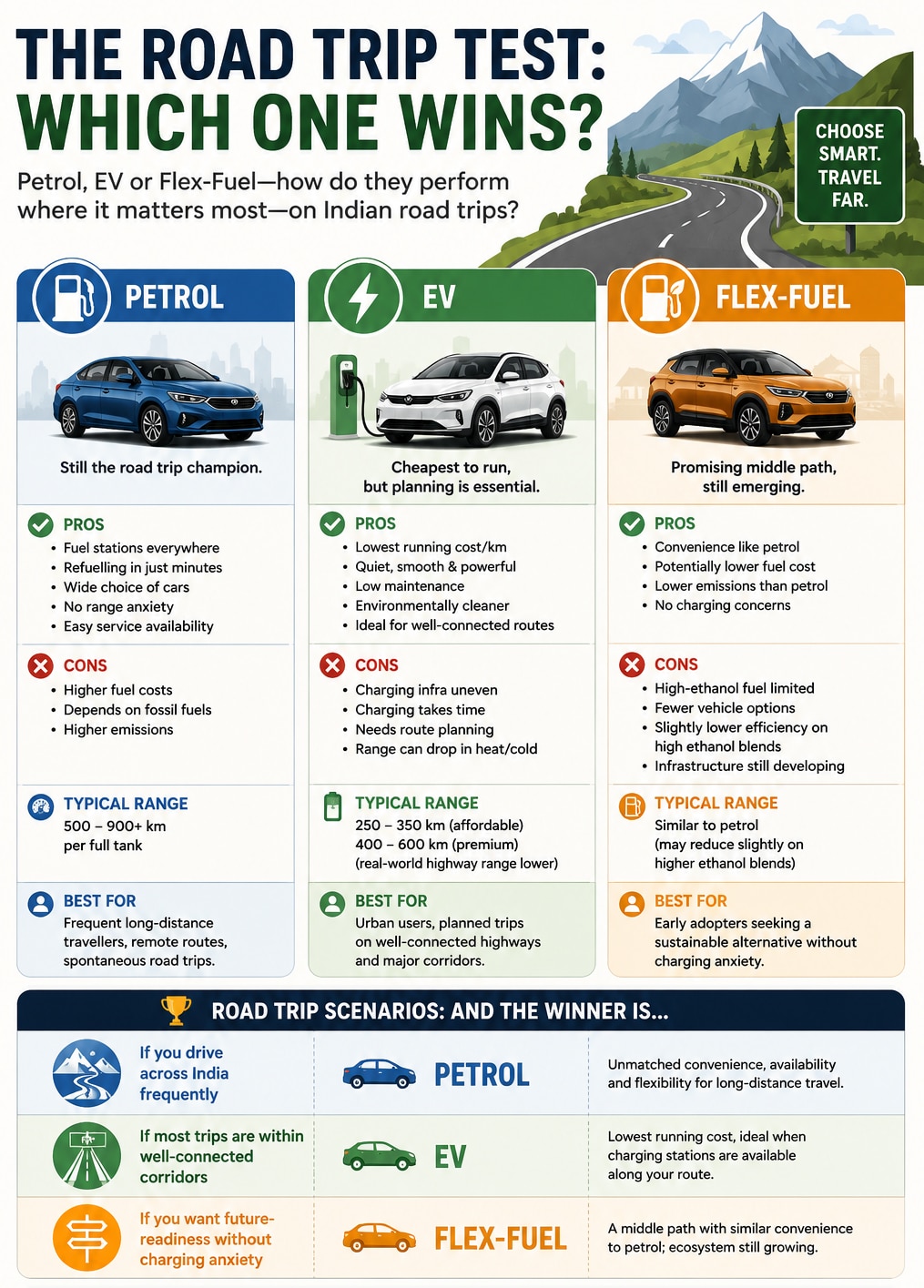


 Despite the buzz around newer technologies, petrol cars remain the most practical choice for long-distance travel in India.
With fuel prices fluctuating, electric vehicles becoming mainstream and flex-fuel technology entering the spotlight, Indian car buyers are increasingly asking a simple question: Which type of vehicle is best for long drives and road trips?
The answer depends on where you travel, how often you drive, and how much inconvenience you're willing to tolerate in exchange for lower running costs. Here's a closer look at the strengths and weaknesses of petrol, electric and flex-fuel vehicles in India today.
 'AI models cannot be trusted': Microsoft warns of insider threats, expands Project Perception
 China announces export controls on tunnel boring machines. Challenge for India's infra push?
 Ferrari expects FTA to boost demand in India; plans new dealerships in Ahmedabad and Chennai by year-end
 Houthi attacks disrupt Saudi aviation: Riyadh airport restricts flights indefinitely
 Fewer seats, higher fares: Why flying home this festive season costs more
 PNB Reports Strong Q2FY27 Results; MD & CEO Ashok Chandra On Earnings And Growth Outlook
 Market Commentary | Axis, HDFC Bank & IT Stocks Bleed! Vaishali Parekh On Key Support Levels
 Cricket Diplomacy To Zero Tariffs: Why The India-New Zealand FTA Is A Total Win-Win
 How Many Mutual Funds Should You Hold? Expert Explains Portfolio Diversification And Fund Overlap
 Why Smartphone Prices Are Skyrocketing Despite Festive Discounts?
 Jio IPO draws 30 times anchor demand, brokerages see more upside in digital business
 Indian stock market outlook: Nikunj Saraf prefers large-caps, cautions against small-caps
 Hindustan Zinc Q2 earnings: Net profit zooms 149%, revenue at Rs 15,093 crore
  Muhurat Trading 2026: NSE, BSE announce Diwali timings; check full schedule
 ICICI Bank shares close lower after Q2 earnings; 3 brokerages remain bullish
 Apple announces 'Pro and Tell' event for next week: OLED MacBook Pro and other devices expected
 Apple HomeView may get a 360-degree robotic arm and 9-inch display: What it means for smart homesJio IPO draws 30 times anchor demand, brokerages see more upside in digital business
 Saudi Arabia postpones in-person 'Davos in the desert' event amid Houthi attacksFerrari expects FTA to boost demand in India; plans new dealerships in Ahmedabad and Chennai by year-end


