












 Alive’s 2025 Experience Study reveals a decisive shift from travel-linked add-ons to impulse weekend bookings, as founder Vivek Kumar highlights changing urban spending patternsAlive’s 2025 Experience Study reveals a decisive shift from travel-linked add-ons to impulse weekend bookings, as founder Vivek Kumar highlights changing urban spending patterns
For years, experiences in India were largely tied to travel. Heritage walks, curated food trails and adventure activities were typically consumed as part of holiday itineraries, facilitated by online travel aggregators such as MakeMyTrip, Airbnb Experiences and Viator.
In 2025, that model is rapidly evolving.
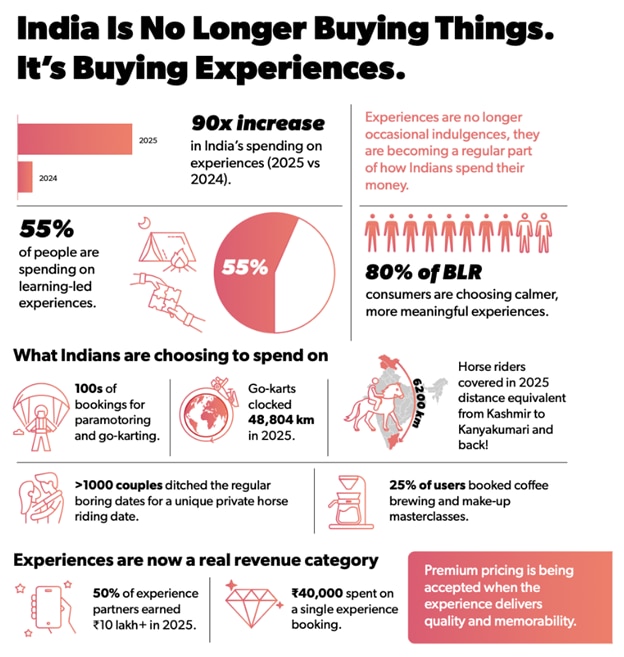
According to Alive’s 2025 Experience Study, based on platform and partner data, spending on experiences has grown 90 times compared to 2024, with users frequently spending ₹4,000 to ₹5,000 on same-day impulse bookings within hours of discovery. What was once a travel add-on is now becoming a weekend habit embedded in urban life.
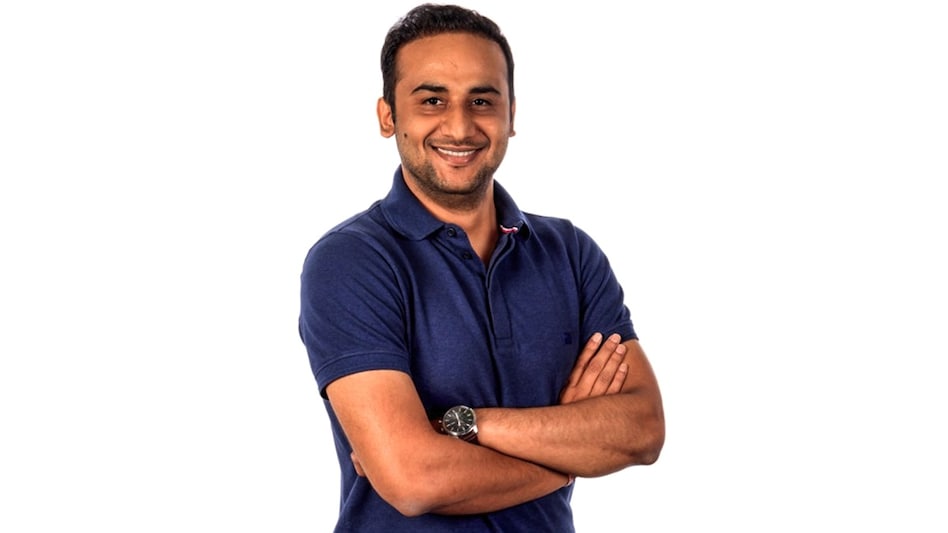
Vivek Kumar, Founder of Alive, says the shift signals a deeper structural change in how urban Indians value time, leisure and fulfilment.
From Itinerary Add-Ons to Everyday Rituals
“When travel platforms first promoted experiences, they were almost exclusively linked to trips. It made sense because people were already in a different place and open to novelty,” Kumar explains. “What we are seeing now is a clear break from that model. Experiences are no longer something you consume only while travelling. They are becoming part of everyday city life.”
Across Bengaluru, Hyderabad, Chennai, Mumbai, and Delhi, urban professionals are increasingly opting for curated weekend experiences such as wellness sessions, coffee brewing workshops, aerial yoga, craft masterclasses and neighbourhood adventure activities.
This shift reflects a broader recalibration of discretionary time. Instead of planning elaborate getaways, many consumers are choosing short, high-value engagements lasting two to three hours.
Data Signals Structural Change
Alive’s study indicates that the trend is not a fleeting lifestyle fad. Work intensification, digital fatigue and a desire for meaningful offline engagement are driving demand.
“People want fulfilment without a massive time commitment,” Kumar says. “They discover something in the morning and book it the same day. The impulse economy is very real in experiences.”
Growth is visible across categories including learning-led sessions, wellness formats, adventure activities and experiential crafts, pointing to diversified consumer demand rather than isolated spikes.
Discovery Goes Social
Unlike traditional travel-linked bookings driven by itinerary searches, discovery today is happening through Instagram, WhatsApp groups and community networks. Frictionless digital payments further accelerate spontaneous decision-making.
Globally, travel platforms such as GetYourGuide and Viator have reported rising demand for immersive experiences. In India, however, the shift is distinctive because the appetite for curated activities has moved from travel destinations to everyday urban contexts.
Hybridisation of Social Spending
Industry observers note that experiences are not replacing dining or shopping but layering over them.
Cafés are hosting brewing workshops, restaurants are offering chef-led tables and gyms are launching premium wellness sessions. Hospitality operators are diversifying revenue streams through curated events and experiential formats.
“What we are seeing is hybridisation,” Kumar explains. “Consumers are not abandoning traditional outings. They are augmenting them with curated, participatory experiences.”
The Rise of the Experience Entrepreneur
The expansion of the experience economy is also creating new income opportunities. Chefs, artists, fitness instructors, mixologists and niche specialists are converting their skills into structured, bookable sessions.
Alive’s data suggests that many creators are generating predictable supplementary income through weekend formats, with some earning revenues comparable to part-time or full-time work.
“Experiences allow individuals to monetise existing skills and spaces without heavy infrastructure investment,” Kumar says. “It is building micro-entrepreneurial ecosystems.”
What Lies Ahead
Over the next 12 to 18 months, Kumar anticipates three major developments:
● Premiumisation and stronger curation, as quality and safety standards become key differentiators
● Growing corporate demand, with curated experiences becoming integral to team building and employee engagement programs
● Platform convergence, as boundaries blur between travel OTAs, social platforms and local marketplaces
A Cultural Recalibration
The evolution of India’s experience economy from holiday-centric bookings to neighbourhood-based engagements marks a cultural shift in urban consumption.
“Travel platforms taught consumers to value experiences on vacation,” Kumar concludes. “Local creators and marketplaces are now turning that into a regular part of weekend life. People are investing not just to possess, but to feel, learn and remember.”
As urban Indians reassess how they spend their most finite resource, time, the experience economy appears poised to become one of the defining consumer trends of 2026.
 UAE airspace partially closed between May 4-11 as Iran escalates missile, drone attacks; 3 Indians among injured
 Beaten in Nandigram in 2021, now Bhabanipur in 2026: Why Mamata lost her last safe seat
 Dividend announcements today, history: Hero MotoCorp, Coforge L&T, M&M, PNB, Marico
 Delhi HC rejects SpiceJet’s review plea against ₹144 crore deposit order
 Fixed deposits (FD) vs Post Office schemes: Where to earn more in 1–5 years
 Stock Market LIVE: Markets React To Election Buzz, Nifty Near 24,100 | Deven Choksey
 Daily Calls LIVE: Ask Your STOCK MARKET TODAY QUERIES | Market Update LIVE | Share Market News Today
 Defence Stocks Bull Run: Best Picks For Your Portfolio | What's Hot
 Big Win For Adani As NCLAT Rejects Vedanta Plea In Jaiprakash Associates Case, Upholds CoC Decision
 Linkerbot Eyes $6B Valuation! The Startup Owning 80% Of The World's Robotic Hand Market
 Zen Tech down 11% in 4 days: Defence stock worth a buy?
 Stock market: BJP’s win in West Bengal, hat-trick in Assam: What analysts say
 Nifty, Sensex, Nifty Bank outlook for today: GIFT Nifty down 120 pts; key levels to watchDividend announcements today, history: Hero MotoCorp, Coforge L&T, M&M, PNB, Marico
 Top stocks in news: BHEL, Tata Tech, L&T, Ambuja Cement, Manappuram, AB Capital, Sobha