


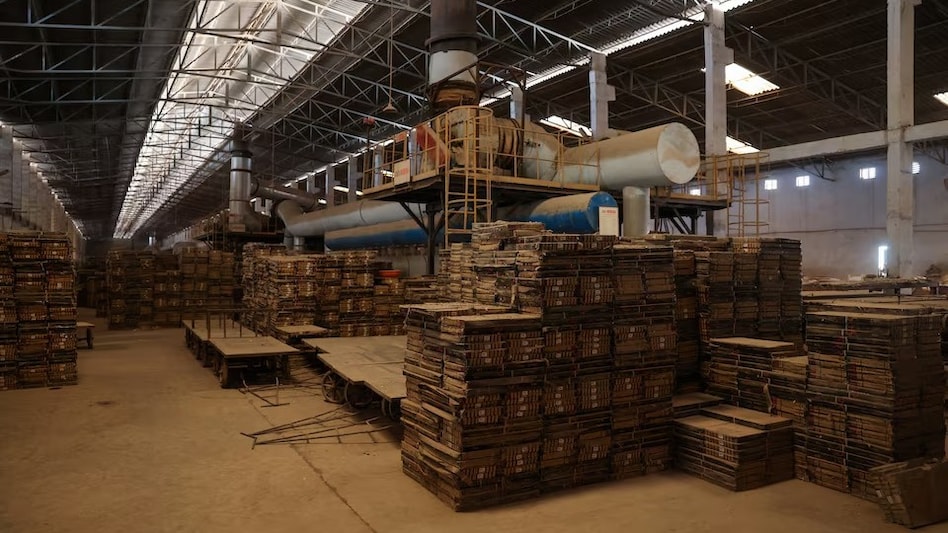
 Boxes of ready ceramic tiles during shutdown at a ceramic tiles manufacturing factory in Morbi, Gujarat (Reuters)
Morbi, India's largest ceramics manufacturing hub, has seen most of its factories shut for nearly a month after gas supplies tightened sharply in the wake of the Iran war, according to a report by the BBC.
Also read: 'Stop laying mines, missile strikes': Europe, Japan warn Iran, signal readiness to secure Hormuz

 Tata Trusts asks Tata Sons to explore options other than listing, says ‘Tata Model has to be saved’
 Tata Trusts proposes ₹25,000 crore plan for SP Group, says Tata Sons listing is not an option
 'RBI letter does not mention listing': Noel Tata seeks full briefing on Tata Sons-RBI talks
 'We cannot put the cart before...': Noel Tata's argument against N Chandrasekaran's reappointment
 Tata Trusts opposes N Chandrasekaran reappointment, says board resolution is ‘legal nullity’
 How India Changed In 12 Years: PM Modi’s Journey From Economic Reforms To Viksit Bharat
 Modi @76: From Twitter To Instagram, How His Digital Outreach Has Evolved
 Stock Picks To Watch: Shibani Kurian Reveals Kotak AMC’s Market Bets
 Gold ETF vs Physical Gold: Know the Tax Rules, Charges and Key Differences
  PPF vs NPS: Tax Benefits, Returns and Lock-in Period Explained for Retirement Planning
 Hero Motors IPO subscribed 3.37 times on Day 2; retail portion subscribed over 5 times
 NSE IPO: India's largest exchange gets 43% subscription on Day 1; NIIs, retail see strong demand
 Rentomojo shares settle maiden trade nearly 32% above IPO price; what should investors do now?
 Sensex slips, Nifty settles higher; Tata stocks gain after N Chandrasekaran reappointment
 Cochin Shipyard, KRBL, RITES, Ramky Infrastructure among stocks to turn ex-dividend on September 18
 TVS Motor to increase monthly EV capacity to over 50,000 units as sales boom
 'Foreign investors want only returns': Noel Tata explains why he opposes listing Tata SonsTata Trusts proposes ₹25,000 crore plan for SP Group, says Tata Sons listing is not an option'RBI letter does not mention listing': Noel Tata seeks full briefing on Tata Sons-RBI talks
 Want EPFO Updates On WhatsApp? Here’s How To Follow The Official Channel In Just A Few Steps












