


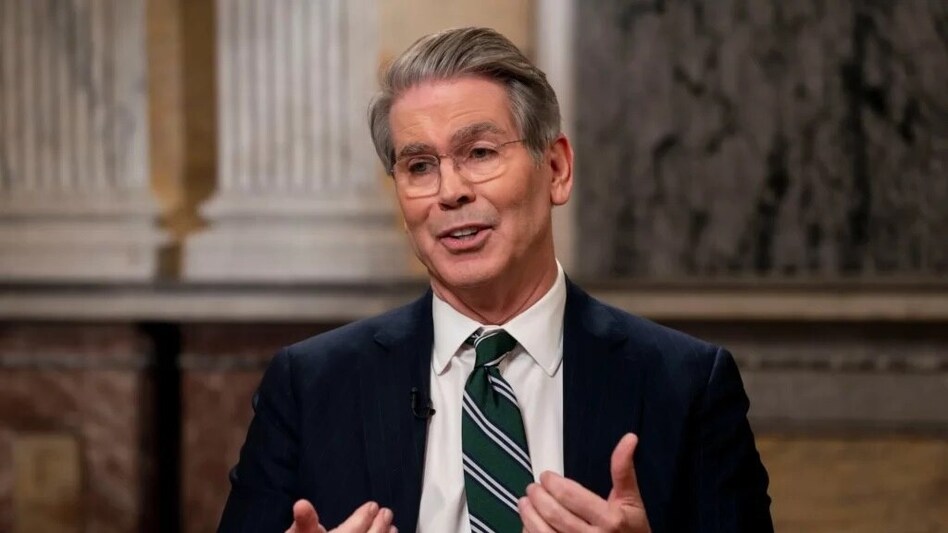
 In an interview with CNBC, Bessent said that China's reliance on Russian crude oil grew marginally compared to New Delhi's sharp escalation.
 Former Foreign Secretary of India Kanwal Sibal recently took to social media to counter US Treasury Secretary Scott Bessent after the latter defended Washington's decision to impose additional tariffs on India over its Russian oil imports while taking no such action on China.
In a post on X (formerly Twitter), Sibal claimed that Bessent is actively contributing to the deterioration of the India-US relationship. "Bessent is contributing actively to creating tensions with India. Based on false facts to boot," he said on social media.

 BTTV Exclusive: Ashishkumar Chauhan explains why NSE went public now
 Tata Sons rejects Noel Tata objections over N. Chandrasekaran reappointment
 GST Council to take up proposal of MDR on UPI
 SEBI's settlement rules set for a big revamp; experts call for balance between speed and accountability
  SEBI rewrites PMS rulebook, allows IPO, foreign securities and unlisted debt investments
 Meta’s New Gadgets: Camera-Free Glasses, VR Eyewear And AI Handheld Device Unveiled
  MDR Levy: Will Retail Trading Volumes Take A Hit? | NSE Chairman Srinivas Injeti
 NSE Lists At ₹1,800: Exclusive Post-Listing Interview With India's Largest Exchange
 From Mobile Trading To AI: How NSE Plans To Protect Market Integrity
 NSE On India’s Capital Markets Growth | IPOs, REITs, InvITs And More
 SEBI's settlement rules set for a big revamp; experts call for balance between speed and accountability BTTV Exclusive: Ashishkumar Chauhan explains why NSE went public nowSEBI rewrites PMS rulebook, allows IPO, foreign securities and unlisted debt investments
 HSBC plans India equity broking return amid IPO boom, says report
 Whirlpool of India clarifies on promoter stake sale report; stock slips
 Railway UPS pension calculator: How much can you get after 10, 20 and 25 years?
 This 48-year-old doctor quit her 20-year medical career to open a steamed bun shop, says ‘I just want to live a life I love’
 Financial Horoscope Today, September 25, 2026: Increase in Wealth for Gemini, Know the Condition of All Signs
 Top 10 countries for science education: China leads global ranking, Singapore follows
 ‘And that’s it?’: Prince Harry’s AI speech hits a glitch as teleprompter fails mid-address in New York












