


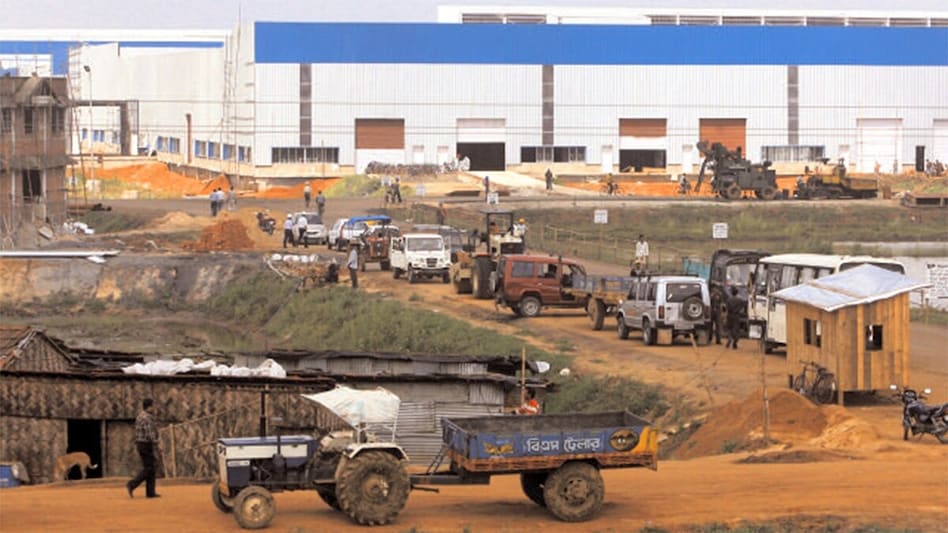
 In October 2008, Tata Motors officially pulled out of Singur, citing a "heightened level of agitation and hostility." The company shifted the Nano project to Gujarat. (Photo: AFP)
Nearly two decades after the collapse of one of India's most talked-about industrial projects, West Bengal may be preparing to reopen the Singur chapter.
The newly elected BJP government in West Bengal is exploring the possibility of holding discussions with the Tata group to revive industrial activity at Singur in Hooghly district — the site where Tata Motors' ambitious Nano factory project was abandoned in 2008 amid intense political protests, as per a report in the Informist.

 India’s AI bet goes global: 93% of businesses trust AI with data, 87% eye new markets
 RBI forex swap facility draws $72.85 billion inflows, FCNR(B) deposits account for bulk
  Delhi H1N1 outbreak: 1,777 cases recorded. Symptoms, who are at risk & how to stay safe
 AI jobs rise 51% in India, but 75% of job skills could change by 2030: LinkedIn India head
 JioBlackRock Mutual Fund revises 6 schemes, adds gold, silver ETFs to flexi cap fund allocation
 Rental Income Tax: 3 Key Deductions Every Senior Citizen and Property Owner Should Know
 Meta’s $200 Billion Trial: Did Instagram & Facebook Keep Kids Hooked?
 Motor Insurance Explained: Is Third-Party Car Insurance Enough? Know Before You Buy
 Retirement Tax Planning: 5 Ways Senior Citizens Can Reduce Their Tax Liability
 #IndiaAt100 : Adipen Bose Nandhiji On Conscious Capitalism- Can Profit & Purpose Coexist?
 Crompton Greaves says no plan to sell stake, expects revenue to double by FY31
 Gaja Alternative Assets IPO: 3 ways to check application status; allotment odds, GMP, listing date
 FII sentiment shows early signs of turnaround after months of selling: Report
 ₹24,800 crore bill: How transaction costs are eating into retail derivatives trading
 Cupid, NTPC Green, NTPC, Raymond Realty, HAL shares: Key technical levels to watch
 Bar Council chief MK Mishra gets 15-day ultimatum to resign over fund diversion, graft allegationsJioBlackRock Mutual Fund revises 6 schemes, adds gold, silver ETFs to flexi cap fund allocation
 Bangladesh-Pakistan ties: What Dhaka’s interest in Saudi-Türkiye defence pact means for IndiaRental Income Tax: 3 Key Deductions Every Senior Citizen and Property Owner Should Know
 LinkedIn dating? India chief says platform to remain professional networking only












