


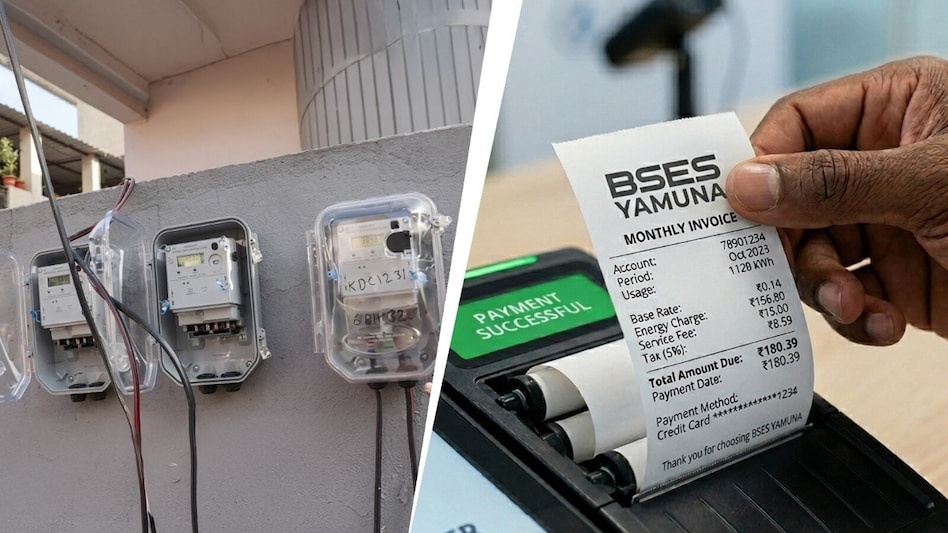
 According to estimates, a household with a sanctioned load of 2 kilowatts and monthly consumption of 600 units in BYPL areas could see its bill rise by around ₹170, from about ₹3,766 to ₹3,936.
Delhi residents could see a modest increase in their electricity bills after the Delhi Electricity Regulatory Commission (DERC) approved a higher Fuel and Power Purchase Adjustment Surcharge (FPPAS) for power distribution companies, allowing them to recover rising electricity procurement costs.
The increase, which applies to April 2026, comes amid higher fuel prices and global market uncertainties that have pushed up the cost of power generation.

 PayPal cuts 600 jobs in India as part of its cost-cutting, restructuring measures
 India stays ahead of global turbulence as economy grows 7.8% in Q1: Nirmala Sitharaman
 'No country should help Iran evade sanctions': Marco Rubio on Modi-Pezeshkian meet at SCO summit
 ‘Ill-educated, egregiously wrong…’: Neelkanth Mishra says ‘2.6% GDP growth’ claim is obviously incorrect
 Lumino Industries make decent stock market debut; shares list at 34% premium on NSE
 Piyush Goyal Defends India’s 7.8% GDP Growth, Hits Back At Opposition Critics
 U.S. May Tighten Child Passport Checks Under Trump, Indians And Birth Tourism Families Face Scrutiny
 Market Commentary | Deven Choksey On Buying Opportunities & Market Trends
 “India Is Certainly Not In Crisis”: Arvind Panagariya On Growth, Investment And Reforms
 Daily Calls: Ask Your STOCK MARKET TODAY QUERIES | Market Update | Share Market News Today
 Suzlon, Tata Power, Premier, JSW Energy, NTPC Green: Fresh targets & risks for these utility stocks
 Inox Wind shares rise 3% after Rs 755 crore repeat order from IOC
 GQG further cuts stake in Adani Energy to 3.46%; Adani stocks where it trimmed holdings
 Hexaware Technologies shares tank 4% after CEO steps down
  HDFC Bank out, ICICI Bank, IndusInd, KMB among Nomura’s preferred picksSuzlon, Tata Power, Premier, JSW Energy, NTPC Green: Fresh targets & risks for these utility stocks
 Indian auto industry clocks record CV sales, EV registrations surge to 3.5 million in FY26: SIAMInox Wind shares rise 3% after Rs 755 crore repeat order from IOC
 NDMC Chairman asks for suggestions: Should the inner circle of Delhi’s CP be vehicle free?GQG further cuts stake in Adani Energy to 3.46%; Adani stocks where it trimmed holdings












