


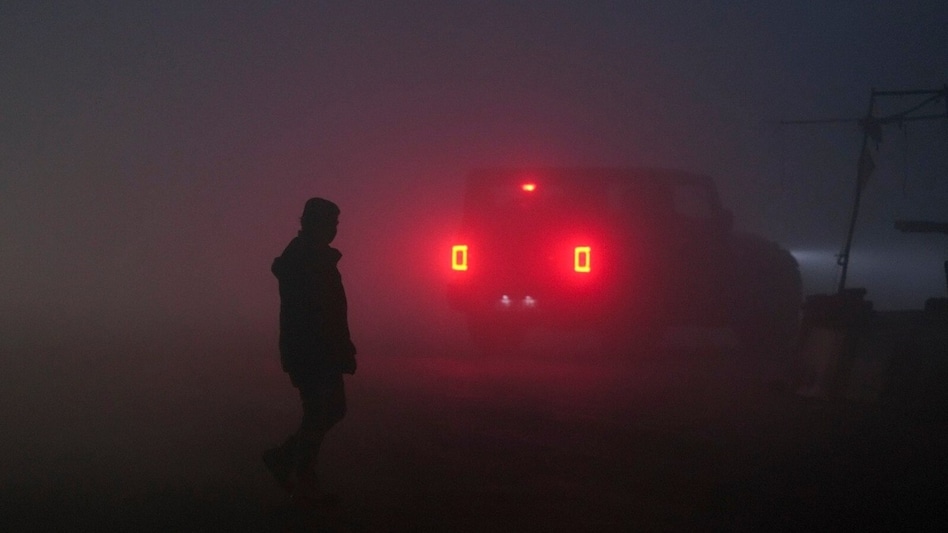
 Within Delhi, November was the most polluted month in 2025 for fine particulate matter.
 About two-thirds of Delhi's air pollution in 2025 came from outside the city, largely from nearby NCR areas and neighbouring states, news agency PTI reported, citing an analysis by the Centre for Research on Energy and Clean Air (CREA).
Data for the winter months showed that around 65% of Delhi's PM2.5 pollution originated outside the national capital, while about 35% came from sources within the city.

 HDFC Bank shares in focus: MD, CFO, Group Head fined in MSRDC case; warning letters issued
 'AI is a profound civilisational shift': N Chandrasekaran says software companies won't be left behind
 Parliament set for first major debate of Monsoon Session on Anti-paper leak bill; Here's what the bill proposes
 'Create jobs, do not replace them': Satya Nadella calls for community-first AI growth
 ITR filing last date July 31: Will the deadline be extended? Here’s what we know
 DCB Bank Management | Q1 Earnings, Loan Growth, Margins & Asset Quality Explained
 Infosys Fined In France: 70-Hour Work-week Debate Returns After €175,000 Labour Penalty
 I.T. Sector Outlook: Is the Worst Over for Indian I.T. Stocks After Long Underperformance?
 France And Spain Wildfires Threaten Cap Ferret Mansions And Bordeaux Wine Country
 Maruti Suzuki Eyes 25-30% SUV Growth, Says CNG Demand Has Overtaken Diesel
 BEL share price targets: What Jefferies, UBS, Goldman Sachs, Nomura, Morgan Stanley say
 Nifty, Sensex, Nifty Bank outlook for today: GIFT Nifty down 53 pts; key levels to watchHDFC Bank shares in focus: MD, CFO, Group Head fined in MSRDC case; warning letters issued
 Suzlon, Ambuja Cements, Radico Khaitan: Stocks to trade— Key levels, target, stop loss
 Top stocks in news: Meesho, IndiGo, Suzlon, Coal India, BEL, Tata Power, Adani Energy, TMPVBEL share price targets: What Jefferies, UBS, Goldman Sachs, Nomura, Morgan Stanley say
 Air India has made significant progress in the transformation journey: N Chandrasekaran
 CJP claims Centre assured no fresh cases against protesters after NEET paper leak stirITR filing last date July 31: Will the deadline be extended? Here’s what we know
 Samsung Galaxy Z Fold 8 First Impression: The foldable we've been waiting for?










