

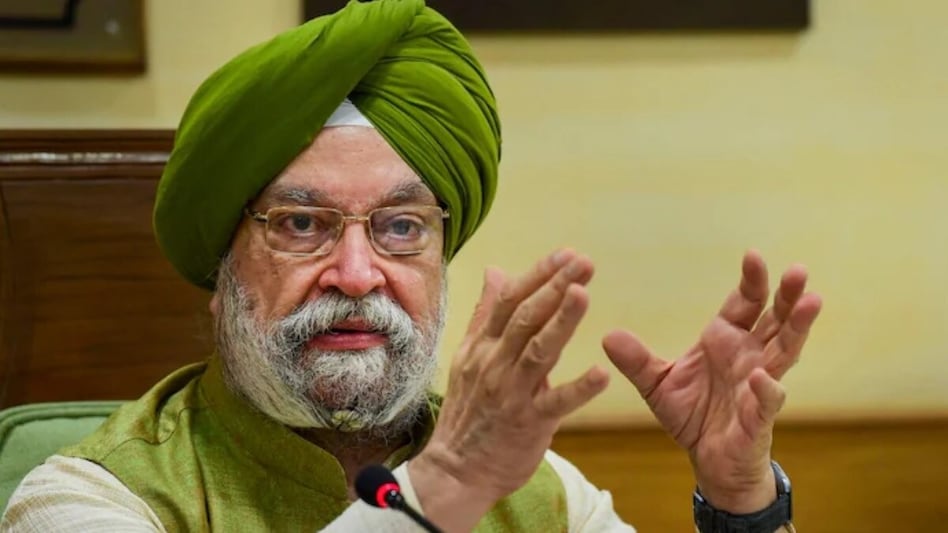
 Petroleum Minister Hardeep Singh Puri said on Thursday
India will increase its oil refining capacity from around 270 million metric tonnes per annum (MTPA) to 300 MTPA over the next six months to two years as several refinery projects come on stream, Petroleum Minister Hardeep Singh Puri said on Thursday.
Addressing a media briefing, Puri said the HPCL Rajasthan Refinery is the first greenfield refinery since Indian Oil Corporation's Paradip refinery and is being established after a gap of 10 years. The refinery will have 9 MMTPA refining capacity and 2.4 MMTPA petrochemical capacity.
 Hormuz crisis exposed world's energy weak spots: Why the next shock could hurt more
 Jaiprakash Power shares jumped 10% today; here's why
 Accel, Tiger Global-backed Moneyview IPO opens on Sept 24; check price band, size & all key details
  Surprise surge in Indian electronic exports to China, shipments rise nearly 40%: Report
 ‘India has to de-risk from both China and the US’: Sanjaya Baru on the country’s external dependencies
 Gold Price Target 2026: Expert Sees MCX Gold At ₹1.8 Lakh By Year-End Amid Strong Demand
 Health Insurance: Why Pre-Existing Diseases And Waiting Periods Matter For Buyers
 Crude Oil Above $100: How High Energy Prices And Rupee Weakness Impact Gold Prices In India
 CEA On India’s Manufacturing Rise, Atmanirbhar Bharat And Modi’s Economic Policy
 Health Insurance Buying Guide: 7 Things First-Time Buyers Must Check Before Choosing A Policy
 Infosys, Tech Mahindra, TCS, Wipro: Why IT shares are down in a rising market today
  NSE IPO closes today: 15 brokers say 'subscribe' as issue attracts 20.4 lakh applications
 Lenskart Solutions shares fall as 2% equity change hands in block dealJaiprakash Power shares jumped 10% today; here's why
 SS Retail IPO: How to check allotment status on BSE, NSE & Kfin; odds of getting shares & GMPInfosys, Tech Mahindra, TCS, Wipro: Why IT shares are down in a rising market today
  Box Office showdown: Mirzapur crosses ₹300 cr worldwide, but Hanuman Ansh rules as it nears ₹350 crNSE IPO closes today: 15 brokers say 'subscribe' as issue attracts 20.4 lakh applicationsLenskart Solutions shares fall as 2% equity change hands in block dealJaiprakash Power shares jumped 10% today; here's why












