


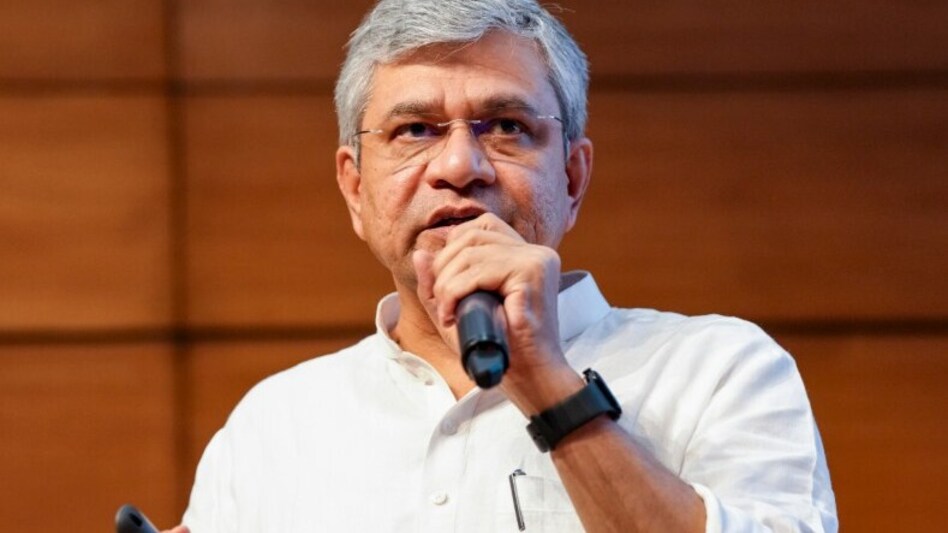
 The minister said the full chip ecosystem is now taking shape, with global equipment majors Applied Materials and Lam Research establishing design, production and validation operations in India.
Union Minister for Railways, Information and Broadcasting Ashwini Vaishnaw on Thursday accused the Congress of missing key chances to develop India’s semiconductor industry despite having the talent.
In a post on X (formerly Twitter), Vaishnaw cited two “missed opportunities” — Fairchild Semiconductor founder Robert Noyce’s 1964 visit, when the Congress-led government’s “licence-permit raj” stopped him from setting up a plant in India, and Intel’s 2005–06 proposal for a unit that was rejected due to “policy paralysis” under the UPA regime.

 NSE shares: RK Damani, Azim Premji, NRN, Dolly Khanna & others see fortunes rise as stock jumps 5%
 PB Fintech shares crash 28%: Why Policybazaar parent fell like deck of cards; 1.42 lakh retail investors hit; targets
 Insurance commissions may fall: What IRDAI’s new distribution rules mean for policyholders
 NSE adds Rs 22,000 crore to m-cap as stock rises 5% over issue price after listing
 BT Big Story: Is 66% = zero? The Tata Sons question on everyone’s minds
  NPCI MD Dilip Asbe Justifies UPI Charges, Says The Money Is Need To Fund Ecosystem Growth
 AI Safety Crisis: Why Tech Leaders Want Frontier Models Slowed Down
 Delhi Shalimar Bagh Mosque Demolition Triggers Political Row Over Midnight Road-Widening Drive
  Student Housing Faces A Major Shift: Why Organised Campus Accommodation Could Grow
  Ground Report: Sleeper Buses Face Safety Questions After Greater Noida Fire Tragedy
 What triggered PB Fintech’s 20% fall even as it bets big on health, pension expansionNSE shares: RK Damani, Azim Premji, NRN, Dolly Khanna & others see fortunes rise as stock jumps 5%
 JM Financial flags Irdai insurance reforms; L&T Finance, Axis Bank, Bajaj Finance among stocks in focus
 Genesys International shares rise 7% Rs 283-crore Ahmedabad digital twin contract win
 NSE stock listing a multi-year opportunity in capital markets: Emkay Global
 Meet Abhay Karandikar: From IIT professor to NITI Aayog member & the researcher behind India’s 5G and 6G journeyNPCI MD Dilip Asbe Justifies UPI Charges, Says The Money Is Need To Fund Ecosystem GrowthAI Safety Crisis: Why Tech Leaders Want Frontier Models Slowed DownWhat triggered PB Fintech’s 20% fall even as it bets big on health, pension expansionNSE shares: RK Damani, Azim Premji, NRN, Dolly Khanna & others see fortunes rise as stock jumps 5%












