India became independent from British rule on August 15, 1947. But independence did not immediately make the country a republic. For nearly three years, India continued to operate under the Government of India Act, 1935, while the Constituent Assembly worked on a new Constitution.
That Constitution came into force on January 26, 1950. On that day, India formally became a sovereign democratic republic, and Dr Rajendra Prasad became the country's first President.
MUST READ | Republic Day vs Independence Day: Why Jan 26 gets the grander celebration than Aug 15
The date itself was chosen for a historical reason.
On January 26, 1930, the Indian National Congress had observed Purna Swaraj (complete independence) Day, declaring complete independence from British rule as its political goal. Choosing January 26 for the Constitution's commencement therefore connected the new republic to the freedom movement's earlier demand for full independence.
Why August 15 is not India's Republic Day
August 15 marks the moment India became independent from British rule.
January 26 marks something different: the moment India adopted its own Constitution and established the constitutional framework under which the country would be governed.
In simple terms:
- August 15, 1947 = India became independent.
- January 26, 1950 = India became a republic under its own Constitution.
That distinction explains why India has two major national days with very different historical meanings.
But the US is already a republic
The United States followed a different path. The country declared independence from Britain on July 4, 1776. The American Revolution subsequently produced a constitutional system in which the head of state was not a monarch but an elected president.
DO CHECKOUT | Independence Day 2026: PM Modi unveils Sapt Dhara roadmap for Viksit Bharat. What it means, list of sectors it focuses on
The US Constitution was adopted in 1787 and came into effect in 1789. George Washington became the first US president that year. So, the United States did not experience the same transition India did in 1950 — from independence under an existing legal framework to becoming a republic under a newly adopted Constitution.
Instead, the American national calendar developed around Independence Day on July 4, which commemorates the Declaration of Independence.
Why doesn't America have a Republic Day?
The simplest answer is that the US does not need a separate national holiday to mark the establishment of its republican system. The country's most important founding milestones overlap much more closely with its independence and constitutional history.
July 4 celebrates the break from British rule. The Constitution and presidency that followed established the federal republic, but there is no single date equivalent to India's January 26 that Americans traditionally regard as the moment the country “became a republic”.
DON'T MISS | Nehru, Mountbatten & astrology: Why India got freedom on August 15 midnight
The American political system also developed gradually through the Revolution, the Articles of Confederation and eventually the Constitution, rather than through a single post-independence constitutional transition comparable to India's.
India and US: Two different constitutional journeys
There is another important difference. India inherited a constitutional and administrative framework from British rule and then spent nearly three years drafting and adopting its own Constitution. The Constitution transformed the country's legal and political structure when it came into force in 1950.
The US, meanwhile, created its federal constitutional system during the country's founding period, with the Constitution becoming the foundation of the new federal government soon after independence.
So, does the US celebrate becoming a republic? Not in the same way India does.
FIND OUT | Is it the 79th or 80th Independence Day? Clearing up the Independence Day math
Americans certainly celebrate the country's constitutional system, democratic institutions and founding principles. But these are woven into broader commemorations of American independence and the nation's founding rather than concentrated into a holiday called “Republic Day”.
That is why January 26 has a uniquely important place in India's national calendar. It does not simply commemorate freedom from colonial rule. It marks the day India gave itself a Constitution and formally became a republic.
For the US, the story is different: July 4 remains the defining national celebration because American independence is the central founding milestone around which the country's national identity and historical calendar developed.



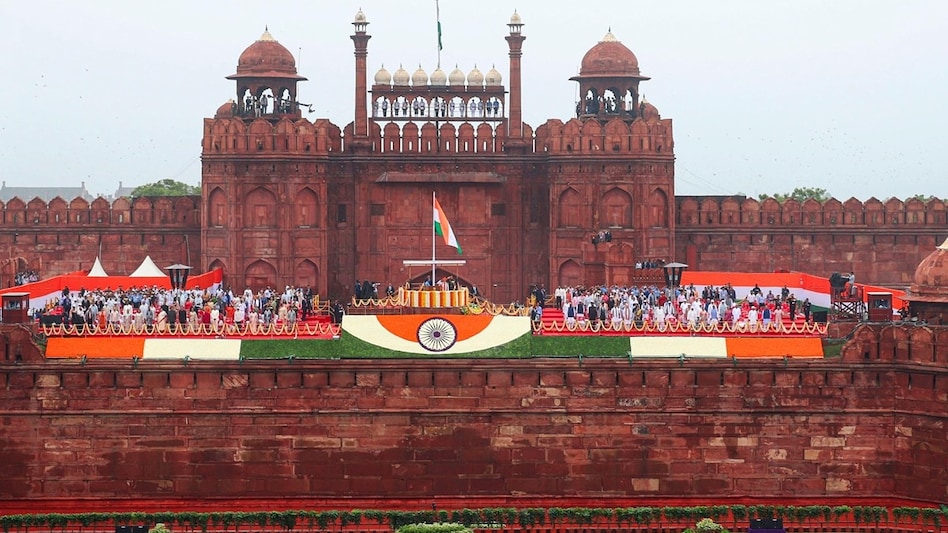 January 26 has a uniquely important place in India's national calendar. It marks the day India gave itself a Constitution and formally became a republic.
 BRICS must remove top 10 trade barriers, secure sea routes for seamless trade, says PM Modi
  NSE's selling shareholders set to rake in bonanza amid a weak broader market
 Solar scale must now give way to resilient grids, storage and finance: Prahlad Joshi
 Apple launches AppleCare One: Includes one plan, six people, and multiple Apple devices
 RBI’s record forex deposit drive to generate additional income, says Governor Sanjay Malhotra
  Market Commentary: Arun Kejriwal On Nifty, Stocks & The Next Big Move
 Gadkari: FASTag Is More Than Toll Payment, It’s Digital Mobility Infrastructure
 Russia Eyes Bigger India Investments: Sberbank CEO Herman Gref On The Next 2-3 Years
 India’s Cybersecurity Is Still In The Awareness Phase?
 Modi-Putin Meet: Trade Deficit, Defence And The Next Phase Of India-Russia Ties In Focus
 Milky Mist shares hit 5% upper circuit; here's what analysts say
 Sensex, Nifty settle lower but recover sharply from intraday lows; here's why
 Quantum AMC bets on cash logistics revival as consolidation boosts pricing power
 Paytm shares hit 52-week high; brokerage expects stock to cross IPO price
  BRICS has 11 members and a queue of 30-plus more. Here's who's most likely to join next
 BRICS isn't launching a new currency this weekend — here's what "de-dollarisation" actually means
 BRICS Summit 2026: PM Modi joins leaders, business representatives for key family photograph in Business Forum
  How IRCTC pulled a record 2 million train ticket booking on a single day












