


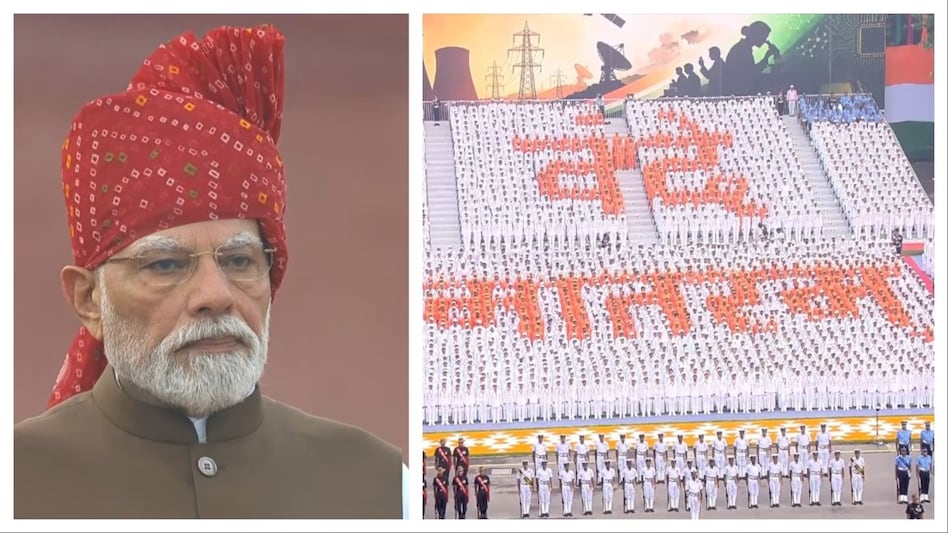
 Vande Mataram on Independence Day
For the first time in the history of Independence Day celebrations at the Red Fort, ‘Vande Mataram’ was rendered before the national anthem, giving the national song a prominent place in the country’s biggest annual patriotic ceremony. The moment came on August 15 as India marked its Independence Day and commemorated 150 years of ‘Vande Mataram’, the song that became one of the defining symbols of the freedom struggle.
Prime Minister Narendra Modi led the Independence Day celebrations at the Red Fort amid patriotic fervour and tight security. An Army band played the tune of ‘Vande Mataram’, with guests joining in the singing. The performance was followed by the hoisting of the national flag and the recitation of the national anthem.

 NSE IPO: NSE to become 7th most valuable exchange, 3 times BSE’s mcap
 BRICS nations must open markets for each other’s products, ease up clearances: Piyush Goyal
  ‘Forget BRICS, look towards the US and Europe’: Surjit Bhalla questions how the bloc has benefitted India
 BRICS Summit 2026: A quick guide to the most powerful leaders in town
 BRICS Summit 2026: Menu to be millet-forward, focus on local products, say sous-chefs
 From Galwan To Handshake: Can Modi-Xi Finally Reset India-China Ties At BRICS Summit?
 Perfios’ Big Bets On AI, Digital Lending & The Future Of Fintech
 Visa Showcases The Future Of Digital Payments
 BRICS Business Summit: S Jaishankar Says Self-Reliance Will Boost Economy And Security
 BRICS Summit: Can India Turn The Global South Into A Stronger Voice?
 Vikram Solar shares gain on 124 MW Andhra Pradesh module supply order
 Consumer stocks: Systematix stays cautious on ITC shares; prefers Marico, Bikaji Foods, Dodla Dairy
 BSE shares drop 3% as NSE fixes IPO price band; here's why
 Cochin Shipyard shares slip over 9%, here's why
  Wipro shares in a multi-month downtrend; price targets, resistance and support levelsBRICS Summit 2026: Menu to be millet-forward, focus on local products, say sous-chefs
 From NRE accounts to FPI and GIFT City: Rupeeflo expands digital infrastructure for overseas investorsFrom Galwan To Handshake: Can Modi-Xi Finally Reset India-China Ties At BRICS Summit?BRICS Summit 2026: A quick guide to the most powerful leaders in town
 Strongest El Niño since 1950? US climate centre gives 75% chance of historic event












