


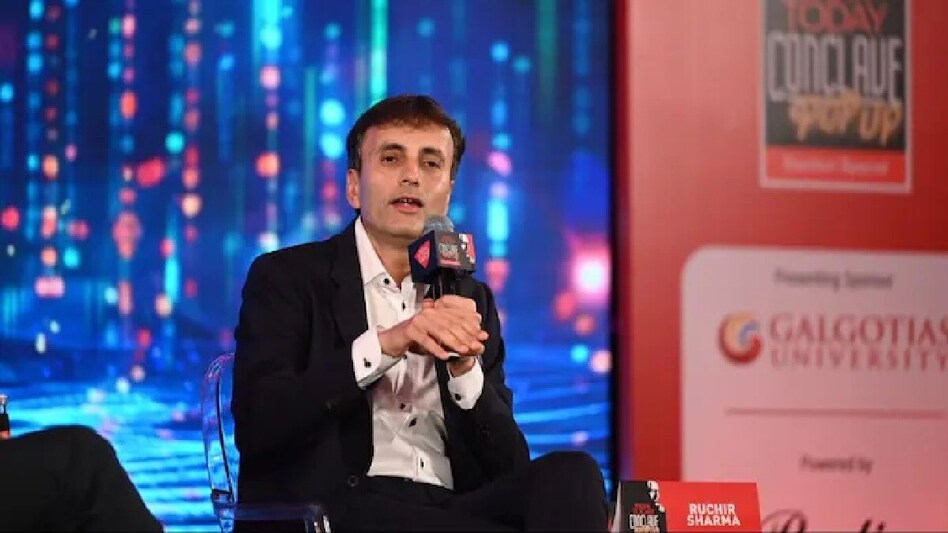
 Economist and investor Ruchir Sharma
Economist and investor Ruchir Sharma has argued that India will not achieve the kind of sustained, high growth rates seen in East Asia, calling 6 per cent a more realistic long-term benchmark for the economy.
"Why India will never achieve a growth rate like China of 9 or 10%...we have all now reconciled to the fact that we are a 6%-type economy. The ambition of growing at 9, 10% doesn't even exist anymore," Sharma told Zerodha's Nikhil Kamath. "And partly it's because of the recognition that in a country like India, our society, or whether it's our politics, is never going to ever allow that sort of runaway growth to take place, which requires very little welfare and very little protection from what's happening internationally."

 Mahindra takes battery-as-a-service to entire electric SUV line-up
 Closing Auction Session: Why the system expected to reduce volatility is still seeing occasional wild swings
 Reliance Industries denies Subhash Chandra’s media allegations
 Silver may be cheaper than gold as 2026 draws to a close: Report
 India paid 29% more for cooking gas after Hormuz strikes: Report
 CMF Buds Neo Review | Tech Gear | Business Today
 Gen Z Is Changing Politics? D.K. Shivakumar On Youth Power & Rahul Gandhi’s Outreach
 Babita Singh Reporting, Part-Timers, Bandar & More: 5 OTT Releases To Watch This Weekend
 Using AI To Write? You Could Be Caught! Anthropic's Invisible Watermark Explained
 Shah Rukh, Salman & Madhuri-Backed Pernia’s Pop-Up Shop Parent Eyes ₹680 Cr IPO
 Jio Platforms IPO gets SEBI nod: Rs 27,500 crore debt repayment plan, $100 billion valuation in focusClosing Auction Session: Why the system expected to reduce volatility is still seeing occasional wild swings
 RIL-backed penny stock hits 52-week low; firm clarifies on high trading volume
 Happiest Minds shares slip despite IT stocks surge; here's what is weighing on the stock
 BEL, Solar Industries shares remain Nuvama's top defence picks; here's what it said on BDL, Data Patterns, HAL
 Special FD rates in August 2026: DCB Bank, Indian Bank, Federal Bank and Union Bank offer higher returnsCMF Buds Neo Review | Tech Gear | Business Today
 Ramayana timeline explained: Why the epic’s story, manuscripts and artworks may belong to different eras
 After 2024 bleaching: Super El Niño likely to push coral reefs closer to the brink
 ITR-3 vs ITR-4: Which income tax return form should freelancers, traders and business owners use?












