









 India has naturally positioned itself in the global arms market

 India has naturally positioned itself in the global arms market
India's indigenous weapon systems are gaining global traction for being cost-effective and reliable, experts from Taiwan said in an interview just days before Operation Sindoor showed their performance in live combat with Pakistan.
Speaking to Taiwan Talks, Dr Mumin Chen, associate professor at Taiwan's National Chung Hsing University, said: "India in the past did not want to sell weapons to other countries because of the ideology it had — non-violence, non-alignment. They saw that only the superpowers like the US and the Soviet Union sell weapons for profit. But this thinking changed recently because India thought that everybody was selling weapons and it also has its own defense industry and - we can also do that'."
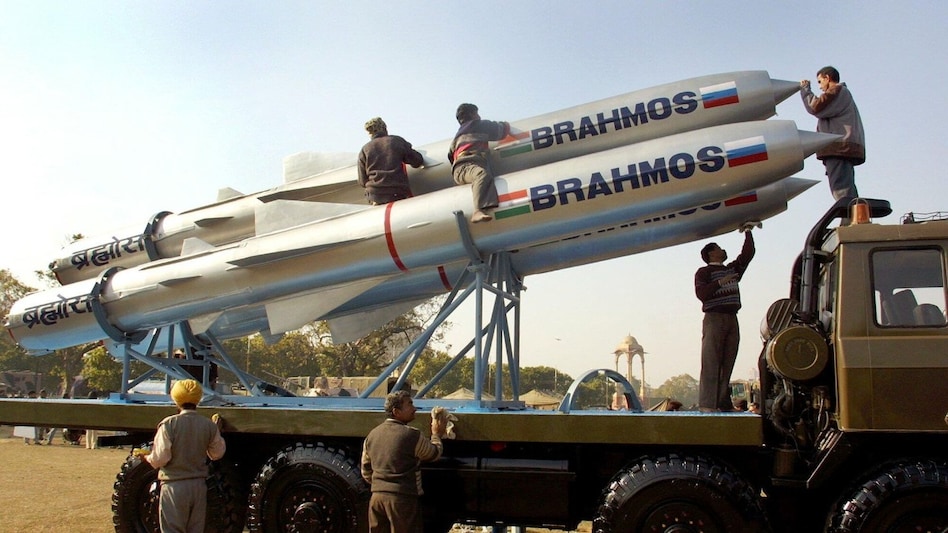
Chen noted that India's pricing and reliability are making it a preferred option for countries that cannot afford expensive Western systems. "India's weapon systems are attractive because of their price and also reliable, particularly the conventional arms. For countries that cannot afford very advanced, sophisticated systems, India became a good option. Recently, the Philippines purchased the BrahMos missile system from India — a big breakthrough," he said, adding that some African nations have also begun importing Indian defence equipment.
Alexander Huang, Chairman of the Council on Strategic & Wargaming Studies, said India has naturally positioned itself in the global arms market. "If you're selling arms, you can generate income and fund future R&D. It will help India a lot. Indian-produced weapons are more cost-effective. It's easier to do maintenance and cheaper."
Huang said that some countries cannot afford to have high-end weapon system or their threat would not require them to buy extremely expensive top cutting-edge weapon systems from the US. "So, India is situated or located itself in a nicely in part of that market. And, of course, there is plenty of room for India to expand its arms sales industry."
India has already set a target of Rs 50,000 crore in defence exports by 2029. In FY 2024–25 alone, India logged Rs 23,622 crore in arms exports, up 34-fold from 2013–14 levels. According to Dr Chen, this target is achievable. "India already has certain advantages in its defense industries. It purchased (weapons) from both the Soviet Union and the US. India is probably one of the very few countries in the world that could get technologies from both sides and then develop its own systems."
Chen pointed out that India now has an edge in "light arms, military trucks" and supplies mainly to "African countries, developing countries in the Middle East", where budget-conscious buyers need reliable systems without geopolitical strings.
These remarks came just weeks before India's Operation Sindoor, a four-day conflict with Pakistan. During the operation, India's indigenous air defence and strike systems demonstrated exceptional performance, intercepting hundreds of Pakistani drones and missiles. Not a single Pakistani projectile hit its target.
According to US Army veteran John Spencer, Chair of Urban Warfare Studies at the Modern War Institute, India's Make in India push has transformed the country's defence landscape. From meeting 32% of the Army's ammunition needs domestically in 2014, India now meets 88%.
"From missiles like BrahMos and Pinaka to radars and artillery systems, Indian-made equipment proved itself in live combat," Spencer said. "That's not just a national achievement — it's a model of military readiness."
Pakistan, in contrast, relied on Chinese-made HQ-9/P, LY-80, and FM-90 systems, which failed to intercept Indian precision strikes. India's counter-strikes included Israeli-origin Harop drones (now produced in India), Akash SAMs, SCALP and HAMMER missiles from Rafales, and a robust Integrated Counter-UAS Grid. Pakistan's Chinese-built air defence units in Lahore and Chakrala were also destroyed.
On May 14, the Indian government said indigenous defence production hit Rs 1.27 lakh crore in FY 2023–24.
 Will Tata Sons stay private? RBI's latest circular raises fresh questions
 Centre likely to constitute high-level banking committee before Monsoon Session
 EPF Scheme 2026: Can ₹1,800 a month create a ₹19 lakh retirement fund?
 EPFO new rules 2026: Mandatory PF capped at ₹1,800; extra savings now voluntary
 Zepto IPO soon! Anand Rathi flags profitability risks despite growth potential, check unlisted share price
 Nirmal K Minda: India's EV Push Could Finally Reduce China Dependence
 U.S. Supreme Court Ruling On Birthright Citizenship: What It Means For Indians
 June Auto Sales Data: Winners And Looser | Top 2-Wheeler & 4-Wheeler Stocks To Buy
 LIVE Daily Calls: Ask Your STOCK MARKET TODAY QUERIES | Market Update LIVE | Share Market News Today
 Market Commentary LIVE: Gold, Silver & Crude Oil Outlook | Kunal Shah, Nirmal Bang
 This newly listed Vedanta demerged stock has rallied over 100% since its market debut; do you own it?Zepto IPO soon! Anand Rathi flags profitability risks despite growth potential, check unlisted share price
 Gujarat Energy, Latent View Analytics shares: Market expert shares outlook
  Coca-Cola eyes $1 billion IPO for Indian bottling arm, says report
 BEL, HFCL, Vedanta Iron: Should you buy, hold or sell these 3 stocks