








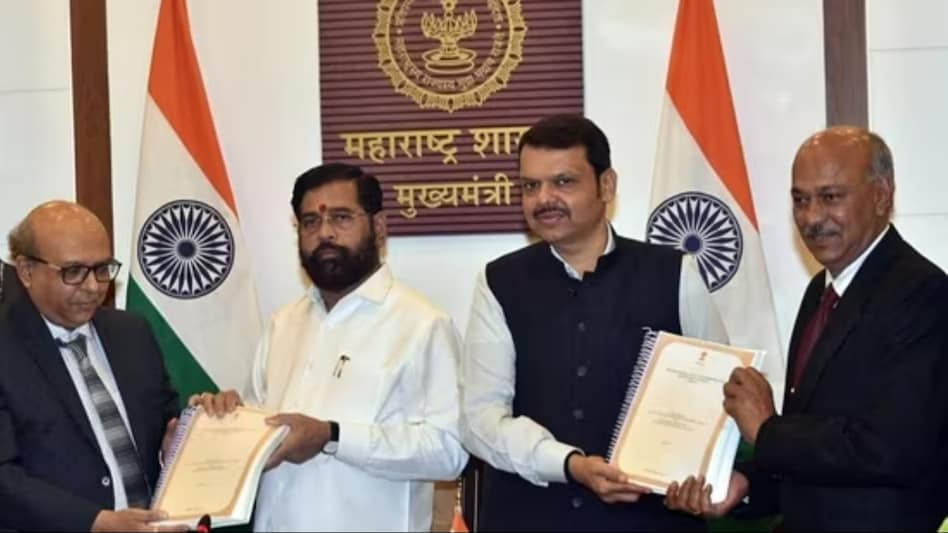
 The report has been prepared by the Maharashtra State Commission for Backward Classes (MSCBC).
 The report has been prepared by the Maharashtra State Commission for Backward Classes (MSCBC).
The Maharashtra Legislature passed a bill reserving 10% of the seats in educational institutions and the same proportion of government jobs for people from the Maratha community. On Tuesday, the Maharashtra Cabinet approved the report of the Maharashtra Backward Class Commission, which stated the Maratha community is a socially and educationally backward class.
This marks the third time in a decade that the Maratha quota bill has been passed by the state government, following its previous nullification by the Supreme Court on May 5, 2021.
The report, which was tabled on Tuesday, highlighted that the Maratha population in the state is 28%, of which 21.22% is living below the poverty line. The state average mentioned is 17.4%. It further advocated 10% reservation for Marathas in education and jobs by proving the backwardness of the community on social, educational, and economic grounds. The report has been prepared by the Maharashtra for Backward Class (SCMBC).
The report noted that the Maratha community should be specified as such under Article 342A (3) of the Constitution of India and reservations should be given to these classes under Article 15(4), 15(5) and Article 16(4).
The report also mentioned statistics on farmer suicides in the state. It revealed that 94 per cent of the individuals who committed suicides are from the Maratha community. The data indicated that the financial situation of the Maratha community has worsened as a result of diminishing profits from farming, division of land holdings, and the diminishing status linked to agriculture.
The report said the Maratha community faces "exceptional and extraordinary conditions" of backwardness, warranting reservation beyond the 50 per cent cap mandated for quotas. Citing the example of Tamil Nadu, where a 69 per cent reservation has been implemented, breaching the 50 per cent quota cap established by the Indra Sawhney ruling in 1993, the report demanded action for the Maratha community.
 US-Israel-Iran war LIVE Updates: Daily Swiggy, Zomato deliveries down to 5; gig workers fear COVID-like scenario
 Before missiles came Mossad: How Israel pulled off the biggest nuclear heist in Iran
 Commercial LPG shortage: HCLTech gives WFH option till March 13 as gas crunch disrupts office canteen
 BT EXPLAINED: How the West Asia war has threatened India's energy security
 Delhi-NCR sees 300% jump in induction cooktop sales, products sold out on Blinkit, Zepto, Swiggy Instamart
 Thai Cargo Ship Hit By Projectiles Near Strait Of Hormuz, India Condemns Attack
 Strait Of Hormuz Turns Warzone As Tankers Hit And US Warships Strike Iranian Boats
 West Asia War Forces India’s Strategic Reset As Govt Opens Door To Chinese Investments
 West Asia War Sparks Panic Buying In Chennai; Induction Stoves, Cookware Sold Out
 Russian Oil Twist: U.S. Calls India A “Good Actor” As Global Energy Crisis Deepens
 L&T, KEC, KPIL, NCC, PNC Infra may benefit as Rs 8.7 lakh crore Jal Jeevan Mission extended till 2028, says JM
 Borosil shares slide 7% as LPG crunch hits Jaipur plant production
 Adani Total Gas shares surge 33% in 3 days; analysts 'divided' on outlook
 Aarti Industries shares jump 6% after securing $150 million deal; key details
  Iran war: Stock investors pay Rs 23,00,000 crore price for a conflict far from home