


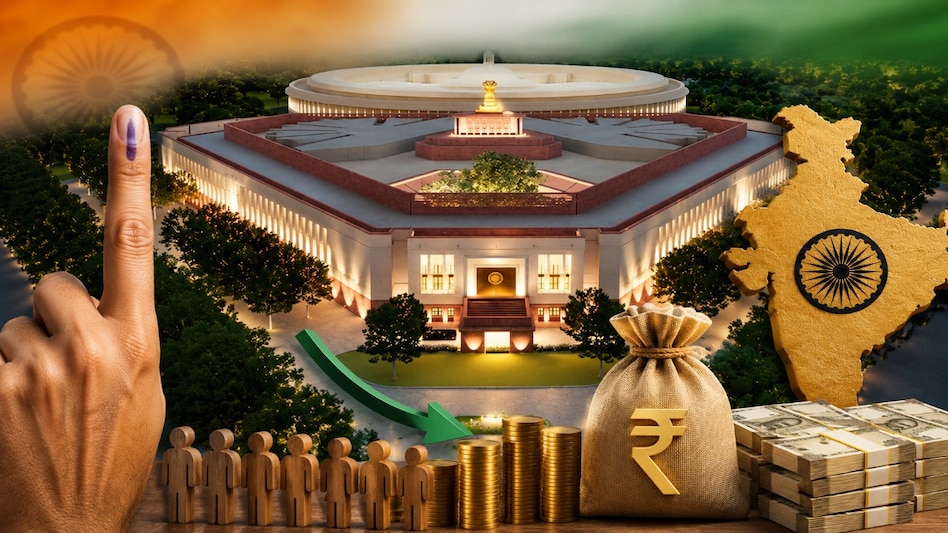
 ₹7 lakh crore at stake? JPC says simultaneous polls can transform India’s economy. (Pic: AI generated)
The Joint Parliamentary Committee (JPC) examining the One Nation, One Election proposal on Tuesday said simultaneous Lok Sabha and Assembly elections could save India ₹7 lakh crore and boost economic growth.
P P Chaudhary, chairman of the 41-member panel, said the money saved from conducting simultaneous elections could be redirected toward infrastructure, healthcare, education and welfare programmes.
FAQs
What is the main claim made by the JPC on the One Nation, One Election proposal?
The Joint Parliamentary Committee has said that holding Lok Sabha and Assembly elections together could save India around Rs 7 lakh crore and improve governance efficiency.
How could the money saved from simultaneous elections be used?
According to JPC chairman P P Chaudhary, the savings could be diverted to infrastructure, healthcare, education, welfare schemes and other public welfare works.
What economic benefit did the committee mention apart from cost savings?
Chaudhary said economists told the committee that simultaneous elections could raise India’s GDP by about 1.6 per cent.
What bills is the parliamentary panel currently examining?
The committee is reviewing the Constitution (129th Amendment) Bill and the Union Territories Laws (Amendment) Bill as part of its study of the One Nation, One Election proposal.
Why does the JPC say One Nation, One Election is important for India?
The panel believes it can reduce the cycle of frequent elections, cut administrative disruption and give governments more time to focus on development, poverty reduction, education, healthcare and national progress.

 India now stands at a pivotal moment in its developmental journey, says Shaktikanta Das
 China is both a model and a warning for India's chip ambitions: US professor on what New Delhi should do
 FPI outflows have nothing to do with their belief in India growth story: Neelkanth Mishra
 DLF sells out Gurugram luxury retirement project The Aureva for ₹1,985 crore
 'Had 1 last fight left': Captain Smit Machchhar recalls cockpit attack on Flydubai flight
 Gold Vs Silver: Which Should Investors Buy? Ajay Kedia Shares His 70:30 split Strategy
 Can You Sell Bonds Before Maturity? Liquidity, Exit & Penalties Explained
 Bonds Vs FDs: Are Bonds A Better Alternative For Higher Returns? Risks Explained
 Should You Buy Gold Now? Festive and Wedding Season Strategy Explained
 Direct Vs Regular Mutual Funds: Why the Right Advisor May Matter More Than 1% Cost
 Nvidia shares approach record high as AI optimism revives investor demand
 Sebi receives 20,000 comments on proposed CAS changes; framework to follow soon
 Stock market sell-off: Nifty, Sensex log 8th straight weekly loss; key levels & top triggers now
 IPO boom: 69 Indian companies raise Rs 90,500 crore in Q3 despite stock market sell-off; what's next
 TCS, Infosys, HCL Tech, TechM, Wipro, LTM, Coforge, HEXT: Fresh target, Q2 previews for IT stocks
 'Russia stood by us when...': EAM Jaishankar explains why India's ties with Moscow endure
 Man watches Drishyam 3 in Surat, travels 2,000 km to Bihar and kills fatherIndia now stands at a pivotal moment in its developmental journey, says Shaktikanta DasGold Vs Silver: Which Should Investors Buy? Ajay Kedia Shares His 70:30 split StrategyDLF sells out Gurugram luxury retirement project The Aureva for ₹1,985 crore












