


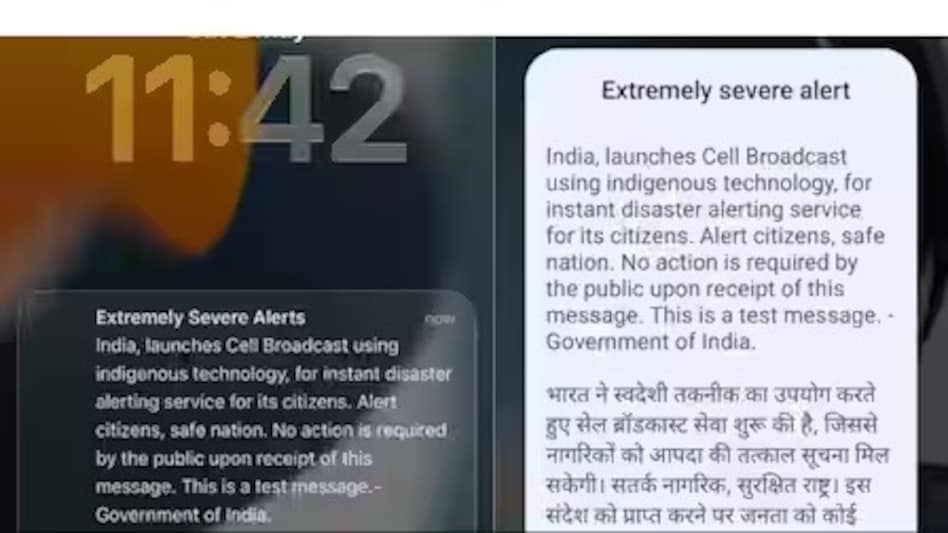
 Launched in May by the Government of India, the Cell Broadcast System was touted as a massive infrastructure upgrade for critical, geo-targeted disaster communication.
 A nationwide disaster alert system designed to scream through silent modes and wake millions in real-time has been temporarily put on hold over technical issues.
Just a month after its high-profile rollout, India has suspended its newly launched Cell Broadcast System (CBS) following a string of midnight alerts that allegedly reached the highest offices in the country. The National Disaster Management Authority (NDMA) issued an order on June 12 freezing the nationwide emergency alert service until further notice, citing "issues flagged by competent authorities."

 NSE IPO update: SEBI approval likely next week; Check expected dates of price band and listing
 SEBI begins hearings to recover gains linked to Adani-Hindenburg trades: Report
 Sensex, Nifty snap four sessions of losing streak; RIL, Tata Steel, Bajaj Finance boost sentiment
  7.8% GDP row: ‘Need to compare apples to apples, not apples to oranges,’ says MoSPI Secretary
 ₹10 lakh crore liquidity surplus: Why FCNR-B inflows could push bank funding costs lower, says Jefferies
 Financial Planning For Couples: How To Build A Strong Financial Plan, Budget & Wealth Together
 “High Sugar, Salt, Fat”: FSSAI CEO On Proposed Red Warning Labels On Food Packs
 How Many Mutual Funds Should You Own? Expert Recommends 4-5 Equity Funds
 Pakistan’s Mohsin Naqvi: The Civilian Power Broker Linked To Asim Munir’s Rise
 Olectra Greentech’s 8,500+ Bus Order Book; Why Electric Trucks Could Be Its Next Growth Engine
 56% rally in TBZ stock: Upper circuit led to record high today; here's why Sensex, Nifty snap four sessions of losing streak; RIL, Tata Steel, Bajaj Finance boost sentiment
  Physicswallah shares jump 9% as Motilal Oswal sees 66% upside
 KEC International: At 52-week low, Geojit expects more downside in infra stockNSE IPO update: SEBI approval likely next week; Check expected dates of price band and listing
 BT Explainer: Why Volkswagen Group plans to axe 12% of its workforce in IndiaFinancial Planning For Couples: How To Build A Strong Financial Plan, Budget & Wealth Together
 Why Zerodha Fund House is bullish on life cycle funds
 EPF interest after leaving job: Will your provident fund balance keep earning until 58?
 Activist Swatantra Bhardwaj detained in UP as Jantar Mantar assault case intensifies












