Mindgrove, one of India’s emerging fabless semiconductor startups, is building indigenous system-on-chip products for IoT and edge AI applications at a time when the government is pushing to create a domestic semiconductor ecosystem.
Must read: India’s semiconductor moment is bigger than outsourcing: UST COO Gilroy Mathew
The company’s Secure IoT chip, S2401, is expected to be rolled out by the end of this year, while its Vision SoC, V2600, is expected by the end of next year.
The first chip is aimed at use cases such as smart meters, wearables and access control systems, while the Vision SoC will target applications including CCTV cameras, dashcams, advanced driver assistance systems and smart TVs.
Moving from services to products
India has long been strong in semiconductor design services, but has had fewer companies that own products and intellectual property. Shashwath said this needs to change if India wants to build globally competitive chip companies.
“Product thinking, the ability to conceptualise a product and engage with the users, is an ecosystem-level skill we need to build,” he said. “Patient capital, product thought and anchor customers separate product nations from service nations.”
According to him, India’s semiconductor opportunity will depend not just on talent, but also on whether investors, customers and the wider ecosystem are willing to back companies through long development cycles.
Building Indian IP
Mindgrove says its chip architecture, security subsystem and integration work are built in India, based on the Shakti core from IIT Madras.
Must read: India’s AI-first GCCs are reshaping global enterprise strategy: Nasscom’s Rajesh Nambiar
“The Shakti core, chip architecture, security subsystem, and integration work are entirely ours, based on initial open-source design done at IIT Madras,” Shashwath told Business Today. “Design intelligence sits in India.”
He added that the company continues to depend on large global foundries for fabrication, which is common for fabless semiconductor companies globally.
“Fabrication at large foundries is standard for every fabless company globally,” he said. “Each successive chip deepens our indigenisation. We’re also targeting domestic fabs as India’s manufacturing ecosystem matures.”
Trusted silicon demand
The push for domestic chips is also being shaped by geopolitics, especially as governments and enterprises become more careful about where electronics components are designed and manufactured.
Shashwath said customer conversations have changed in recent years. “Customers now ask where the chip was designed, who owns the IP, and about foreign dependencies,” he said. “This spans government procurement and critical infrastructure.”
Must read: Anthropic Claude Fable 5 ban explained: Why US government restricted access for new AI models
He said Mindgrove’s ownership of its design and IP gives it an advantage as electronics procurement becomes more security-driven.
“Our design, security architecture, and IP are entirely ours,” he said. “That’s a structural advantage as geopolitical pressure on electronics increases.”
Competing with global players
Mindgrove’s first chip will compete in markets already served by low-cost Chinese and Taiwanese chips. Shashwath said cost can help bring customers in, but the company’s bigger edge is its ability to work closely with original equipment manufacturers.
“Cost gets OEMs to the table, but access to our design team keeps them,” he said. “We customise and co-develop in ways global vendors won’t for mid-sized customers.”
“For smart meters and access control, that combination at our price point is genuinely rare globally,” he added.
Why RISC-V matters
Mindgrove has built its chip on RISC-V, an open-source instruction set architecture, instead of ARM. Shashwath said the choice was both technical and strategic.
“ARM requires licensing, restricts customisation, and creates foreign dependency,” he said. “RISC-V is open, royalty-free, and solves all three problems.”
Must read: 'Human capital is...': Satya Nadella says AI success will hinge on ecosystems, not frontier models
“For India to achieve chip sovereignty, we need an open foundation,” he added. “We build on Shakti from IIT Madras. Choosing RISC-V is a statement about what kind of company we want to build.”
Mindgrove is also betting on edge AI, where AI processing happens on devices such as cameras, wearables and IoT systems instead of being sent to the cloud.
“For many applications, edge inference is already more important than cloud AI,” Shashwath said. “Latency, privacy, connectivity costs, and reliability push intelligence to the edge.”
He said India has a large opportunity in this market because many devices currently depend on imported chips.
“Our Vision SoC addresses CCTV, dashcams, ADAS, and smart TVs,” he said. “India has hundreds of millions of these devices running foreign chips. That value is enormous.”
Fundraising harder than software
While semiconductor startups are attracting more attention in India, Shashwath said fundraising remains harder than in software because chip companies need more capital upfront and take longer to generate revenue.
“Semiconductor fundraising in India is genuinely harder than software,” he told Business Today. “Longer timelines, front-loaded capital, and most investors lack technical vocabulary.”
Mindgrove has raised capital from investors including Peak XV, Speciale Invest, Whiteboard Capital, Rocketship and Mela Ventures. Shashwath said the company found investors who understood the complexity of the business.
“We found investors who did their homework: Peak XV, Speciale Invest, Whiteboard Capital,” he said. “Series A from Rocketship, Speciale and Mela brought global credibility.”
Must read: From Nice to Paris, PM Modi's France visit puts India's deeptech ambitions in focus at Bharat Innovates and VivaTech
On talent, however, he said India has the required capability.
“Talent has never been a problem for us, it exists but needs a mission worth believing in and we find that the mission we articulate resonates with those who want to work with us,” he said.
AI in chip design
Shashwath said that the company uses AI in parts of the chip design workflow, including verification and design checks.
“AI is already embedded in our workflow for verification, design rule checking, and timing closure,” Shashwath said. “These consume enormous engineering hours.”
He said AI can help small teams move faster, but it will not replace core design judgment.
“For startups, a lean team can do what previously required many more people,” he said. “That changes the capital equation. But AI won’t replace architectural judgment or strategic decisions about chip design.”



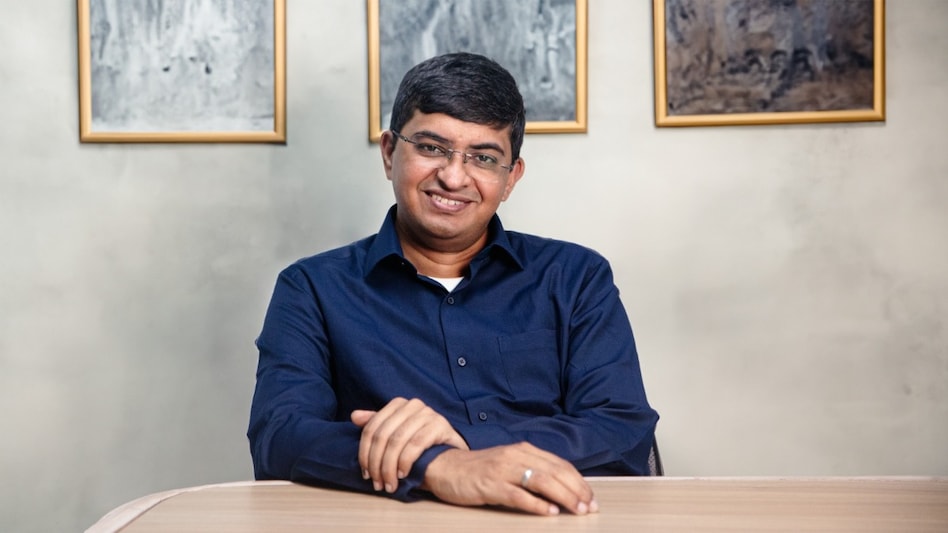 Shashwath TR, cofounder and CEO of Mindgrove Technologies
 Why Zerodha Fund House is bullish on life cycle funds
 Air India sacks Phuket-Delhi pilot after psychoactive substance test comes back positive
 BT Explainer: Why Volkswagen Group plans to axe 12% of its workforce in India
 NSE IPO update: SEBI approval likely next week; Check expected dates of price band and listing
 EPF interest after leaving job: Will your provident fund balance keep earning until 58?
 #DemocraticNewsroom | '800 Million People On Subsidies': Siddharth Zarabi On India’s K-Shaped Economy
 #DemocraticNewsroom | India Inflation Data: Are Official Numbers Hiding The Real Economic Picture?
 GDP Real Or Fudged? Siddharth Zarabi Defends India’s Growth Numbers With Data
 Financial Planning For Couples: How To Build A Strong Financial Plan, Budget & Wealth Together
 “High Sugar, Salt, Fat”: FSSAI CEO On Proposed Red Warning Labels On Food Packs
 56% rally in TBZ stock: Upper circuit led to record high today; here's why
  Sensex, Nifty snap four sessions of losing streak; RIL, Tata Steel, Bajaj Finance boost sentiment
  Physicswallah shares jump 9% as Motilal Oswal sees 66% upside
 KEC International: At 52-week low, Geojit expects more downside in infra stock
 PM Modi congratulates ‘friend’ Meloni as she becomes Italy’s longest-serving PM
 Ex-IMF economist Surjit Bhalla backs 7.8% GDP number: 'No evidence of exaggeration'
 Trishuli Rescue: Stranded Nepal Residents Evacuated Across Rope Bridges After Floods
 Exclusive: Actor Sonu Sood Reaches Flood-Hit Nepal, Urges People To Step Up Relief Efforts
 Nainital: Shipra River Swells Near Kainchi Dham After Heavy Rain, Raising Flood Concerns












