


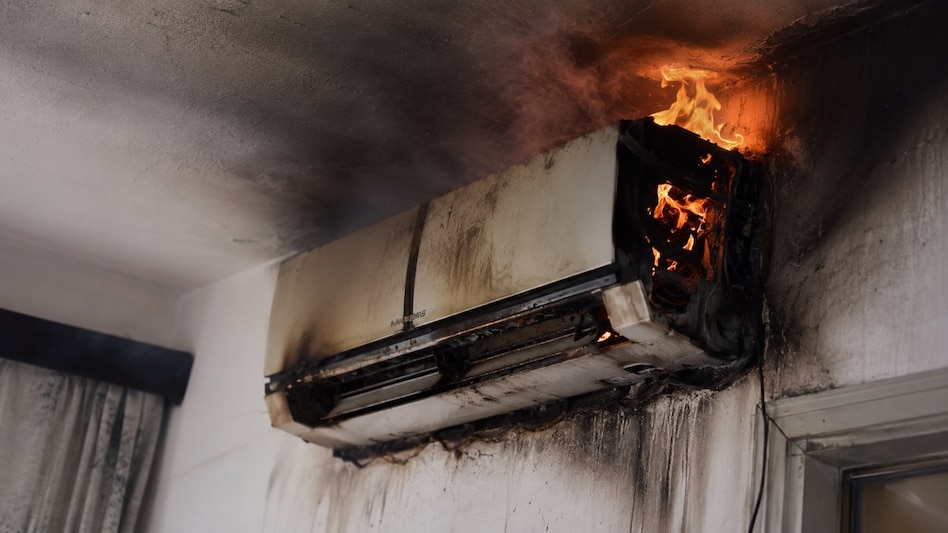
 The fire remained confined to the flat, though smoke spread up to two floors above.
A suspected air-conditioner blast sparked a fire in a 21st-floor flat in Noida's Sector 119 on Monday, once again raising concerns about fire safety in high-rise buildings.
Six fire tenders and 15-20 firefighters were deployed, and the family escaped unhurt after noticing the blaze, which was contained within 30 minutes. The fire remained confined to the flat, though smoke spread up to two floors above.

 Meta's 'technical glitch' removes PM Modi post from Facebook; Officials likely to be summoned
 HDFC Bank shares in focus: MD, CFO, Group Head fined in MSRDC case; warning letters issued
 From Aadhaar to UPI: Why Nandan Nilekani remains India's go-to architect for nation-scale reforms
 E20 row: Nitin Gadkari seeks ₹11 crore in damages over abusive posts, AI deepfakes
 Seven years in US could mean a green card under new bill: Indians stuck in H-1B backlog may benefit most, here's how
 DCB Bank Management | Q1 Earnings, Loan Growth, Margins & Asset Quality Explained
 Infosys Fined In France: 70-Hour Work-week Debate Returns After €175,000 Labour Penalty
 I.T. Sector Outlook: Is the Worst Over for Indian I.T. Stocks After Long Underperformance?
 France And Spain Wildfires Threaten Cap Ferret Mansions And Bordeaux Wine Country
 Maruti Suzuki Eyes 25-30% SUV Growth, Says CNG Demand Has Overtaken Diesel
 Chipmaker CXMT shares soar 466% in Shanghai debut, becomes China's most valuable listed co
 Infosys, RIL shares face weight cuts by Kotak; Eternal, IndiGo, SHFL get a lift
 Xtranet Technologies IPO allotment: Check application status, latest GMP & listing date
 Indo-MIM IPO allotment: Step-by-step guide to check status, fresh GMP, listing date & more
 Hindustan Unilever shares slip after Q1 profit declines 4% YoY; revenue rises 10%Chipmaker CXMT shares soar 466% in Shanghai debut, becomes China's most valuable listed coSeven years in US could mean a green card under new bill: Indians stuck in H-1B backlog may benefit most, here's how
 Vivo S2 launching in India soon: Official teaser hints at imminent launch, camera design
 Govt plans 44 airports with Hub and Spoke flights: What does it mean for air travellers?Infosys, RIL shares face weight cuts by Kotak; Eternal, IndiGo, SHFL get a lift










