


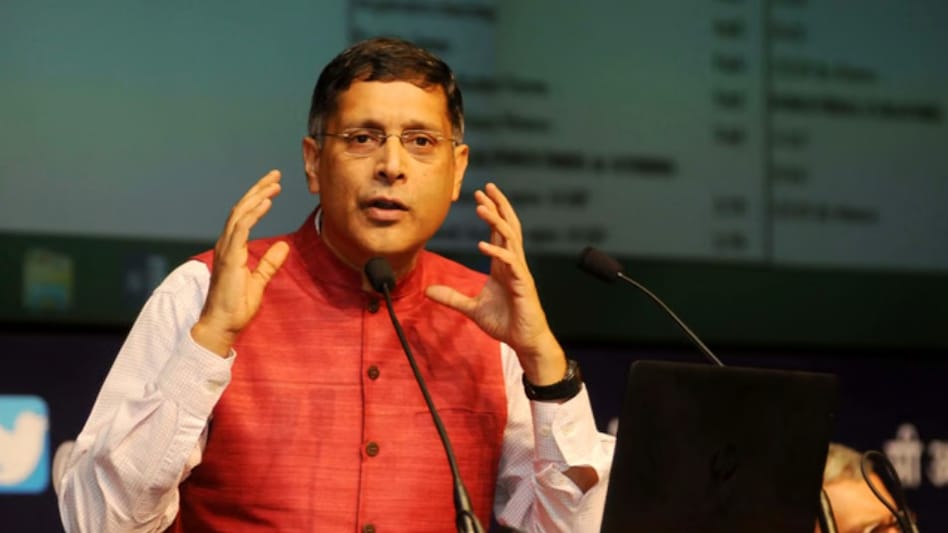
 Former Chief Economic Advisor (CEA) Arvind Subramanian
Former Chief Economic Advisor (CEA) Arvind Subramanian has cast doubt on India's ability to achieve its 2047 "Viksit Bharat" goal, arguing that the economic math simply does not add up. "You can't escape the tyranny of arithmetic. And the arithmetic is very simple — today our per capita GDP is about $2,500 in market exchange rate terms. To become a developed economy, it needs to become $12,500 — a fivefold increase in per capita GDP over 22 years. That requires growth rates of magnitudes that we have never seen historically in India for that period of time," Subramanian said in an interview with Karan Thapar for The Wire.
He noted that India would need to sustain 7-8% growth consistently for the next 25 years, something the country has never done before. "We've had one bout of similar rates of growth. So, I'm talking about something like 7 to 8% growth consistently for the next 25 years to reach that 'Viksit Bharat' target —maybe a little bit more. And we've never been able to do that."

 Closing Auction Session: Why the system expected to reduce volatility is still seeing occasional wild swings
 Silver may be cheaper than gold as 2026 draws to a close: Report
 India paid 29% more for cooking gas after Hormuz strikes: Report
 Nepal faces years-long rebuild and $5 billion bill after devastating flash floods, says billionaire
  Noel Tata, Shapoorji Pallonji negotiate share swap for 18.4% Tata Sons holding: Report
 Debt Mutual Funds Or Bonds? Understanding Liquidity, Diversification & Risk
 Reasons Why Arvind Could Be A Big Winner In India’s Textile Sector
 “Analogue Paneer Isn’t Fake”: Sanjeev Kapoor On FSSAI Rules & What Consumers Must Know
 PSU Banks Vs Private Banks: Why Investors Are Betting Big On PSU Bank ETFs
 EV Insurance Explained: Battery Damage, Repairs & Insurance Coverage | Personal Finance
 Jio Platforms IPO gets SEBI nod: Rs 27,500 crore debt repayment plan, $100 billion valuation in focusClosing Auction Session: Why the system expected to reduce volatility is still seeing occasional wild swings
 RIL-backed penny stock hits 52-week low; firm clarifies on high trading volume
 Happiest Minds shares slip despite IT stocks surge; here's what is weighing on the stock
 BEL, Solar Industries shares remain Nuvama's top defence picks; here's what it said on BDL, Data Patterns, HALJio Platforms IPO gets SEBI nod: Rs 27,500 crore debt repayment plan, $100 billion valuation in focusClosing Auction Session: Why the system expected to reduce volatility is still seeing occasional wild swingsSilver may be cheaper than gold as 2026 draws to a close: ReportDebt Mutual Funds Or Bonds? Understanding Liquidity, Diversification & Risk
 This family's confirmed train berths were taken over. What happened next won them ₹75,000












