


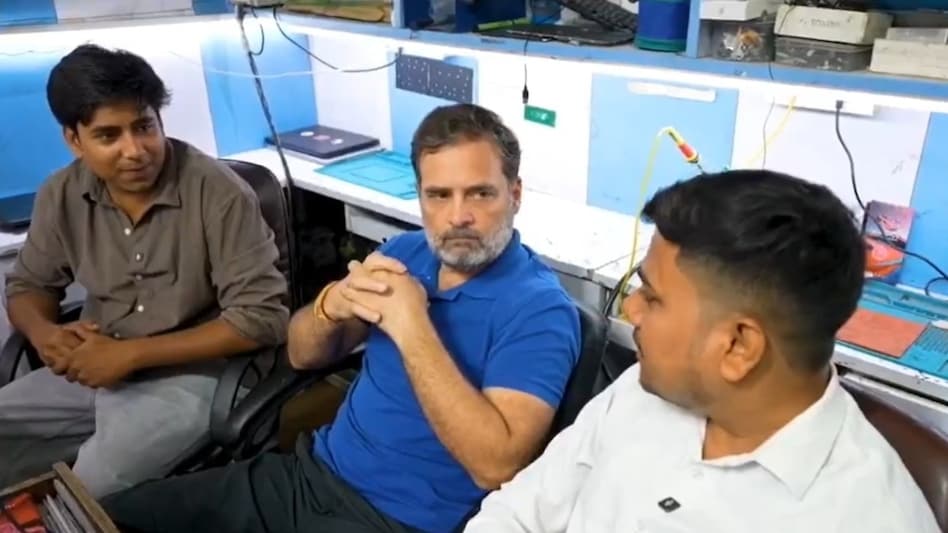
 Congress MP Rahul Gandhi
An entrepreneur with three decades of manufacturing experience on Saturday countered Congress MP Rahul Gandhi's claim that India is only assembling imported goods and not building locally. Prakash Dadlani, who has worked extensively across India and China, said the real picture on the ground shows steady, capacity-driven growth in Indian manufacturing.
"I've been in the manufacturing sector for 30+ years and I disagree with you. I've a deep exposure to both India and China. And the reality on the ground tells a different story," Dadlani said in response to Gandhi's recent remarks.

 Jio IPO: Meta, Google, ADIA, 7 others eye Rs 3.2 lakh crore stake value, gains on investment
 'Trump likely to take decision in 10 days or so': Sergio Gor on 100% tariff against India for Russian oil purchases
 A 100-bps rate rise could weigh on global growth: What does it mean for Indian exports? Here's what Goldman Sachs says
 Trump mulls using MOAB, the 'mother of all bombs', against Iran: Report
 BS-VII emission standards: Government proposes three-phase rollout starting from April 2029
  India Wants Minerals, Canada Wants Markets: The Big Trade Deal Explained
 Sugar Prices Surge ₹1,000 Per Quintal Before Diwali: Will Government Measures Bring Relief?
 Vijay’s Viral Hand Gesture Gets RSS Twist As DMK Sparks Fresh Political Row
 IDBI Bank Sale To Fairfax: A Landmark Deal For India's Banking Sector? Gaurang Shah
 Tata Technologies Q2 FY27 Results | Warren Harris On Q2 Growth, Big Deals And FY27 Outlook
 Jio Platforms IPO: Rs 2,500 crore quota for RIL shareholders; how to check eligibility?
 Leela Palaces Hotels shares trim gains after hitting record high post Q2 earnings; check targets
 Tata Technologies shares slip 5% as Q2 earnings fall below estimates
 Acme Solar shares: Axis Capital initiates coverage, sees 31% upside; check stock reaction
 Sahajanand Medical Technologies IPO: Should you apply? Check price band, reviews, fresh GMP & moreIndia Wants Minerals, Canada Wants Markets: The Big Trade Deal ExplainedJio Platforms IPO: Rs 2,500 crore quota for RIL shareholders; how to check eligibility?
 Tirupati laddu case: ED attaches ₹129.85 crore assets, alleges adulterated ghee worth ₹234.9 crore was supplied
 Hate crimes against Indians abroad: From racist abuse to an alleged mass shooting plot
 Why the BCI says consumer demand is keeping businesses wary












