









 Gwadar, US fears, and the Indian Ocean: Gokhale unpacks China’s deepening Pakistan ties

 Gwadar, US fears, and the Indian Ocean: Gokhale unpacks China’s deepening Pakistan ties
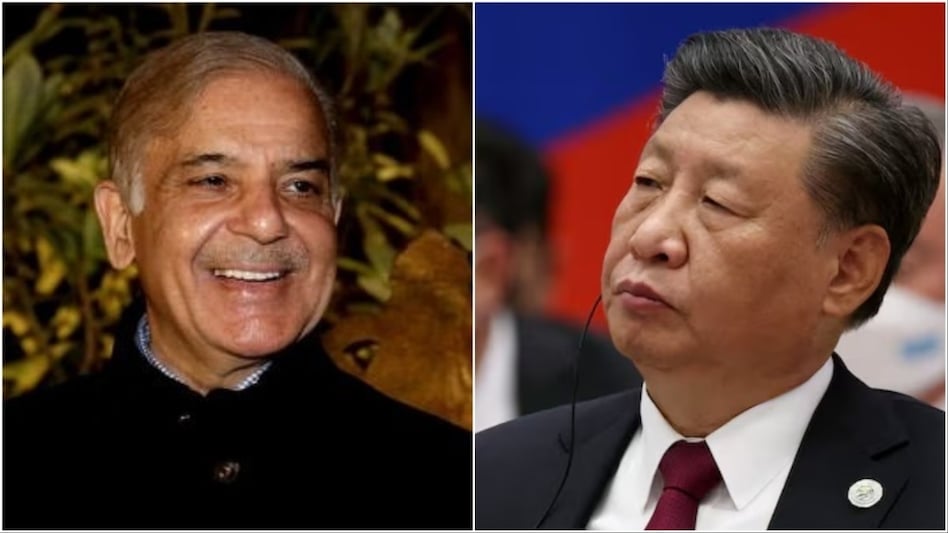
China's strategic embrace of Pakistan has deepened in recent years, driven by multiple long-standing geopolitical objectives, former Foreign Secretary Vijay Gokhale said in an interview with CNBC-TV18. He pointed to China's military, economic, and political calculations, including its need to counterbalance India and secure maritime access to the Arabian Sea.
"Pakistan has always been seen as a strategic asset since the early 1960s and China has systematically cultivated Pakistan for a variety of reasons," Gokhale said. He outlined four key motivations behind Beijing's enduring interest in Pakistan: "Firstly, because it is in a sense, at least in Chinese minds, a counterbalance to us. Second, it is a gateway to the Arabian Sea and, in a sense, it is one possible solution to their Malacca dilemma. Thirdly, they prefer that it is not part of the United States camp because US military bases in Pakistan are seen by China as a threat to national security. And lastly, of course, they believe that Pakistan's friendship will help in controlling ethnic fundamentalism in their own ethnic borderlands."
According to Gokhale, these strategic considerations gained further importance after 2015, when China launched the China-Pakistan Economic Corridor (CPEC), expanding both its economic and military footprint in the region. "With the third [Chinese] carrier group already being tested, once it is fully seaworthy, it is likely to be deployed in the Indian Ocean," Gokhale noted. For that, China will need "friendly ports of call" for repair and resupply. "They have a base in Djibouti but Gwadar will become increasingly a sort of base where the Chinese Navy will do its replenishments and repairs."
Despite facing challenges such as attacks on Chinese personnel and concerns about Pakistan's economic situation, Gokhale said China sees the partnership as a long-term strategic investment. "China feels this is a strategic investment. It's not looking to get every dollar back so long as it gets advantages in terms of national security."
On managing ties with China, Gokhale said progress has been "limited" following the 2020 border clashes. "We have successfully disengaged at the various points...but we have not yet gone to the second stage of de-escalation,” he noted. Other parts of the relationship remain strained, with continued visa restrictions, lack of direct flights, and a persistent trade imbalance.
Gokhale also pointed to signs of informal trade restrictions. "We hear news that critical tunnel boring equipment for metro systems has been blocked… [and] equipment for making the next generation of Apple phones in India is finding difficulty in getting exported,” he said. He also cited obstacles faced by joint ventures in lithium-ion technology.
He said the collapse of the old diplomatic framework necessitates a new structure. "If we don't develop a new framework then the current state of armed coexistence makes the relationship unstable," Gokhale warned, though he expressed confidence that "there is wisdom on both sides" and that steps are already being considered.
On what India needs to do and whether it should relax FDI policy, the foreign secretary said that New Delhi's objectives are first and foremost to have a predictable relationship. "You don't want it to be unpredictable. Secondly, you would like it to be a relationship based on the understanding that neither side will use force or threaten to use force so that you use those resources better for economic development. And thirdly, I think we would like to leverage China's economy for our development. But that will depend on whether China is keen on investing in real terms."
"We would like to see greenfield Chinese investment, not investment in what is environmentally dirty industries or in the old manufacturing processes. And in the new areas, we would like to see some technology transfer, not simply an assembly plant in India, which is intended really to sell in the Indian market. If this can be something that China can consider, they will see that India responds positively, and at that time, I'm sure our FDI policy will reflect that."
"At this stage, however, I'm a little reluctant to advocate the cause for relaxing our FDI policy simply because in my opinion, China continues to look at us principally as a market and its entire effort is market penetration and not partnering India in terms of industrial development or economic growth," added.
 Will Tata Sons stay private? RBI's latest circular raises fresh questions
 This newly listed Vedanta demerged stock has rallied over 100% since its market debut; do you own it?
 Bought these stocks? Here's how a ₹144 crore pump-and-dump scam fooled retail investors
 Centre likely to constitute high-level banking committee before Monsoon Session
 EPF Scheme 2026: Can ₹1,800 a month create a ₹19 lakh retirement fund?
 EPF Overhaul: Voluntary Contributions Above ₹1,800, New Withdrawal Rules Explained
 Raipur Demolition Row: 90+ Families Homeless For MLA Colony, Villagers Protest Amid Tears!
 Market Volatility Ahead? Fund Manager Sunil Shah Reveals His Portfolio Strategy & Top Investment Bet
 Silver Supply Crisis In India? Physical Market Premiums Rise As Imports Slow
 Kunal Shah Says, Gold May Rally Ahead After Recent Correction | Check Upside Potential
 Bought these stocks? Here's how a ₹144 crore pump-and-dump scam fooled retail investorsThis newly listed Vedanta demerged stock has rallied over 100% since its market debut; do you own it?
 Zepto IPO soon! Anand Rathi flags profitability risks despite growth potential, check unlisted share price
 Gujarat Energy, Latent View Analytics shares: Market expert shares outlook
  Coca-Cola eyes $1 billion IPO for Indian bottling arm, says report