

 A key issue before the tribunal was whether DERC could assign an audit of private discoms to the CAG.
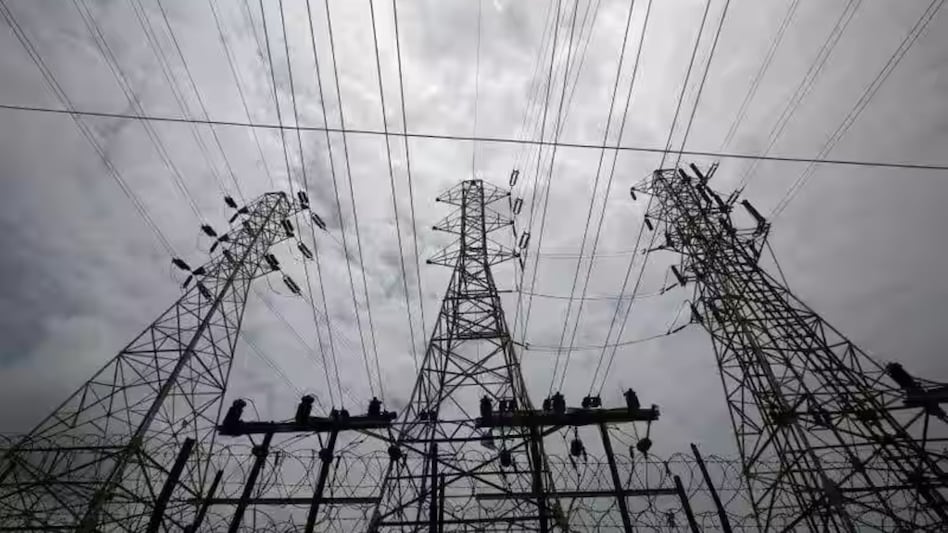
 Decks have been cleared for a likely increase in electricity bills in the National Capital Territory of Delhi after the Appellate Tribunal for Electricity (APTEL) sharply criticised the Delhi Electricity Regulatory Commission in a ruling that defines the limits of regulatory authority and questions the Commission’s conduct.
A bench comprising Officiating Chairperson Seema Gupta and Judicial Member Virender Bhat on Monday dismissed DERC’s request to extend the timeline for initiating liquidation of over Rs 38,000 crore in “regulatory assets” — dues owed to Delhi’s three power distribution companies. The tribunal also rejected the Commission’s proposal for a detailed audit by the Comptroller and Auditor General of India of the Discoms.
Will electricity bills rise?
The amount in question relates to long-pending unpaid dues owed to Delhi’s discoms under a broader effort to clean up legacy liabilities in the power sector.
The matter traces back to directions issued by the Supreme Court of India in August 2025. The court had directed all state regulators to begin clearing such dues from April 2024 and complete the process by April 2028.
It had also said regulators could use all available mechanisms to recover these amounts — technically termed “regulatory assets” — including raising electricity tariffs if needed.
Why this matters for consumers
Electricity tariffs in Delhi had been kept relatively low in recent years under DERC and government policy. As a result, discoms were unable to fully recover the actual costs of generating and supplying power, leading to a steady build-up of unpaid dues, now exceeding Rs 38,000 crore.
With the tribunal now directing that these dues be cleared, the burden is expected to be passed on to consumers.
Lawyers representing Tata Power, Shri Venkatesh and Ashutosh Srivastava, told India Today that a tariff increase is “one of the only options” to address the situation.
“The Tribunal has rejected DERC’s request for a three-month deferment and directed that Regulatory Asset liquidation commence within three weeks. This means that the legitimate dues of Delhi’s distribution companies, amounting to approximately Rs. 38,552 crores accumulated over nearly two decades, will now begin to be recovered through consumer tariff as mandated by the Supreme Court,” said Shri Venkatesh, Founding Partner, SKV Law Offices.
Anurag Bansal, Head Legal at Tata Power Delhi Distribution Ltd, welcomed the ruling.
“Today’s judgment of APTEL will usher in a sense of responsibility, introspection and sensitivity by Regulatory Commissions which were till now operating on the deference of ‘cost reflective tariff’,” he said.
APTEL flags delays, questions DERC conduct
The tribunal was examining DERC’s request to defer the start of regulatory asset liquidation, which the Commission justified on procedural grounds such as pending true-up orders and the need for audits.
APTEL rejected this reasoning, noting there was “no impediment before the Commission in starting recovery of regulatory assets,” particularly when the amount involved was already known.
It observed, “We find it evident that the Commission has been delaying the liquidation of regulatory assets for one reason or the other thereby permitting increase in the amount… which would place additional burden upon the end consumers.”
In a strong remark, the tribunal added: “The entire conduct of the Commission in this regard appears to be malafide and needs to be deprecated.”
The order also pointed to repeated failures by DERC to honour commitments made before courts. APTEL noted that the Commission had given “repeated undertakings and assurances… to the Hon’ble Supreme Court, to the Delhi High Court and to this Tribunal,” but did not act on them.
Calling the delay unjustified, the tribunal rejected the extension request as “totally unreasonable and unacceptable” and directed DERC to begin the liquidation process “within three weeks from today positively.”
However, it allowed time until June 30, 2026, for issuing the true-up order for the financial year 2023-24.
CAG audit not permitted under current framework
A key issue before the tribunal was whether DERC could assign an audit of private discoms to the CAG.
APTEL examined the legal framework, including Article 149 of the Constitution and Section 20 of the CAG Act. While noting that private entities may be audited under certain conditions, it stressed that strict requirements must be met — including demonstrable public interest and prior opportunity of hearing.
The tribunal found that no such “public interest” justification had been established in this case.
It also criticised the office of the Delhi Lieutenant Governor for approving the proposed audit.
“No material has been placed on record… to show that the Lt. Governor of Delhi had gained satisfaction about involvement of public interest,” the tribunal said, adding that the approval appeared to have been granted “in a very cavalier manner without enquiring whether or not does it involve ‘public interest’.”
APTEL further faulted DERC for acting “unmindful of the requirement under Section 20(3) of the CAG Act.”
Clarifying the scope of earlier directions, the tribunal said the Supreme Court’s 2025 order on audits was limited to examining the circumstances under which discoms continued operations without recovering regulatory assets.
“The audit cannot be construed as an intensive enquiry into the entire accounts & financial affairs of the discoms,” APTEL said.
It concluded that “we do not find it expedient in public interest to entrust the strict & intensive audit of the Delhi Discoms to CAG,” and directed DERC to instead appoint a chartered accountant to complete the audit within a strict three-month timeline.
 Mahadev betting app case: ED arrests EBIX Chairman Vikas Garg
 ITC shares set for worst returns in 22 years; price targets signal more downside
  Infosys, Coforge, TCS, Wipro, HCL, LTM, Persistent, Mphasis: IT stock with highest upside target
 Anthropic introduces India pricing for Claude AI plans; Pricing starts at…
 How Akasa Air capacity is growing amidst downsizing by IndiGo, Air India
 Audit Flags ₹22.74 Crore Irregularities At Butati Dham, Missing Gold And Suspect Bills Under Scanner
 Can DSP MF Quant Funds Really Beat The Markets? Here's What Investors Should Know
 “Global Governance Must Reform”: Jaishankar Pitches MANAV Vision, Future-Ready UN Peacekeeping At UN
 Expert Says Market Psychology Is Changing: Here's Why Indian Markets Look Attractive Now
 U.S.-Iran War Returns As Fresh Strikes Rock Hormuz And Indian Sailor Goes Missing After Ship Attack
 Landmark Cars shares zoom 17% on Q1 updates, more details
 Gold, silver prices: Should you buy precious metals now? Quant AMC’s George Thomas answers
 ICICI AMC shares fall 4% after Q1 results; brokerages still see up to 30% upside
 IDBI Bank share price rises 5%, stock up 16% in one month; here's whyITC shares set for worst returns in 22 years; price targets signal more downside









