








 Dealer Commission on Petrol & Diesel Decoded

 Dealer Commission on Petrol & Diesel Decoded
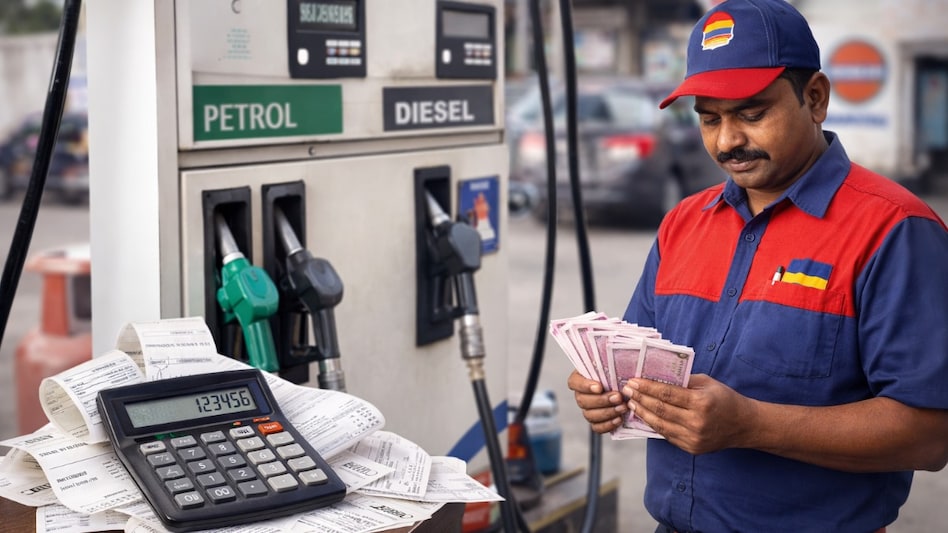
The earnings of petrol pump owners in India often spark curiosity, especially during periods of fuel price volatility and dealer protests. While retail fuel prices may seem high, the actual income of pump operators is relatively modest and largely fixed by government-approved commission structures.
How much do petrol pump owners earn per litre in India?
Petrol pump dealers do not freely decide their margins. Instead, they receive a fixed commission per litre from oil marketing companies such as Indian Oil, BPCL and HPCL. On average, dealers earn around ₹3-₹4 per litre on petrol and about ₹2-₹3 per litre on diesel, depending on location and pricing structure.
In percentage terms, this forms only a small fraction of the retail price. For instance, in Delhi, dealer earnings account for roughly 3-5% of the total fuel price, with the rest made up of base cost, central excise duty and state VAT.
What are the commission rules for petrol and diesel dealers?
Dealer commissions are determined through a formula that includes a fixed amount per kilolitre along with a small percentage of the fuel's base price. As per official data, petrol dealers receive over ₹3,100 per kilolitre plus a percentage component, while diesel dealers receive over ₹2,300 per kilolitre under the latest revisions.
In October 2024, oil companies increased dealer margins by about ₹0.65 per litre for petrol and ₹0.44 per litre for diesel, marking the first major revision in several years.
Why is there a row over fuel dealer earnings?
Despite periodic revisions, petrol pump owners argue that their margins have not kept pace with rising operational costs. Running a fuel station involves expenses such as employee salaries, electricity, maintenance, rent, security and compliance requirements. These costs significantly reduce actual profits from the commission earned per litre.
Dealers have also raised concerns that commissions are fixed while costs are variable, meaning profitability depends heavily on sales volume rather than margins.
Why are petrol pump owners protesting over margins?
Fuel dealers across India have occasionally staged protests demanding higher commissions, citing inflation, increased wages and infrastructure costs. Many argue that the current system does not adequately compensate smaller or low-volume outlets, making it difficult to sustain operations.
What costs do fuel dealers have to manage?
Apart from fuel handling, petrol pump owners bear multiple operational expenses. These include staff salaries, power bills, equipment maintenance, digital payment charges and safety compliance. In urban areas, land costs and rentals further add to the financial burden.
As a result, while petrol pumps may appear lucrative, the business largely operates on thin margins and high volumes, making earnings heavily dependent on location and daily sales rather than per-litre profits.
 Elon Musk's $1.1 trillion fortune is nearly 8 times Gautam Adani's and 10 times Mukesh Ambani's
 Tata Trusts row escalates after Vijay Singh demands probe into 1989 share deal
 US-Iran peace deal likely on Trump's 80th birthday? Pakistan drops big hint
 US tells Anthropic to suspend Fable 5, Mythos 5 access for foreign nationals
 RBI's 2013 playbook brought in $34 bn. Can the latest scheme do it again?
 "Before 2014, India's Image Was A Country Of Poor & Corrupt": Minister Shekhawat To India Today
 Latest Tech News Of The Week | Starlink, Anthropic Fable 5, Instagram Update, WWDC26 | Tech Gear
 Tech Gear Show | Tech News, E85 Fuel Explained, HMD Vibe 2 Review, Moto Edge 70Pro+ | EP 6
 India's First E85 Fuel Sports Bike | Suzuki Gixxer SF 250 Flex Fuel | Gadget Garage | Tech Gear
 Noida Airport Eyes Five Million Passengers In Its First Year Of Operations
 Why Motilal Oswal's Raamdeo Agrawal believes passive investing will gain ground
 Avalon, Dixon Tech, Kaynes Tech, Amber, Syrma SGS, PG Technoplast: 2 top EMS picks
 Tata group stock announces Rs 25/share dividend; record date set for July 16
 Elon Musk's net worth rises by Rs 13 lakh crore post SpaceX's stellar market debut
  SpaceX shares make Nasdaq debut after historic IPO; check listing price & marketcap