















 Author Kuldip Nayar writes that Jinnah had initially not believed reports that thousands of people were migrating from both sides of the border.
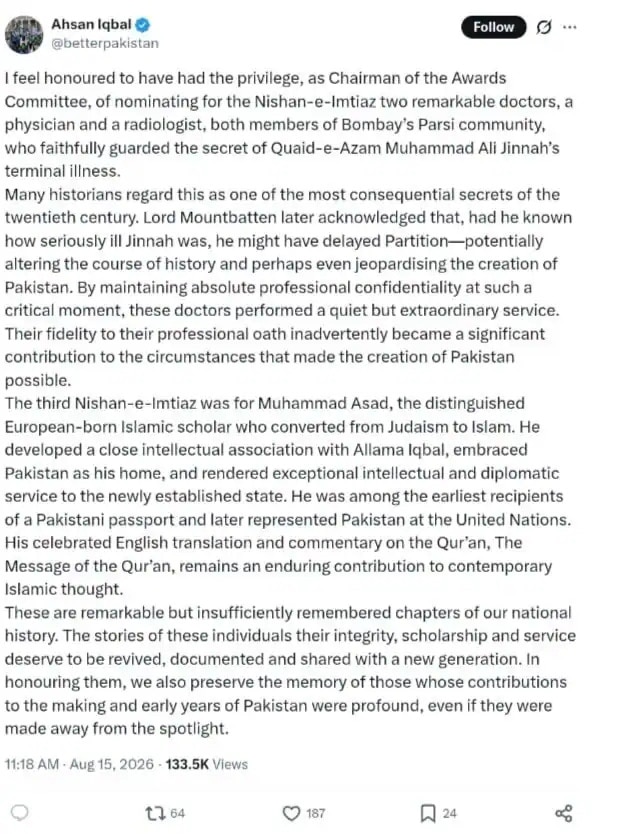
 Two Mumbai-based Parsi doctors who treated Pakistan founder Muhammad Ali Jinnah and kept the severity of his illness confidential are set to receive Pakistan’s highest civilian honour posthumously.
Physician Dr Jal Ratanji Patel and radiologist Dr Jal Dhaybho-Koo have been nominated for the Nishan-e-Imtiaz by Pakistan. The honour is expected to be formally conferred at an investiture ceremony in March 2027. Pakistan announced the civil awards on August 14, with 355 individuals recognised across various fields.

 IDBI Bank stake sale is the largest FDI deal till date; Centre, LIC to continue to remain invested
 'My satellites have been hovering for 5 years, I'm ahead of Musk in the queue,' says Sunil Bharti Mittal
 Jio Platforms IPO: RHP filing likely today; Reliance set for primary market return after 20 years
 IDBI Bank shares jump 13%, CSB Bank also gains 6% after Fairfax approval; here's why
 Salary hikes at 9.1%, inflation still bites: Are employees actually getting richer in 2027?
 Anand Rathi Wealth Q2 Results: Consolidated PAT Jumps 22% to ₹122 Cr | Joint CEO Feroze Azeez Decode
 PROMO | 27 Years Of BT Golf | BT Golf 2026-27 Tees Off On 31 October 2026 In Kolkata
 Oil Prices Surge, Food Inflation Bites: Why Markets Are Worried
 From Telecom To Consumer Loans: Sunil Mittal On Airtel's Next Growth Bets
 Does India Really Need Starlink? Expert Questions Satcom Business Case
 Tata Tech Q2 profit rises 4% to Rs 171 crore; revenue jumps 28%
 Hyundai Motor India to invest up to Rs 11,000 crore in Pune plant
  HDB Financial Q2 PAT climbs 34% to Rs 780 crore; stock slips 4%
 IDBI Bank sale: What changes for depositors, borrowers and shareholders?
 Siemens Energy, Hitachi India, GE Vernova: Elara sees Rs 15 lk cr opportunity; check fresh targetsAnand Rathi Wealth Q2 Results: Consolidated PAT Jumps 22% to ₹122 Cr | Joint CEO Feroze Azeez Decode
 'We stand with Saudi Arabia': India condemns Houthi attack on Aramco, calls it 'unacceptable'Tata Tech Q2 profit rises 4% to Rs 171 crore; revenue jumps 28%IDBI Bank stake sale is the largest FDI deal till date; Centre, LIC to continue to remain investedHyundai Motor India to invest up to Rs 11,000 crore in Pune plant


