


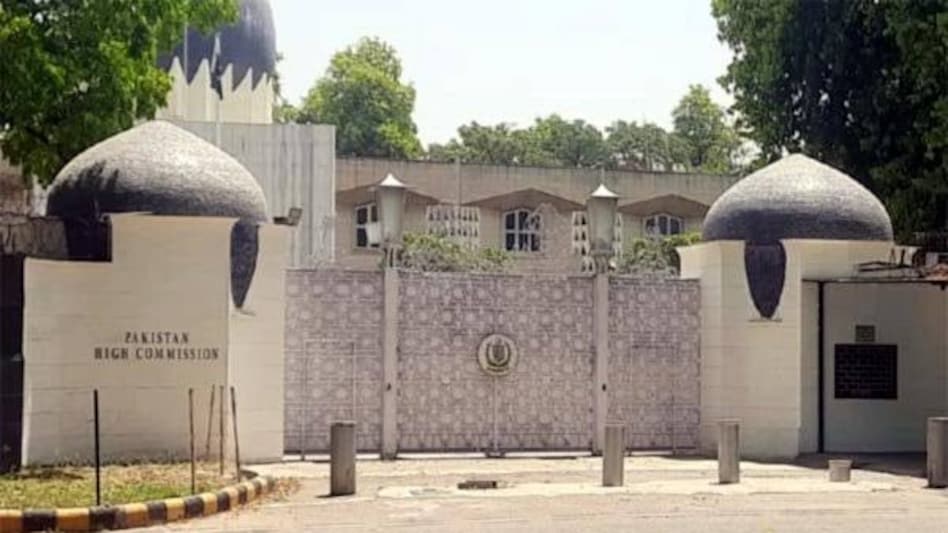
 Delhi dismantles security barriers around Pakistan High Commission
 In a calibrated diplomatic response, Indian authorities on Thursday dismantled unauthorised structures and outer security perimeters outside the Pakistan High Commission in New Delhi, mirroring Islamabad’s removal of barricades around the Indian High Commission in Pakistan three days earlier.
READ ALSO: Shared sentiment: How Indians and Pakistanis view each other, the nations

 India's $30 trillion goal needs 8-10% growth, $400 billion more annual investment: Jayant Sinha
 BT India@100: ‘India has not lost the AI race,’ says Amitabh Kant, highlights the country’s biggest advantage
 Will Tukaram Mundhe enter politics? Here's what the Maharashtra FDA commissioner said
 Deepinder Goyal’s Temple gets a major redesign, shrinks to 'less than half the size'
 Bitcoin price today: Rs 16 lakh gain just in a week! What led to a sharp rally in crypto market?
 #IndiaAt100 : CM Pushkar Singh Dhami On Uttarakhand’s Industrial Growth & India’s Next Leap
 #IndiaAt100 : Dr. Pawan Goenka On India’s SpaceTech Lift-Off And The Race To 2047
 #IndiaAt100 : P Chidambaram On India’s Growth Dilemma | What Could Hold Back $30 Trillion Dream?
 #IndiaAt100 | India’s Coolest Start-Ups: Meet The Innovators Building Tomorrow
 #IndiaAt100 | The Labour Code For Manufacturing: What Changes For Jobs & Industry?
 Cupid, NTPC Green, NTPC, Raymond Realty, HAL shares: Key technical levels to watch
 Defence stock with Rs 2,654-crore order book hits record high; here's why
  GACM Technologies: FII holding jumps to 29%; penny stock in focus
 Puravankara shares rise 5% on fresh order win
  20 high-conviction ideas for up to 95% upside | stocks to buy
  India’s deep-tech startups face a new test: Crossing the valley of death#IndiaAt100 : CM Pushkar Singh Dhami On Uttarakhand’s Industrial Growth & India’s Next Leap
 Current economic model in India is default: P. Chidambaram#IndiaAt100 : Dr. Pawan Goenka On India’s SpaceTech Lift-Off And The Race To 2047
 #IndiaAt100: Sanjeev Sanyal Debunks Bengal’s “Anti-Business” Image












