












 US tariffs on India: 'Strategic circles are depressed'"
 US tariffs on India: 'Strategic circles are depressed'"
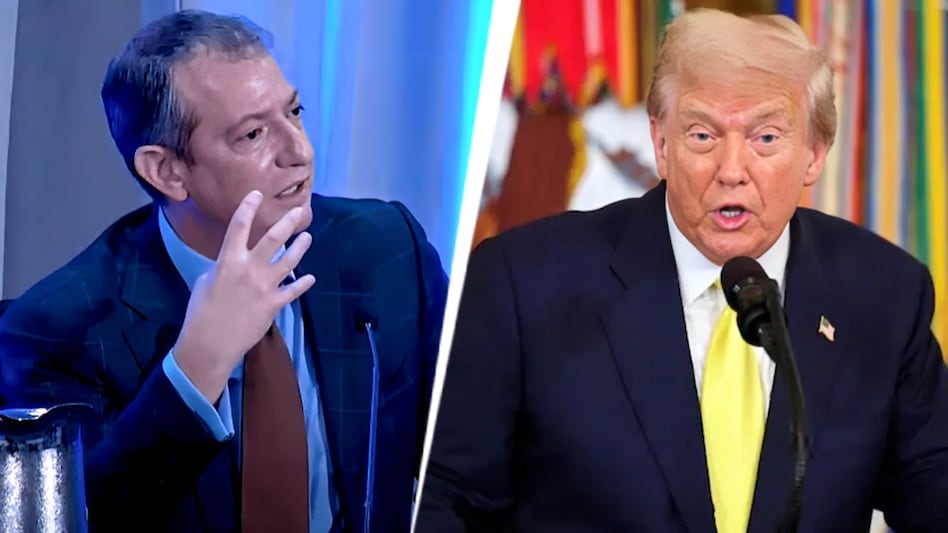
The mood in American strategic circles regarding the US-India partnership has turned "depressed," according to Evan Feigenbaum, Vice President for Studies at the Carnegie Endowment for International Peace. In an interview with ThePrint, Feigenbaum described how recent trade policies under President Donald Trump have soured the relationship, with particular focus on the US's steep tariffs on India.
Feigenbaum explained, "The mood in American strategic circles is what I would describe as depressed. But in some parts of the American body politic, the mood is actually quite euphoric.” He pointed out that the sudden shift in the US's foreign economic and trade policies, driven by political agendas, has created a rift. "A lot of the ideas that have been at the core of American foreign economic policy, trade policy have really gone out the window amid the political moment that we're in."
The specific trigger for the growing tension is the series of tariffs imposed on India. Last week, Trump added a 25% levy on Indian imports, following an earlier 25% tariff, making India one of the highest-taxed countries by the US at 50%. This decision, particularly the additional tariff on Russian oil purchases, has angered India, with its Ministry of External Affairs calling it "unfair, unjustified and unreasonable."
Feigenbaum, who has served as Deputy Assistant Secretary of State, acknowledged the frustration this has caused in India, noting, "India has been singled out, and I can see why people in India feel that way. After all, when you layer the 25% base tariff with the 25% that they’ve imposed because of Russian oil purchases that he objects to – you get to India being tied with Brazil for having the highest tariffs in the world at 50%."
But the American political scientist also pointed out that India is not the only country facing these tariff onslaughts. "There is not a country in the world that has escaped this tariff onslaught," he said, referring to the global impact of Trump's policies. However, he stressed that India's predicament has been exacerbated by a perceived hypocrisy from the US, especially considering China’s continued oil purchases from Russia, which have gone unchallenged by the US.
Feigenbaum described the situation as problematic for both nations, with India feeling unfairly targeted, and the US suffering from the lack of a coherent strategic framework behind such tariffs. "This is an example of issue linkage that has become detrimental," he said. In the past, he added, the US and India never allowed differences on third-party relations, such as those with Russia, to damage the broader bilateral relationship. However, with the current tariff policy, this tradition seems to have been abandoned.
"The reality is India is not going to junk its relationship with Russia, just as the US isn't going to junk its relationship with China," Feigenbaum explained. He expressed concern that such unrealistic expectations are damaging the US-India relationship, leaving the US "worse off" in the region.
Feigenbaum stressed that the broader consequences of this trade war extend beyond the immediate economic impact. "It really undermines and vitiates one of the core strategic understandings that enabled the progress between the United States and India over the last 25 years," he said, stressing that such actions could destabilize the foundation of the US-India partnership.
 Petrol, diesel prices likely to be hiked within a week: Sources
 ₹30,000 Cr monthly hit for OMCs: How long can the Govt hold back fuel price hikes?
 West Bengal gets its 'Dada'! Suvendu Adhikari to take oath as BJP's first CM in the state
 Hyundai looks beyond Creta with new mid-size SUV, compact EV launches in FY27
 Air India’s internal message to employees: Exercise strict cost discipline due to West Asia crisis
 Killer On Board: Rare Hantavirus Leaves 3 Dead On Atlantic Luxury Cruise
 Muridke To Bahawalpur: How India Systematically Dismantled Pakistan's Terror Hubs
 Mother’s Day: How To Secure Your Mother’s Financial Future | SIPs, Insurance & Retirement
 Resort Politics Returns: 25+ AIADMK MLAs Move To Puducherry To Push For TVK Alliance
 Stalemate In Tamil Nadu: 107-MLA Vijay Scrambles For Majority As Governor Sets Terms
 Kaynes Technology, Tata Chemicals shares: Trading strategy, outlook | Daily Calls on BTTV
 Jhunjhunwala stock: Rs 15 dividend in Q4 results, revenue breaches Rs 75,000 cr mark in FY26
 Britannia Industries declares Rs 90.5 dividend; check record date; stock target
 Tata Consumer Products Q4: Net profit rises 21%, board declares highest dividend in 17 years
 Foreign investors are still selling India — Here's why