












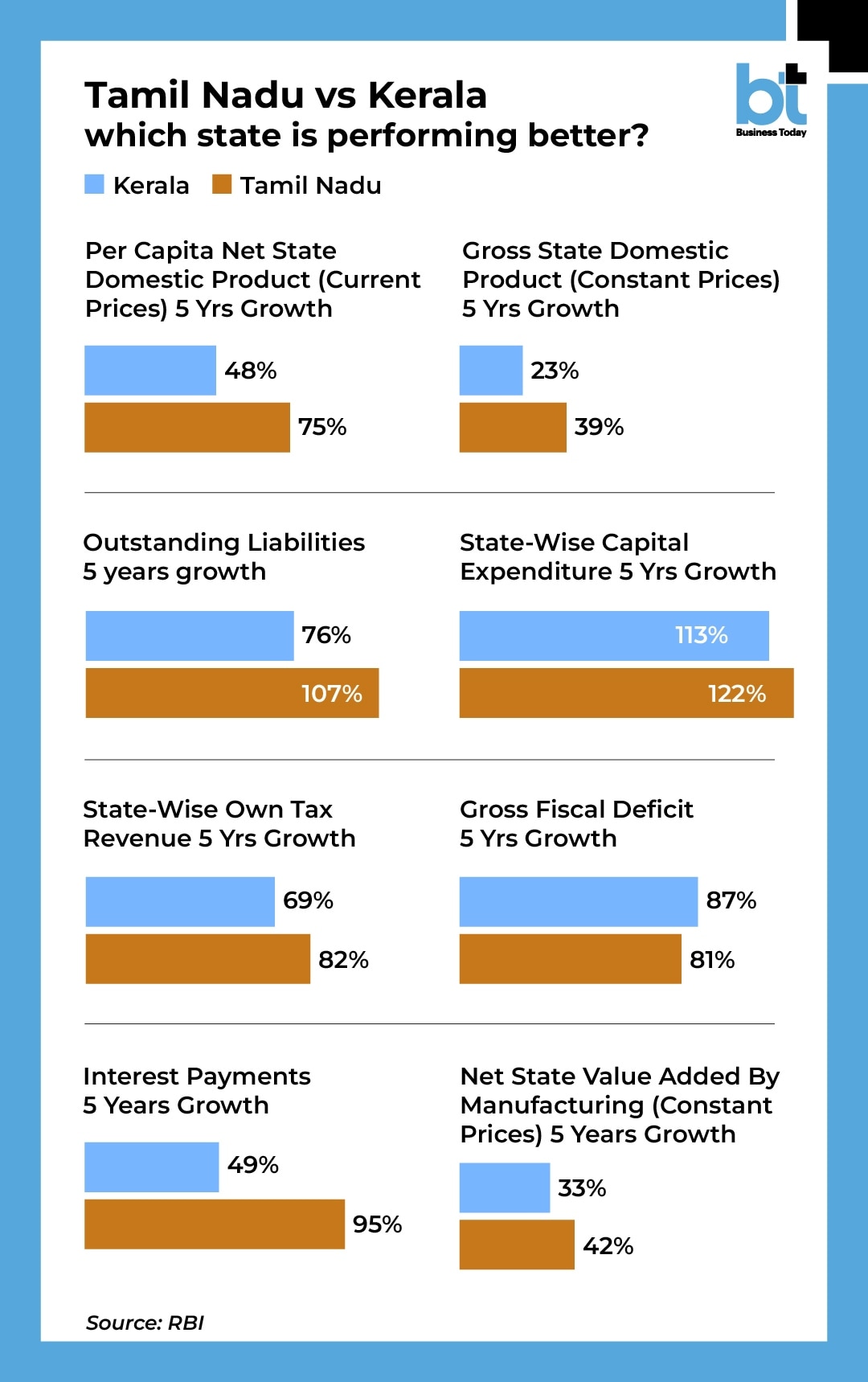



 Kerala’s per capita income rose from ₹2.09 lakh in FY20 to ₹3.08 lakh in FY25, while Tamil Nadu’s grew faster from ₹2.06 lakh to ₹3.62 lakh.
Ahead of the Assembly elections in two of South India’s economic powerhouses, Kerala and Tamil Nadu, the focus is increasingly turning to the economic performance of their respective chief ministers. Pinarayi Vijayan and M. K. Stalin play a significant role in the growth story of India. These states contribute strongly to services, manufacturing, exports and remittances.
As voters head towards elections, the economic record of the past five years under Pinarayi Vijayan in Kerala and M. K. Stalin in Tamil Nadu is likely to become an important part of the political debate.
Data from the Reserve Bank of India (RBI) provides a clear picture of how these economies have evolved over the past five years. From economic growth and per capita income to government spending and rising debt, the numbers tell a story of growing economies, infrastructure development, higher public investment and increasing fiscal pressures, setting the stage for a closely watched political and economic contest ahead of the elections.

 BT Explainer: How the NCLT order in the Subhash Chandra case exposed gaps in personal guarantor cases and what could be done to improve outcomes
 HDFC Bank leadership shake-up: CEO Sashidhar Jagdishan to retire on Oct 26, will not seek reappointment
 GST Council set to meet on September 12; ITC norms, state revenues likely on agenda
 Multiple options exist post the deferment of Tata Sons' AGM, say legal experts
 From Apple to the Boardroom: Tim Cook’s leadership roles beyond Apple
 ITR Filing Deadline August 31: Key Rules For Freelancers, Content Creators & F&O Traders
 “Bengaluru Needs Metro, Not A ₹40,000-Crore Tunnel Road,” Says Tejasvi Surya
 Why Astra Microwave Could Benefit From Rising Defence Orders | Defence Sector In Focus
 Alienware 16 Area-51 Review: RTX 5080 Beast Or ₹3 Lakh Overkill?
 Hitachi Stock Doubles In 6 Months: Why It Became The Top Portfolio Performer Of 2026
 Jio Platforms IPO gets SEBI nod: Rs 27,500 crore debt repayment plan, $100 billion valuation in focus
 Closing Auction Session: Why the system expected to reduce volatility is still seeing occasional wild swings
 RIL-backed penny stock hits 52-week low; firm clarifies on high trading volume
 Happiest Minds shares slip despite IT stocks surge; here's what is weighing on the stock
 BEL, Solar Industries shares remain Nuvama's top defence picks; here's what it said on BDL, Data Patterns, HAL
 UAE NRIs: Should you keep your dollars abroad or move them into FCNR (B) deposits?ITR Filing Deadline August 31: Key Rules For Freelancers, Content Creators & F&O Traders
 'Do you feel you are a lord...': Bombay HC warns Tukaram Mundhe's FDA with contempt chargesFrom Apple to the Boardroom: Tim Cook’s leadership roles beyond Apple
 The AI jobs shock: Why reskilling could become unavoidable by 2030, says report


