


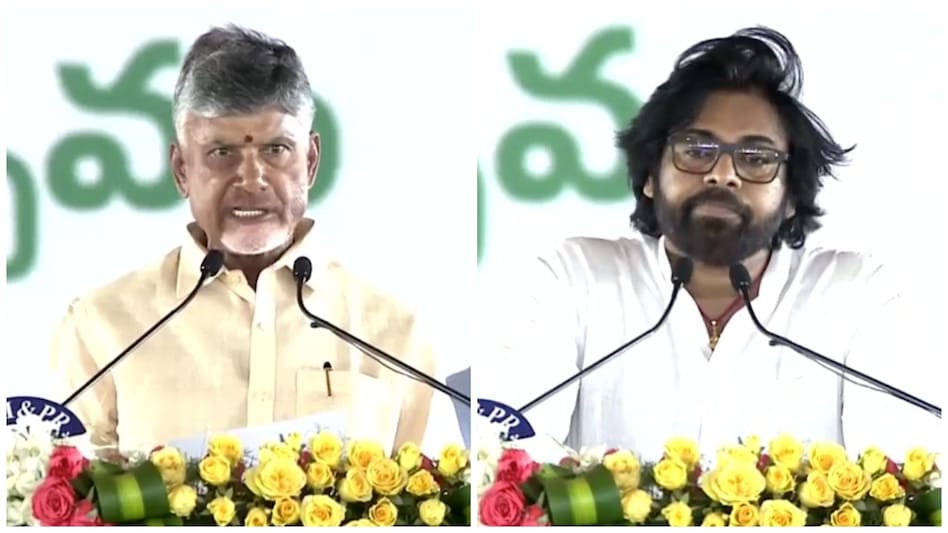
 Andhra Pradesh Chief Minister N. Chandrababu Naidu defended his government’s stance on the ongoing Tirupati laddoo ghee controversy
In a candid interview, Andhra Pradesh Chief Minister N. Chandrababu Naidu defended his government’s stance on the ongoing Tirupati laddoo ghee controversy, while also addressing his ally Pawan Kalyan’s recent embrace and defence of Sanatan Dharma. The laddoo controversy erupted into the public limelight when Naidu went public with the claim that the revered 'prasadam' from the Sri Venkateswara Swami Temple in Tirupati was made through adulterated ghee, using animal fat. He accused the former government of Jagan Mohan Reddy of trying to destroy the faith of millions in the state.
The controversy took a political turn, prompting a public outcry and later judicial intervention. Addressing these criticisms, Naidu maintained that his actions were rooted in safeguarding religious harmony and ensuring that the sanctity of the temple’s rituals remained intact.

 Aadhaar authentication mandatory for subsidised LPG refills from October 1: Check rules
 Japan’s semiconductor push in India: Why Japanese companies are betting on materials, equipment and technology
  Tata Steel seeks fresh UK government funding as Port Talbot project faces delays
 How big is Apple Pay? US payment giant to enter India as UPI dominates digital payments
 Delhi airport gets its third runway operational; optimise aircraft movement
 CEA On India’s 7.8% Growth, Rural Incomes And Government’s Job Creation Push
  Gold Price Outlook: Why Dollar Weakness Could Keep Gold And Silver Prices Attractive Ahead
 Gold vs Silver Investment Strategy: Is This The Right Time To Buy For Long-Term Returns?
 Corporate Vs Personal Health Insurance: Which Is Better On A Budget?
 Gold Price Outlook: Why Gold Could Rise Despite Global Interest Rate Hikes | Silver Market Update
 Jindal Supreme, SS Retail, Hero Motors IPOs subscribed up to 181 times on final day; details here
 Sensex, Nifty post sixth weekly loss; TCS, Titan among top laggards, slip up to 4%
 How AI collapse could benefit Indian equity market; Jefferies' Christopher Wood explains
  Banks are no more secular growth story, prefer NBFCs: Chris Wood
 Jefferies' Christopher Wood sees gold at $10,000 'sooner or later'; likes India's small, midcaps
 Riyadh airport smoke: Explosions reported after Saudi Arabia issues aerial threat alert
 Who is Deepanshu Shokeen? Meet the independent candidate who won DUSU Vice-President postAadhaar authentication mandatory for subsidised LPG refills from October 1: Check rules
 'Welcome baby girl': Deepika Padukone and Ranveer Singh announce birth of second child
 High prices not a downer: iPhone 18 Pro series demand surges in India despite premium tag












