








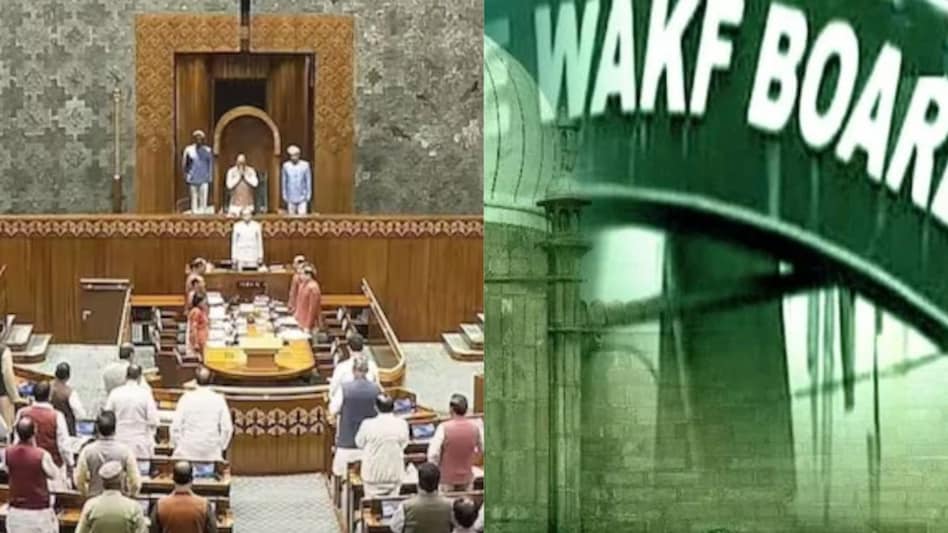
 The Waqf (Amendment) Bill proposed 44 changes to the laws that govern central and state Waqf boards.
  The Waqf (Amendment) Bill proposed 44 changes to the laws that govern central and state Waqf boards.
 The Prime Minister Narendra Modi-led Union Cabinet has approved the Waqf (Amendment) Bill on the basis of the report by the Joint Parliamentary Committee (JPC) headed by BJP MP Jagdambika Pal. The approval for the legislation came in the cabinet meeting on February 19, India Today reported citing sources.
The bill can be introduced during the second part of the Parliament's budget session, which begins from March 10 and ends on April 4. The JPC report was first tabled in the Rajya Sabha during the first half of the Budget session amid protests by the Opposition.
The Opposition INDIA bloc said their dissent notes were removed from the JPC report but the Centre vehemently denied this allegation.
The Waqf (Amendment) Bill proposed 44 changes to the laws that govern central and state Waqf boards. Waqf boards decide how Muslim charitable properties are managed across India.
The bill was first introduced in the Parliament in August last year but was referred to the JPC after opposition from the INDIA bloc. Later, the JPC submitted its report to the Centre after some amendments.
The JPC's report got approved on January 29, with 15 votes in favour and 14 against. The committee had 16 MPs from the BJP and its partners and only 10 from the opposition.
The report included changes given by the BJP MPs whereas Opposition MPs submitted dissent notes. Besides calling it an attempt to abolish the Waqf boards, the opposition registered several objections to the bill.
They also opposed the proposal to remove the 'Waqf by User' provision. The proposals to nominate a non-Muslim and at least 2 women members to every Waqf board, a Union Minister, 3 MPs, and 4 people of 'national repute' to the central Waqf Council were also met with protests from the Opposition.
Another contentious proposal is to limit donations from Muslims who must have been practicing for at least five years, sparking debate over the definition of 'practicing Muslim.'
Additionally, a new officer appointed by the state, rather than the District Collector, will now determine if a property qualifies as 'waqf.' Lastly, the Waqf Council will no longer be able to claim land under the new rules.
After this, the report was presented in the Parliament on February 13. On the basis of this report, a new draft of the bill was prepared, which has now been approved by the Modi-led Cabinet.
 'Think about it': Deepak Shenoy warns indices mask stress as majority of Nifty 500 stocks lag
 NSE IPO: NSE board approves long-delayed listing plans; IPO to have equity shares of face value Re 1
 IDBI Bank stake sale: Financial bids received; evaluation underway, says FinMin
 Bitcoin avoids $60,000 breakdown, still down over 50% from record high
  Silver erases 2026 gains as prices crash 45% from peak - what’s behind the wild swing?
 RBI Says Trade Deals With EU, US & Others Strengthen India’s External Sector Outlook
 Jeffrey Sachs Praises Modi On India-US Trade Deal: “Trump Blinked, India Must Not Depend On U.S.”
 Agra’s ₹127 Cr Housing Project In Ruins: Flats For Poor Rot Before Occupation
 RBI Credit Policy LIVE Analysis | Aditya Pagaria Explains Rate Pause Impact
 TeamLease Q3 Results: Profit Jumps 47% As Margins Improve Despite Headcount Loss
 'Think about it': Deepak Shenoy warns indices mask stress as majority of Nifty 500 stocks lagBitcoin avoids $60,000 breakdown, still down over 50% from record high NSE IPO: NSE board approves long-delayed listing plans; IPO to have equity shares of face value Re 1
 Max Healthcare discontinues patented cancer drugs, writes to CGHS to review pricing
 NSE Q3 net profit falls to Rs 2,408 crore; PAT up 15%, total income rises 6% QoQ