









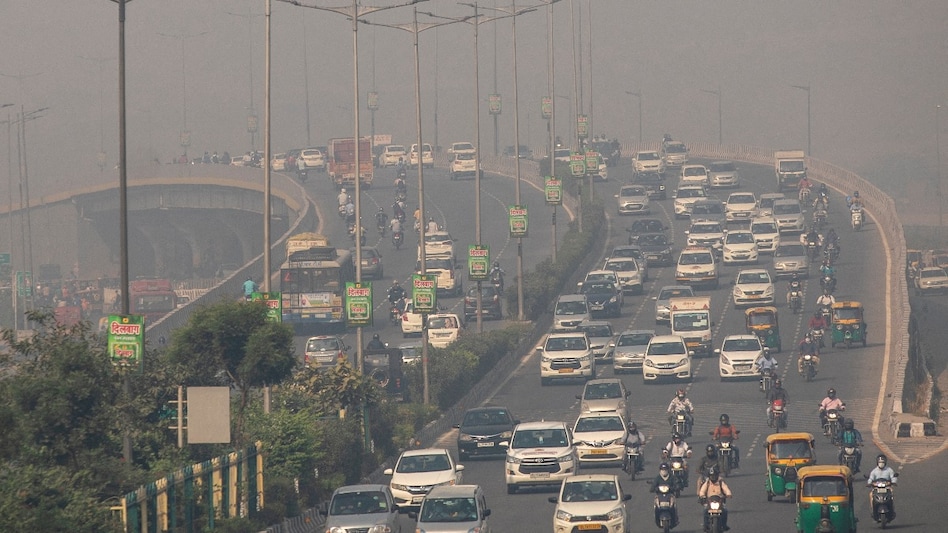
 Delhi's winter pollution playbook: WFH, higher parking charges, BS-VI curbs from Nov 1

 Delhi's winter pollution playbook: WFH, higher parking charges, BS-VI curbs from Nov 1
The Delhi government has notified a comprehensive set of annual anti-pollution measures that will automatically come into force every winter, including work-from-home for half the workforce, higher parking charges, fuel restrictions linked to pollution certificates, and curbs on older vehicles.
The measures, notified by the Department of Environment and Forests under the Environment (Protection) Act, 1986, will be enforced every year between November 1 and February 28, with stricter provisions applying during specific periods.
Don't Miss | Monsoon has officially arrived in Delhi! IMD declares onset as rains lash capital, NCR regions
Fuel only with a valid PUCC
Under the new framework, all petrol, diesel, and CNG/LPG retail outlets in Delhi will supply fuel only to vehicles with a valid Pollution Under Control Certificate throughout the year.
Verification will be carried out through physical certificates, Automatic Number Plate Recognition (ANPR) systems, and electronic databases such as VAHAN. Vehicles found taking fuel without a valid PUCC (Pollution Under Control Certificates) may face penalties.
Curbs on older vehicles
From November 1 to January 31 every year, non-BS VI vehicles registered outside Delhi will not be allowed to enter the capital.
The restriction will not apply to CNG and electric vehicles, ambulances, fire tenders, police vehicles, and other categories exempted by the Environment Department.
WFH, staggered office timings
To reduce congestion during the peak pollution season, the Delhi government and private offices will operate with no more than 50% physical attendance from November 1 to January 31, with the remaining employees working from home.
Essential services, including hospitals, public transport, power, water supply, sanitation, disaster management, and pollution-control agencies, have been exempted.
Office timings will also be staggered during winter. Municipal Corporation of Delhi offices will function from 8.30 am to 5 pm, while Delhi government offices will operate from 10 am to 6.30 pm between November 1 and February 28.
Parking charges doubled
Parking charges at all authorised parking sites across Delhi will be doubled from November 1 to February 28 to discourage the use of private vehicles.
Parking facilities operated by the Delhi Metro Rail Corporation have been exempted.
Construction restrictions
The notification imposes a ban on dust-generating demolition and outdoor civil construction activities from November 1 to January 31, except for essential public infrastructure projects.
A complete ban on construction and demolition activities, barring urgent government projects and emergency works, will remain in force from December 10 to January 20.
During the same period, vehicles carrying construction materials such as sand, bricks, stone, cement, and debris will not be allowed to enter Delhi, except those engaged in projects of national importance, essential infrastructure, and other exempted works.
Anti-smog systems mandatory
Commercial high-rise buildings with a built-up area of more than 3,000 square metres, including malls, hotels, office complexes and institutional buildings of G+5 height and above, must install anti-smog guns or mist systems by August 15.
The systems must remain operational throughout the year except during the monsoon and the peak summer period from May 1 to September 15.
Mist systems have also been made mandatory at construction sites larger than 1,000 square metres.
Crackdown on open burning
The notification makes resident welfare associations, housing societies, institutions, contractors, and establishments responsible for preventing the burning of waste, leaves, biomass, plastic, and other materials within their premises.
Authorities have also been directed to step up enforcement, including drone-based surveillance during night hours.
The Delhi government said the notification consolidates all previous winter pollution-control orders into a single framework. However, if stricter measures are imposed under the Commission for Air Quality Management's Graded Response Action Plan (GRAP), those provisions will prevail.
Violations will invite action under the Environment (Protection) Act, including prosecution, environmental compensation, sealing or closure of premises, and other penalties permitted under law.
 EPFO new rules 2026: Mandatory PF capped at ₹1,800; extra savings now voluntary
 WhatsApp Usernames faces India scrutiny: Govt halts roll out, gives Meta 3 days to explain
 Elon Musk's next big bet? SpaceX may have a prototype for phone-like AI device
 Bengaluru daycare horror: Capgemini shuts facility, says employees' welfare 'foremost priority'
 ‘India will be impossible to take for you if…’: Indra Nooyi’s word of advice for tourists, students
 India-U.S. Trade Deal: Only 1% Remains! Why The Final Stretch Is The Toughest For Modi And Trump
 Market Commentary LIVE: Piyush Pandey On Nifty, Sensex & Top Stock Picks
 TN Politics Explodes: 3 Arrested For Alleged ₹35 Cr Plot To Topple Vijay’s TVK Govt!
 Market Master LIVE: Ravi Dharamshi On India's Next Big Investment Opportunities
 Ram Mandir Theft Exclusive: The 'Ram Rajya Kosh' Mystery Box & The Inside Nexus Exposed!
 Suzlon Energy: Technicals signal bullish momentum, analysts share price targets
 BPCL, HPCL, IOC shares gain up to 4% amid oil price fall, Nayara petrol, diesel rate cuts
 Tata Technologies shares snap five-session fall, climb nearly 8% today; here's why
 Adani Total Gas, Auro Pharma, Delhivery: stocks to trade - Target price, stop loss & more
 Aastha Spintex IPO allotment: Step-by-step guide to check status, latest GMP & more