What went on in the board room of HDFC Bank remains a matter of conjecture and debate, but the near-term transition at the lender and the appointment of a new part-time chairman are being closely watched by investors, analysts and even customers. The consensus remains that despite the current turbulence, the bank continues to function smoothly with strong financials, which was also underlined by the RBI in a statement on March 19.
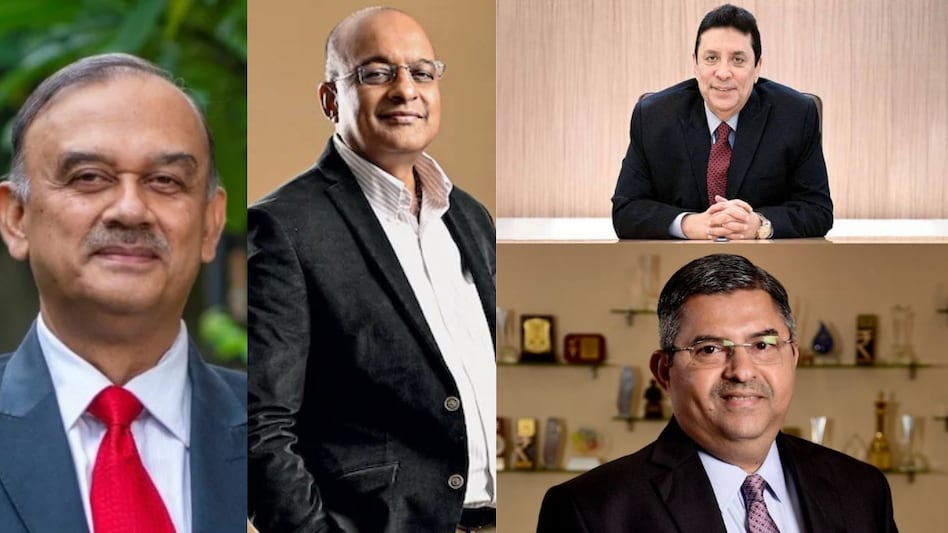
Atanu Chakraborty: From bureaucracy to boardrooms
An IAS officer of the 1985 batch from the Gujarat cadre, Chakraborty was just about to complete his fifth year at the bank. The Reserve Bank of India had in 2021 approved his appointment at the bank for a three-year term in April of that year. He was then re-appointed in 2024, and his term at HDFC Bank as the part-time Chairman was for another one year until April 2027.
In New Delhi, Chakraborty is known for having served as Secretary in the Ministry of Finance, first as Secretary, Department of Investment and Public Asset Management from May 2018 to July 2019 and then as Secretary, Department of Economic Affairs.
He handled the key portfolio during a part of the Covid-19 pandemic, helping set up policies to insulate the economy from the impact of the crisis from July 2019 to April 2020. He has also served on the central board of directors of the RBI and the board of the World Bank as an alternate governor, apart from various positions he held in Gujarat.
He was seen as one of the several bureaucrats who took up board positions in India Inc post-retirement, given their substantial experience in the government sector and economic policy-making.
As per the Annual Report of HDFC Bank for FY25, Chakraborty’s remuneration for the fiscal year included Rs 35 lakh per annum from April 1, 2024, to May 4, 2024. Following this, from May 5, 2024, to March 31, 2025, his remuneration was Rs 50 lakh per annum. “In addition to the above, Mr. Chakraborty was also paid sitting fees, reimbursement of expenses for attending the Board and Committee meetings and provision of a car for official and personal use, during FY 2024-25,” it said.
The Annual Report said that Non-Executive Directors are paid sitting fees of Rs 50,000 or Rs 1 lakh per meeting for attending Committee and Board meetings.
Significantly, he took over his role at HDFC Bank at a crucial juncture. In 2023, Housing Development Finance Corp. (HDFC Ltd), the country’s largest mortgage lender at the time, merged with HDFC Bank, which was a subsidiary. The $40 billion all-stock deal was the biggest such corporate merger in India and catapulted HDFC Bank into a financial powerhouse with a market cap of $150 billion.
That deal still continues to reverberate in the corridors of HDFC Bank; Chakraborty, in his parting letter, stated that the benefits of the merger were yet to fully fructify.
The other major deal that took place during Chakraborty’s tenure was the public listing of HDB Financial Services, a subsidiary of HDFC Bank. HDB Financial went public in 2025 in a Rs 12,500 crore issue. However, before the IPO, it had also been courted by Japan’s largest bank, Mitsubishi UFJ Financial Group (MUFG).
There were rumblings that there were differences between the chairman and the management over whether it should go ahead with MUFG or should go public. Eventually, HDB Financial was listed in June 2025, a move HDFC Bank’s MD and CEO Sashidhar Jagdishan had termed a milestone for value creation for the bank.
Sashidhar Jagdishan: An insider’s rise to the top
Jagdishan succeeded veteran Aditya Puri as the managing director and CEO of HDFC Bank in 2020. There were several contenders for the top job at HDFC Bank at the time, a few insiders, like Jagdishan and some outsiders. Eventually, Jagdishan, who had joined the bank in 1996 and whom many saw as a soft-spoken man close to Puri, was given charge of the corner office.
Jagdishan’s tenure was extended in 2023 and will be up for renewal in October this year. There was some speculation over possible differences between the Chairman and the board over his reappointment. However, the board has firmly denied that.
“Chakraborty’s resignation had nothing to do with the reappointment of Jagdishan. The two are completely different matters,” Keki Mistry, the interim chairman of HDFC Bank, said firmly on Thursday. The bank’s nomination and remuneration committee would consider Jagdishan’s reappointment in the “very near future,” he stressed.
The 60-year-old Jagdishan has spent three decades at HDFC Bank. He had joined the bank in the finance function as manager and went on to become the business head – finance in 1999, and was later appointed as the bank’s chief financial officer in 2008. He was also appointed as the “strategic change agent” of HDFC Bank in 2019.
Soon after he took over as MD and CEO of the bank, the RBI asked the lender to halt new digital banking initiatives and the sourcing of new credit card customers after digital outages at the bank. Jagdishan oversaw the correction of these issues, and the RBI lifted the ban in August 2021.
Keki Mistry: Veteran banker tasked to lead transition
Following Chakraborty’s sudden resignation, HDFC Bank acted swiftly. On Wednesday evening, two whole-time members and independent directors went and briefed the Reserve Bank of India on the situation. The RBI was also supportive and quickly approved the appointment of Keki Mistry as the interim part-time chairman of HDFC Bank for three months.
70-year-old Mistry is a veteran banker and is no stranger to the financial institution, having served as the vice-chairman and chief executive officer of HDFC Ltd, before its merger with the bank in 2023. Mistry has varied experience in banking and financial services spanning over four decades. He is also the chairman of the Primary Market Advisory Committee constituted by the market regulator SEBI.
Throughout Thursday, Mistry led from the front as the HDFC Bank board and management made efforts to convince stakeholders that all was well with the bank and there were no material issues in the bank’s operations. Articulate and soft spoken, he stressed that he would not have taken up the responsibility if the governance standards and ethos of the bank were not aligned with his values.
He will now have to navigate the bank through the near-term uncertainties and will have to ensure a smooth transition to the new part-time chairman, who will have to be appointed in the next few months.
Kaizad Bharucha: The deputy set to play a bigger role
One man who is set to get more responsibilities going ahead as the bank navigates through the uncertainties and plans its next phase of growth is Kaizad Bharucha. The 60-year-old deputy managing director has been an integral part of HDFC Bank since its inception in 1995 and has been the longest-serving executive board member at the bank.
Bharucha already oversees multiple responsibilities, including heading wholesale banking, capital and commodity markets and realty business finance, among others. He also spearheaded the integration committee that was tasked with the responsibility of the integration and merger of HDFC and HDFC Bank.
Reacting to Chakraborty’s views that the merger benefits were yet to fructify, Bharucha pointed out that already of the people availing home loans, 97 per cent were opening savings accounts with the bank, and there was a lot of cross-selling of need-based products that was already happening.
Indications are that his role may be expanded. “That man handles the asset business of the balance sheet, which reflects the kind of respect and stature that he commands within the organisation, both at the Board level and at the management level as well. So that will continue. In fact, he will only get more responsibilities as we move forward,” said Jagdishan.
HDFC Bank shares remained under pressure on Friday and were down 1.8 per cent even as the broader market traded in the green, which kind of reflects the continued nervousness among investors.
“Governance credibility and management stability remain critical factors, and ambiguity, especially around board-level exits citing values and ethics, would result in a near-term cap on upside, despite operational performance remaining healthy and on an improving trajectory,” said Dnyanada Vaidya, analyst at Axis Securities.
Clarity on leadership succession, including appointment of a permanent chairman and progress on MD and CEO re-appointment, remains a key catalyst, Vaidya pointed out.



 The consensus remains that despite the current turbulence, the bank continues to function smoothly with strong financials, which was also underlined by the RBI in a statement on March 19.
 NDA explores holding joint polls in 22 states, UTs in 2029: Report
 ABH Healthcare IPO: Check key dates, price band, issue size, latest GMP, listing details & more
 Cargo vessel with 20 Chinese crew sinks near Odisha; Coast Guard deploys 3 ships for rescue ops
 'Asked too much, offered too little': Carney on why Canada suspended US trade talks
 Trump doubles down on Hormuz claim, shares map calling strait 'NEW US Territory'
 No Claim Bonus Explained: When Should You Claim Or Pay For Repairs Yourself?
 Motor Insurance Premium: What Factors Determine How Much You Pay?
 How Is Retirement Income Taxed For Senior Citizens? Key Rules Explained
 Rental Income Tax: 3 Key Deductions Every Senior Citizen and Property Owner Should Know
 Meta’s $200 Billion Trial: Did Instagram & Facebook Keep Kids Hooked?
 India stocks lag global markets in 2026: BofA data shows 9.1% decline in USD terms
 'FOMO, fixed return': SEBI proposes revamped ad code for bond portals from misleading investors
 Crompton Greaves says no plan to sell stake, expects revenue to double by FY31
 Gaja Alternative Assets IPO: 3 ways to check application status; allotment odds, GMP, listing date
 ‘F&O trading is bad for almost 99% of retail traders’: Nikhil Kamath draws ITC parallel, says brokers need to diversify
 'My three friends ended up seeing psychiatrists': Why ixigo co-founders walked away from a lucrative exit
 'IAF is not against theaterisation': Air Force chief AP Singh cautions against copying foreign models
 Gold, silver prices today (August 23): Check latest rates in Delhi, Mumbai, Kolkata, other cities
 CJP leader Abhijeet Dipke booked over alleged unauthorised entry into Latur school, threatening teachers












