









 He termed corporate governance was like the "nervous system of an organisation."
 He termed corporate governance was like the "nervous system of an organisation."
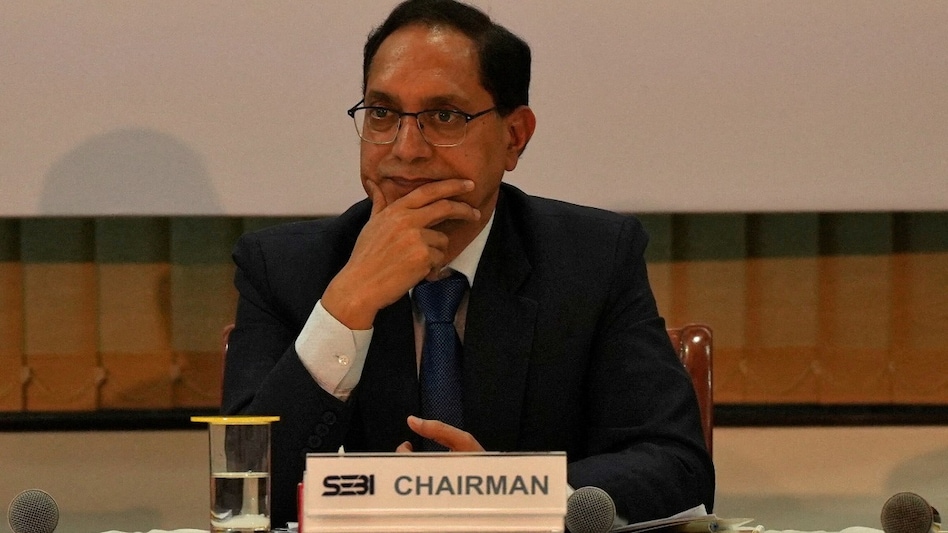
 Securities and Exchange Board of India (Sebi) chairman Tuhin Kanta Pandey has once again stressed on the role of independent directors in effective decision making and their responsibility towards protecting interests of minority shareholders.
"They are accountable for decisions, often without full operational visibility. This makes their role both critical and complex, which is why the conversation must now move beyond who sits on the board to how effectively they are able to contribute once they are there," he said speaking at CII Corporate Governance Summit in Mumbai.
Pandey's comments around the critical role of independent directors comes in the backdrop of the resignation of HDFC Bank's part-time chairman Atanu Chakraborty last month. In his resignation, Chakraborty had cited that certain happenings and practices within the bank, that he had observed over last two years, were not in congruence with his personal values and ethics.
In the immediate aftermath of that, Pandey had urged independent directors to be more responsible.
On April 6, while refusing to comment on individual companies, Pandey stated that independent directors had an important responsibility of overseeing compliance, risk management, financials and if the management had to say something, the board should discuss those things.
"Independent directors are there not only for compliance and pointing fingers at management, but for also supporting and finding solutions to accountability," he said.
"It is a constructive approach," noted Pandey on the sidelines, stating that shareholders of any company or other stakeholders do get affected by the company's performance and the ups and downs in market cap.
"Independent directors in many ways stand for interests of the minority shareholders, that the value of the company keeps growing, consistent with laws and regulations," he said earlier in his address.
He termed corporate governance was like the "nervous system of an organisation." While, not always visible, it silently carried signals, information, judgment, caution, across the organisation and if the system was not strong enough, the organisation still appears strong on the outside, but its responses become slower, and its ability to sense risk gets impaired, he said.
"Markets, as we know, can absorb business risk, but they respond sharply to governance uncertainty. And as participation in our markets continues to deepen with a broader and more diverse investor base, the expectations from boards have become correspondingly high, " said Pandey.
He noted that while the regulatory framework had evolved in a calibrated manner, what was being observed was a gap in translation.
"Boards are well constituted, but not always equally effective, " he pointed.
The next phase of governance he said was about strengthening the quality of engagement within the existing framework and the role of independent directors lay at the centre of this shift.
Pandey stressed on the need for capacity building of independent directors.
"Today's boardrooms are dealing with issues that cut across disciplines, technology and data governance, cyber risks, complex financial structures, regulatory developments. It is unrealistic to expect that every director will come equipped with all these perspectives. At the same time, it is equally unrealistic to assume that a one-time induction or a capacity building program is sufficient. What is required is a continuous, structured and collaborative approach to learning," he said.
Ensuring that board discussions focus not just on reviewing data, but on interpreting what it implies, encouraging diverse perspectives and constructive dissent and moving from periodic review to continuous awareness, were some of the shifts that could strengthen governance outcomes, according to Pandey.
Sebi will seek to embark on a joint initiative for capacity building of independent directors at scale with a view to further improve corporate governance, he said.
 Kotak Bank shares: MD and CEO Ashok Vaswani to step down; Saha looks best placed, says Nomura; target price
 Aastha Spintex IPO opens today: Should you apply? Check price band, GMP, reviews & more
 'Come forward and help us': Ketan's father appeals to witnesses present at Lohagad on day of murder
 YRF's next big drama could be mobile-only: Why the film company is betting on a new format
 HDFC Bank likely to reappoint Sashidhar Jagdishan as CEO for a third term: Report
 HP EliteBook X G2a Review: An AI PC in 2026 With 64 GB RAM And A Price To Match
 China’s Modern Inequality System | Akshita Nandgopal Unpacks The Brutal Reality Of The Hukou System
 India Food Label Scam Explained By Sneha Mordani | FSSAI Issues Strict Action
 Should You Get Your Heart Check Before Gym? Sneha Mordani & Dr Devi Shetty Explain
 Biggest Water Dispute In Asia | India-Pakistan Indus Crisis Update
 Turtlemint Fintech Solutions make a weak stock market debut; shares lists at 11% discount
 Persistent Systems shares dive 9% to hit 52-week low; here's why
 Waaree Energies shares: Why stock fell 5% today after US ruling; JM cuts target price, 3 things to watchAastha Spintex IPO opens today: Should you apply? Check price band, GMP, reviews & more
 BT Opening Bell |Sensex, Nifty open in green; Trent, Sun Pharma, Bajaj Finserv top gainers