









 India's weight loss drugs field is crowded and moving fast

 India's weight loss drugs field is crowded and moving fast
On March 20, 2026, a patent expired in India that is set to change the country's weight loss and diabetes drug market. Semaglutide, the molecule behind Novo Nordisk's blockbuster drugs Ozempic and Wegovy, is now open for generic competition in India. An estimated 40-plus Indian pharmaceutical companies are preparing to launch their own versions, with prices expected to fall sharply from current levels. Here is what you need to know:
What is semaglutide?
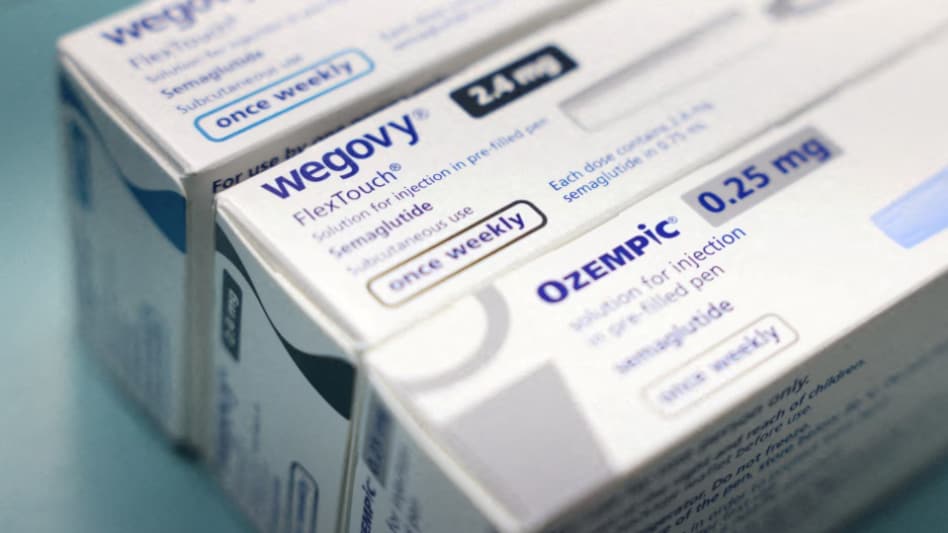
Semaglutide is the active ingredient in Ozempic, used to treat Type 2 diabetes, and Wegovy, used for weight management, both made by Danish pharmaceutical company Novo Nordisk. The drug belongs to a class called GLP-1 receptor agonists. It works by mimicking a gut hormone that signals to the brain that the body is full, suppressing appetite and regulating blood sugar. It is given as a once-weekly injection.
How big is this drug globally?
Semaglutide is one of the best-selling prescription medicines in the world. Novo Nordisk's combined revenues from Ozempic and Wegovy crossed $26 billion in 2024, growing at around 40% a year. Its closest rival is Eli Lilly's tirzepatide, sold as Mounjaro for diabetes and Zepbound for obesity, with combined sales of around $16 billion in 2024. Together, GLP-1 drugs have become one of the fastest-growing categories in global pharma in under a decade. The global market is projected to reach $150 billion annually by the end of this decade.
What changed with the patent expiry?
Semaglutide's patent expired in India on March 20, 2026. Indian pharmaceutical companies can now legally manufacture and sell their own versions of the drug without a licence from Novo Nordisk. In the US and Europe, patent protection continues until the 2030s, making India one of the first major markets where generics can compete freely.
Which companies are entering and with what?
The field is crowded and moving fast. Sun Pharma, India's largest pharmaceutical company, received regulatory approval in December 2025 and is launching under the brand name Noveltreat. The product comes in five dose strengths via a prefilled pen. The company is positioning this as a cardiometabolic therapy.
Dr Reddy's Laboratories has received approval for a generic version for Type 2 diabetes and has announced plans to launch 12 million pens in its first year, with an eye on 87 countries as patents fall in different markets globally.
Zydus Lifesciences is entering with a reusable pen format, under brands Semaglyn, Mashema and Altreme.
Natco Pharma, which received CDSCO approval in February 2026, has partnered with Eris Lifesciences to commercialise its product. Natco is launching in a multi-dose vial format at a starting monthly dose price of Rs 1,290.
Mankind Pharma is launching under the brand name Samakind, targeting diabetes, obesity, cardiology, orthopaedics and gynaecology, and plans to leverage its distribution reach in smaller cities and towns.
Ajanta Pharma has tied up with Biocon to market semaglutide across several Asian and African markets. More than 50 brand names are expected across the Indian market through 2026, from over 40 manufacturers.
What will happen to prices?
Currently a monthly dose of branded semaglutide costs between Rs 10,850 and Rs 16,400 depending on dose strength, after Novo Nordisk cut prices by up to 37% in November 2025 ahead of the patent expiry. Generic versions are expected to come in at 50 to 60% lower than innovator prices at launch. Natco has already priced its vial form at Rs 1,290. Over time, as competition intensifies, prices are expected to fall further.
Why does this matter for India?
According to the International Diabetes Federation's Diabetes Atlas 11th Edition published in April 2025, an estimated 89.8 million adults in India were living with diabetes in 2024, making India the second-most affected country in the world after China. That figure is projected to reach 156.7 million by 2050. On obesity, the ICMR-INDIAB study documented 254 million adults with generalised obesity and 351 million with abdominal obesity in India. According to NFHS-5 data, one in four Indians is now living with obesity, with prevalence having nearly doubled among both men and women over 15 years. Lower prices are expected to expand the pool of patients who can afford the treatment, though the extent of uptake will depend on physician adoption and distribution reach.
What is the market opportunity?
India's anti-obesity drug market has grown sharply in recent years, with GLP-1 drugs accounting for a dominant share of that growth. The India GLP-1 market is projected to reach $347 million by 2035. With over 40 manufacturers entering, companies are also planning significant outreach into smaller cities and towns where Novo Nordisk had not built a strong presence.
Will insurance cover it?
Semaglutide is not on India's National List of Essential Medicines and is not covered under any government health scheme. Patients pay entirely out of pocket. Even at reduced prices, access outside urban centres will depend on how quickly companies build distribution infrastructure.
What are the risks?
Doctors are clear that this is a prescription drug requiring medical supervision. It is not suitable for everyone. Common side effects include nausea, vomiting, diarrhoea and stomach discomfort, particularly in the early weeks. There are also legal questions. A public interest litigation was filed in the Delhi High Court questioning the approval of GLP-1 receptor agonists for obesity without large India-specific clinical trials. Clinicians also caution that weight tends to return after the drug is discontinued, and that sustained results require lifestyle changes alongside medication. The concern among doctors is that lower prices could lead to self-medication and use outside clinically indicated conditions.
What about Novo Nordisk?
Novo Nordisk launched Wegovy in India in June 2025, cut prices by up to 37% in November 2025, and partnered with Emcure to bring another semaglutide brand to market. The company now faces competition from dozens of cheaper alternatives on its own molecule. Eli Lilly's Mounjaro overtook Wegovy to become India's top-selling medicine by value in October 2025. Both innovators are navigating a changed market.
What comes next?
Oral versions of semaglutide are in development and could change the market further when they arrive, removing the barrier of weekly self-injection. Indian companies that have invested in peptide manufacturing are also positioning themselves for export opportunities as GLP-1 patents expire in other markets. Dr Reddy's has said it is targeting 87 countries for generic semaglutide launches as patents fall globally over the coming years.
 Infosys, Hindalco, Redington: How FPI-heavy stocks fared in June as outflows hit Rs 53K crore
 'You're in the wrong chair': When Gita Gopinath faced bias as IMF chief economist
 Can India monetise microdramas as the market booms but profitability remains elusive?
 India needs its own DeepSeek to avoid AI dependence, warns Bernstein
 Last chance next week to buy four Bajaj Group stocks for dividend; check payout, record dates
 China’s Modern Inequality System | Akshita Nandgopal Unpacks The Brutal Reality Of The Hukou System
 India Food Label Scam Explained By Sneha Mordani | FSSAI Issues Strict Action
 Should You Get Your Heart Check Before Gym? Sneha Mordani & Dr Devi Shetty Explain
 Biggest Water Dispute In Asia | India-Pakistan Indus Crisis Update
 Casio G-Shock GA-2100CC-3A Review | Coca-Cola x G-Shock Watch
 Infosys, Hindalco, Redington: How FPI-heavy stocks fared in June as outflows hit Rs 53K croreLast chance next week to buy four Bajaj Group stocks for dividend; check payout, record dates
 Coforge, Mphasis, Persistent, LTIMindtree: Share price targets as IT stocks under pressure
  JSW Energy, Ethos, UPL, Ashok Leyland: Top brokerage picks with upto 48% upside potential
 Why Rakesh Jhunjhunwala backed Titan when few did; Raamdeo Agrawal explains the winning bet