Kirti Ganorkar, Managing Director of Sun Pharma, spoke to Business Today about the acquisition opening opportunities in women’s health, biosimilars, in-licensing and global expansion, while strengthening the company’s front-end presence for innovative medicines. He also spoke about integration plans, China strategy, debt management and expected synergies. Edited excerpts:
BT: What makes Organon a complementary fit for Sun Pharma’s long-term growth strategy?
KG: Today, 20% of our sales revenues come from the innovative business, and it is our growth engine for the future. We are present in dermatology, ophthalmology and onco-dermatology. There are three parts of Organon's business. The first is the innovative part comprising contraception and fertility. What we found through the acquisition of Organon is that they have an innovative portfolio in women's health, which is a different therapy area from what we are currently focusing on. The second is the established product business, which is more than 50% of the portfolio. These are very well-known brands. This can be correlated with the branded generic business we have in India and emerging markets. Despite multiple generics being available, these brands continue to maintain strong equity with healthcare professionals and customers. This part of the business is not growing, but there is an opportunity for us to grow it.
The third part is biosimilars, a new business for us, but similar in nature to how we do generic business on the synthetic side. The biosimilar business has grown at a CAGR of close to 13% over the last five years. A large number of biologic products are losing patents through 2035, creating a sizeable opportunity for biosimilars globally.
As it relates to Sun Pharma, this is a complementary business. The innovative part is complementary, biosimilars is a new segment we are entering, where we will become the seventh largest player, and the established product business follows a playbook similar to branded generics in India and emerging markets.
BT: What will drive growth at Organon going forward: biosimilars, in-licensing or new R&D investments?
KG: The objective for Sun is to grow a business that has been almost stable for the last four to five years.
On the innovative side, which is mainly focused on women's health, Organon has not done much in-licensing. However, very recently they licensed a product for contraception called MIUDELLA, which is a copper IUD, and in the cardiovascular area they also licensed a product called Nilemdo for some European markets. This alone will not be enough, so at Sun Pharma, we are looking to do more in-licensing. In women's health alone, there are more than 100 opportunities under development across Phases 1, 2, 3 and 4, and we will have opportunities to license some of these products. Organon is also ranked third worldwide in contraception and fertility combined.
On biosimilars, we need to pursue partnerships and licensing from third parties to continue growing. There are already seven biosimilars in Organon's portfolio, and we can license more products, including from China, to expand this segment.
For the established product business, which contributes more than 50% of revenue, we can use our branded generics playbook. Products like Hyzaar, Cozaar and Propecia are very well-known brands, and by launching line extensions, formulations or combinations, either developed through our own R&D or licensed, this business can also grow.
It will take around two to four years to bring this business back to strong growth.
BT: What are the key growth and margin drivers for the combined business over the next three to five years?
KG: Both companies have comparable EBITDA margins. In fact, Organon's adjusted EBITDA is slightly higher than Sun's. The combined business will have opportunities for growth across established brands, in-licensing in women's health and biosimilars, and cross-pollinating products of Organon and Sun across markets where we complement each other.
In addition, we have identified potential synergies of $350 million that could materialise over two to four years. All of this should be margin accretive in the medium to long term.
BT: Will the Organon acquisition change Sun Pharma’s investment priorities in specialty medicines?
KG: With this acquisition, our specialty or innovative medicine share goes from 20% to 27%. The focus on innovative medicines therefore continues. In-licensing opportunities also allow us to bring close-to-market assets and place them commercially in markets where both Organon and Sun have a good presence.
One of the constraints we have had in innovative medicines has been field force availability in certain markets. In Europe, for example, we have been using an out-licensed partner to sell our products. With the combined business, we will have a combined field force that can help us place innovative medicines across multiple markets.
BT: How important is China to Sun Pharma’s long-term global strategy?
KG: China is an interesting market where we currently operate through a licensed partner for our innovative business. With Organon bringing in close to $800 million in revenues there, it gives us the opportunity to look at our innovative medicines portfolio differently in that market.
We also see China as a country where significant innovation is happening in biosimilars, so it could help us develop products in China for China, and products in China for global markets. China is set to become the second-largest pharma market after the US. Sun's presence today is negligible, so this adds a very meaningful geography.
BT: Organon already has a sizeable China business. How do you plan to revive growth amid pricing pressure?
KG: Most of Organon's products in China have multiple generics available. For example, Propecia may have 20–25 generics available. Yet these products have maintained their market share despite that. The brand equity with healthcare professionals and patients remains strong. If we start launching new products on top of this existing portfolio, we can change the story in China and drive growth.
For Sun, we can use China for geographical presence, sourcing innovation for the global market, and bringing products into India and emerging markets. The established product portfolio in China has gone through a generic phase with price declines, but it has stabilised. There is now an opportunity to add new formulations or line extensions to drive growth.
MUST READ: How Sun Pharma is expanding innovative medicines business as Organon deal adds new therapies



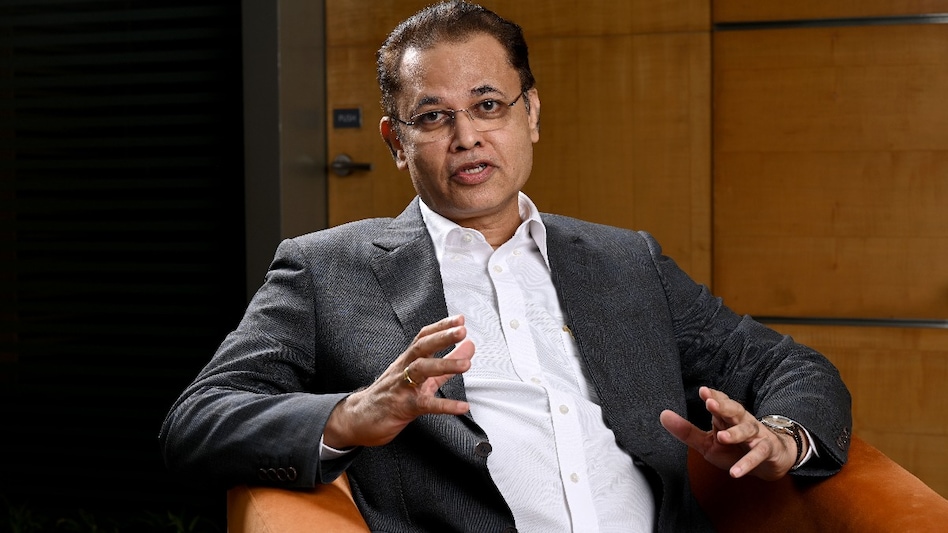 Kirti Ganorkar, Managing Director of Sun Pharma, said the Organon acquisition could strengthen the company’s innovative portfolio and create new growth opportunities. (Photo by Milind Shelte)
 ‘An Indian consumes 1/10th of an average American’: Amb Kwatra says energy security comes first
 Tata stock to buy: Nuvama bets on unique tech-telecom play, sees 28% upside
  NSE IPO, Hero Motors IPO, SS Retail IPO, Jindal Supreme IPO: GMP of four ongoing issues rises up to 32%
 UPI MDR: BharatPe distances itself from Ashneer Grover's remarks, says UPI to remain free for consumers
 IndiGo shares in focus as baggage, infant fee, priority boarding charges likely raised
 Corporate Health Insurance Vs Retail Policy: Why You Need Personal Health Cover Too
 How India Changed In 12 Years: PM Modi’s Journey From Economic Reforms To Viksit Bharat
 Modi @76: From Twitter To Instagram, How His Digital Outreach Has Evolved
 Stock Picks To Watch: Shibani Kurian Reveals Kotak AMC’s Market Bets
 Gold ETF vs Physical Gold: Know the Tax Rules, Charges and Key Differences
 Tata Chemicals, Tata Investment shares drop up to 8%: Why Tata stocks are falling today
 OnEMI Technology shares in focus as board clears fund raising via preferential route
  Adani Power, Adani Green, Adani Ports, Adani Energy: Jefferies shares target prices
 Kotak Bank, Auro Pharma, GE Vernova T&D: Top stocks to trade — Key levels, target price & stop loss
 What endures: The residential school in a changing world
 Only one Indian-American lawmaker voted in favour of Russia sanctions act: Who is Raja Krishnamoorthi?












