


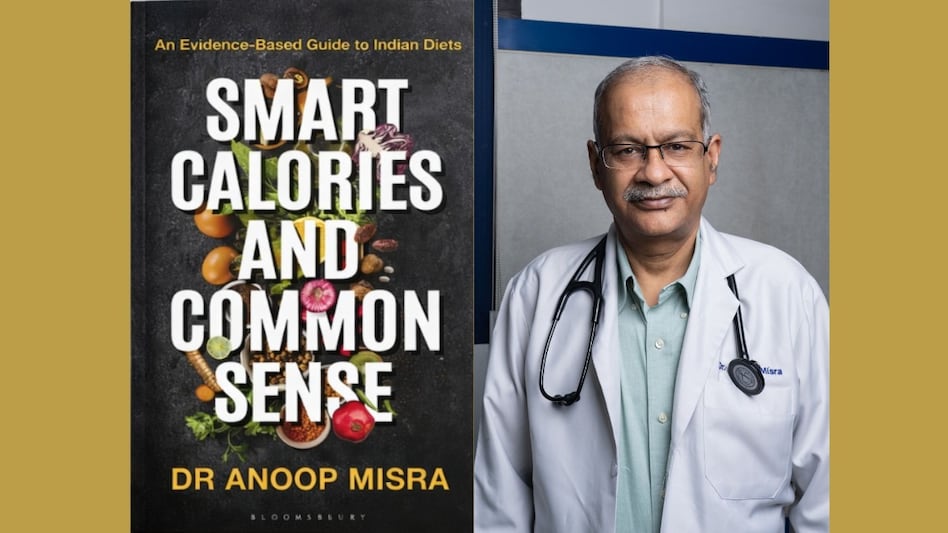
 Book review: Smart Calories and Common Sense
Around 2020, Dr Anoop Misra began paying closer attention to something he had already heard every day in his clinic—what people were eating and how they thought about food. These were not abstract discussions. Patients would talk about how many mangoes they ate in a week, whether they had stopped rice entirely, how much oil went into their cooking, or how thick their potato-stuffed parathas were at home.
These details varied widely, as did the beliefs surrounding them. The same food would be described as healthy by one patient and harmful by another. Much of this stemmed from advice gathered online or through social circles. Over time, Dr Misra realised that people were not short of information; what they lacked was clarity. That gap is what "Smart Calories and Common Sense" attempts to address.

 Will industry participate in the government's call for participation in indigenous SMR development?
 Is Asia facing 1997 again? HSBC's chief economist warns AI demand is the new vulnerability
 'ISRO will neither be privatised, nor...': Space agency clarifies its future role amid private-sector push
 Changed jobs frequently? You may have multiple PF accounts — here’s how to fix it
 India becomes key diesel supplier to Europe via Bab-el-Mandeb
 Equity, FDs, Gold & More: How Couples Should Plan Their Investments Together
 How Couples Can Balance Shared Goals With Individual Dreams And Financial Needs
 FSSAI CEO On Misleading Food Ads, Brand Crackdowns And Pressure From Industry Lobby
 Couples & Tax Planning: How Smart Expense Planning Can Help Reduce Family Tax Outgo
 Mutual Fund Allocation: How Much Should Investors Allocate To Large, Mid & Small Cap Funds?
 Nifty, Sensex, Nifty Bank outlook for today: GIFT Nifty down 75 points; key levels to watch
 Top stocks in news: JSW Steel, TMCV, Mazagon, RVNL, Lupin, Molbio, Purple Style, HEG, Lemon Tree
 APL Apollo, GNFC, Apar, Force Motors among stocks to turn ex-dividend next week; big payouts in focus
 LIC weighs NSE IPO strategy: CEO says market conditions, valuation to decide final move
 IHCL, LemonTree, Chalet among 5 hotel stocks to buy; analysts see up to 49% upsideNifty, Sensex, Nifty Bank outlook for today: GIFT Nifty down 75 points; key levels to watch
 Quote of the Day by Deepinder Goyal: ‘Execution is extremely under rated. All the big things are a sum total of small things’
  Trump shares map calling New Mexico ‘New America’, sparking fresh controversyTop stocks in news: JSW Steel, TMCV, Mazagon, RVNL, Lupin, Molbio, Purple Style, HEG, Lemon Tree
 From six months’ savings to investments in your own name: This CA has 6 financial tips every woman should consider for a better financial future












