


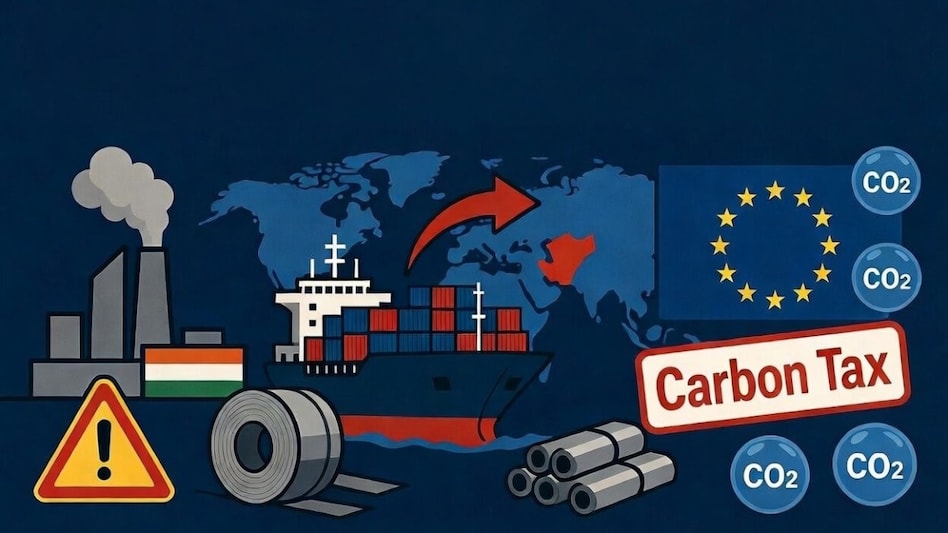
 EU carbon tax expansion spells fresh pain for Indian MSMEs
About one-third of the Indian steel exports in downstream products are dominated by micro, small, and medium enterprises (MSMEs) players, and they will be the worst impacted under the European Union’s plans to expand its Carbon Border Adjustment Mechanism to products by 2028.
The EU has planned to bring 180 additional steel and aluminium-based products from 2028 under the CBAM, thus pushing carbon taxes deep into manufacturing supply chains.

 September GST collections rise 14.7% to ₹2.04 lakh crore
 Who is Anup Kumar Saha, the new MD and CEO of Kotak Mahindra Bank?
 India cannot afford to take its growth performance for granted: Monthly Economic Report
 Flydubai incident: PM Modi speaks to Captain Smit Machchhar's wife, parents, say sources
 BT BIG STORY: Why India's affluent seniors are the next big real estate bet
 Mid-Small Cap Allocation: How Much Should Investors Hold In Their Portfolio?
 MSP: ‘Cost Plus 50%’ Principle Fully Maintained, Says Ashwini Vaishnaw
 Economy In Right Hands, Business Environment Very Positive: Nirmal Minda
 Nara Lokesh Exclusive: Why Andhra Pradesh Is In A Hurry To Build Its Data Centre Ecosystem
 KLM Steps Up SAF Push On India-Europe Route
 Bajaj Finance, Tata Capital, LT Finance, SHFL share price targets as cost of funds rise
 Marico, Radico Khaitan, United Breweries, HUL, Tata Consumer: Brokerage shares top BUYs; here are Q2 expectations
 LG Electronics share price target: Buy stock for 22% upside, says MOFSL
 Sterlite Tech shares gain 5% as arm wins $1.2 billion supply agreement
 34 IPOs raise Rs 39,380 crore despite September market selloff; will trend continue?Bajaj Finance, Tata Capital, LT Finance, SHFL share price targets as cost of funds rise
 Axis Pension Fund launches NPS Swasthya Scheme; what investors get from health-linked pension planMarico, Radico Khaitan, United Breweries, HUL, Tata Consumer: Brokerage shares top BUYs; here are Q2 expectationsLG Electronics share price target: Buy stock for 22% upside, says MOFSLSterlite Tech shares gain 5% as arm wins $1.2 billion supply agreement












