








 Recently, a Swiss climate startup Climeworks claimed that it managed to draw carbon dioxide from the air and lock it underground. Recently, a Swiss climate startup Climeworks claimed that it managed to draw carbon dioxide from the air and lock it underground.
 We now need a costly suite of technologies to do what trees do for free! These tech will turn carbon net neutral as climate change and ESG concerns are gaining prominence in Indian boardrooms.
At 2.9 billion tonnes annually, India is the world’s third largest carbon emitter annually, though our per capita emissions are lower than other major economies. Six sectors – power, steel, automotive, aviation, cement and agriculture – account for about 70 per cent of India’s CO2 emissions, show studies. But a developing nation like India needs these very sectors to become a $5-10.25-trillion economy over the next few decades.
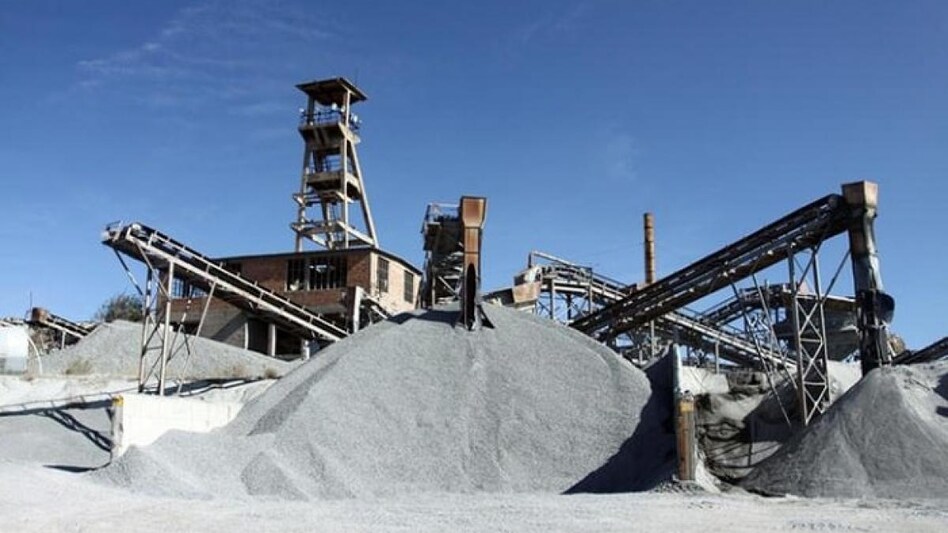
Take cement for instance, 30 per cent of the carbon emission in an integrated cement plant comes from the use of fossil fuels and 10 per cent is from electrical energy use. “But 60 per cent is due to the inherent cement-making process of breaking down limestone (Calcium Carbonate) into Calcium Oxide and CO2,” says JSW Cement’s EVP and Chief Sustainability & Innovation Officer Manoj Rustagi.
He says cement companies are working to cut down the 40 per cent, but the 60 per cent requires Carbon Capture, Utilisation & Storage – a suite of technologies to remove carbon from the atmosphere and lock it back into the earth. He estimates it costs about 50-60 per cent of the price of one tonne cement.
All hard-to-abate sectors such as oil, steel and cement will need the technology in the next decade for India to truly become carbon net-zero and Niti Aayog has proposed a policy framework. “The high costs and shared infrastructure it will require means it will have to be a public private partnership,” says Rustagi.
Globally, except for a few trials here and there, it hasn’t come into use at scale. Recently, a Swiss climate startup Climeworks claimed that it managed to draw carbon dioxide from the air and lock it underground.
Meanwhile, to curb the 40 per cent emissions, most of the Indian cement players use alternate fuels like RDF/biomass and other industrial wastes and have achieved more than 5 per cent thermal substitution, adds Rustagi. “This is expected to be in the range of 25-30 per cent by the end of this decade.”
He says JSW Cement uses blast-furnace slag, a by-product from steel plants, as a supplementary cementitious material which has helped them reduce their carbon dioxide emission intensity to a third of global average. “In the last eight years, we have grown our cement production by four times but halved our carbon dioxide emission intensity.”
Also read: Budget breather for the RBI: Rate hike cycle is coming to an end
Also read: Google CEO Sundar Pichai introduces Chat-GPT rival Bard; here's what it can do
 SEBI draws line between listing norms and RBI rules in guidance to PNB
 Cyber attacks, AI misuse and data privacy rules emerge as top boardroom risks for India Inc
 'India has played it pretty safe, deal is very balanced': Top agri economist on India–US trade agreement
 Funding Viksit Bharat: Govt to set up high-level panel to prepare banks for big-ticket growth
 'Uncomfortable subtext is conditionality': Ex-foreign secretary on US monitoring clause for Russian oil
 BT Golf 2025-26 Kochi, Kerala Awards Ceremony Marks A High-Energy, Successful Conclusion
 Golf Is An Addiction. We Eat And Sleep Golf!
 The Fairway Fixes Everything. Mindset, Life, Relationships
 BT Golf LIVE: Join AU Small Finance Bank Presents BT Golf 2025-26 For Its 4th Leg In Kochi, Kerala
 AI Will Change MBAs, Not Leadership: IMD President On India’s Global Education Rise
 RIL, SBI, Kotak Bank, Kalyan, HAL, BEML, BDL among stocks in focus next week; here’s why
 NSE IPO may unlock mega gains for billionaire investors RK Damani, Premji
 SBI Q3 Results: Profit jumps 24% to Rs 21,028 crore; asset quality improves
 IDBI Bank stake sale: Kotak Mahindra Bank says ‘has not submitted a financial bid’
 BDL, Mazagon Dock, MRF, Hindustan Copper, RVNL, others to turn ex-dividend next week