


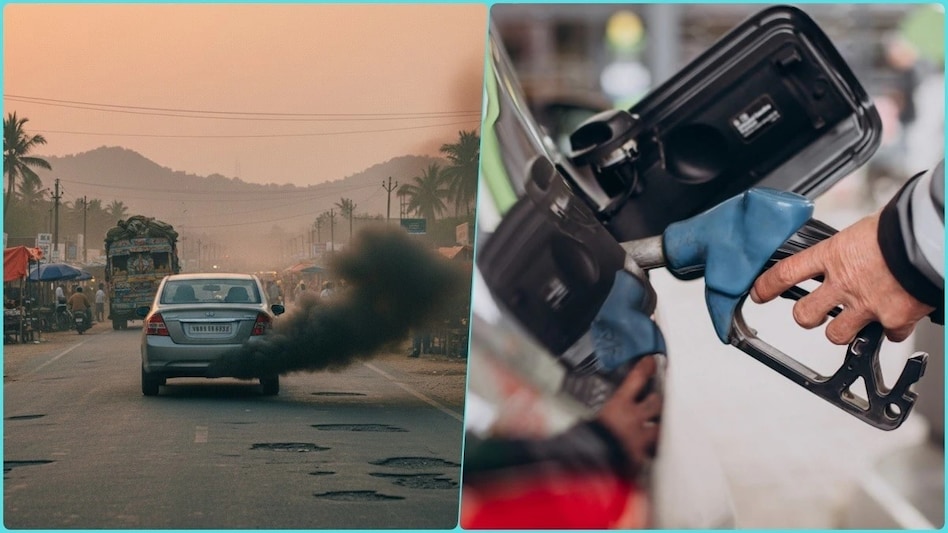
 CAFE norms were first notified by the government in 2017, under the Energy Conservation Act, 2001 to mitigate fuel consumption by lowering CO2 emissions
The Bureau of Energy Efficiency (BEE), on September 25, released the draft Corporate Average Fuel Efficiency (CAFE) 3 norms, proposing weight-based exemptions for small cars and super credits for electric as well as hybrid vehicles. The draft norms have divided India’s ₹22 lakh crore automobile industry with Tata Motors Passenger Vehicles MD & CEO Shailesh Chandra calling the inclusion of weight criterion in the CAFE norms as “arbitrary.” Maruti Suzuki, India's biggest carmaker with significant presence in the small car segment, has backed the exemptions on light-weight cars, stating that such exemptions are given in several other countries.
What are CAFE norms?
CAFE norms were first notified by the government in 2017, under the Energy Conservation Act, 2001 to mitigate fuel consumption by lowering CO2 emissions, thereby cutting oil dependency, air pollution and aiding the government’s climate goals.
These norms were designed to encourage automakers to produce more fuel-efficient vehicles including strong hybrids and electric vehicles to lower CO2 emissions. CAFE norms are applicable for petrol, diesel, liquefied petroleum gas (LPG), CNG, hybrid, and electric passenger vehicles with gross vehicle weight of less than 3,500 kilograms.
How are these different from Bharat Stage emission norms?
CAFE standards are different from Bharat Stage emission norms. While the latter are targeted at emissions from individual vehicles, CAFE norms apply to an entire fleet of vehicles of a car manufacturer.
What’s new in CAFE 3 norms?
Under the first stage of CAFE norms, which were applicable from 2017-18 to 2021-2022, the average fuel consumption was capped at 5.5 litres per 100 kilometres while the emission target was less than 130 grams of CO2 per km.
In CAFE 2, which came into effect from 2022-23 and will continue till March 2027, the average fuel consumption target was slashed to 4.78 litres per 100 km and average emissions were capped at 113 gm of CO2 per km.
In CAFE 3, which will be effective from April 2027 to March 2032, the BEE has proposed stricter targets where the average fuel consumption will drop from 3.7 litres per 100 km in FY28 to 3.01 litres per 100 km by FY32, while the emission target comes down to 91.7 gm CO2 per kilometre. The proposed CAFE 3 norms offer weight-based exemption for small cars. Cars having an unladen mass of up to 909 kg, engine displacement of up to 1,200 cc and length of up to 4,000 mm get an extra 3 g/km CO₂ deduction in emissions performance calculation.
Super credit for EVs and hybrids
The BEE’s draft proposes “super credits” for electric vehicles and strong hybrid cars to encourage cleaner technologies. This means a battery electric vehicle or a range-extender hybrid electric vehicle will be counted three times, thus reducing the average fleet emissions of an automaker. Similarly, plug-in hybrids will be counted 2.5 times and strong hybrid vehicles at 2 times. Flex-fuel ethanol vehicles will get a super credit of 1.5 times.
The draft CAFE norms also introduce the Carbon Neutrality Factor. It provides further relaxations on vehicles running on higher ethanol blends. Petrol vehicles (E20 to E30) will be eligible for 8% reduction in their tailpipe CO2 emissions. Flex Fuel Ethanol Vehicles & Strong Hybrid Electric Vehicles (Flex Fuel Ethanol) will get 22.3% benefit on tailpipe CO2. CNG vehicles will be eligible for CNF of 5% or Compressed Bio Gas (CBG) blending percentage notified by the government whichever is higher.
Pooling of emissions
To meet their Annual Average Fuel Consumption Standard, vehicle manufacturers (not more than 3) may decide to conclude a pool, as per the draft CAFE 3 norms. A pool shall be considered as ‘one manufacturer’ for the purpose of compliance with Annual Average Fuel Consumption Standard. A manufacturer can only be member of one pool in a given reporting period. Manufacturer nominated as the ‘pool manager’ will be the contact point for the pool and will be responsible for paying any penalty imposed on the pool in accordance with Energy Conservation Act, 2001 (52 of 2001).
Is there a penalty for companies that fail to comply?
Carmakers that fail to comply with the CAFE norms may face strict monetary penalties. The draft Energy Conservation (Compliance Enforcement) Rules, 2025 aim to empower the Bureau of Energy Efficiency (BEE) to detect, verify, assess and present cases of non-compliance to an adjudicating officer appointed by the relevant State Commission — rather than impose penalties directly. 90% of recovered penalty proceeds go to the respective state while only 10% will be retained by the Centre.
Why did Donald Trump roll back CAFE norms in the US?
On December 3, 2025, the Trump administration announced a reset of the Corporate Average Fuel Economy (CAFE) norms in the US. In a statement, the White House said, “President Trump is returning CAFE standards to levels that can actually be met with conventional gasoline and diesel vehicles.”
“The Biden Administration created extraordinarily stringent fuel economy standards for passenger cars and trucks, set at such aggressive levels that they were impossible to meet with available technologies for gas cars,” the statement said. “The Biden standards would have compelled widespread shifts to EVs that American consumers did not ask for, accompanied by significant cost-of-living increases. Since EVs are so expensive to build, automakers must sell them at a loss and make up the difference by significantly raising the sticker price of gas cars,” it added.

 Exam reforms: Tech titan Nandan Nilekani picked by PM Modi to fix national public examination system
  'Tax officers struggled for own land': Nirmala Sitharaman slams laidback attitude of govt depts
 CBDT issues new crypto reporting guidance: No new tax, but exchanges must track and report all transactions
 Did Cockroach Janta Party's 'Chalo Sansad' 2.0 threat trigger Dharmendra Pradhan's resignation? What we know so far
 'Will discharge my responsibilities with complete humility': Pralhad Joshi after being appointed Education Minister
 AI Data Centers, Aerospace & Gas Turbines: What's Powering Indo-MIM's Future Growth?
 Best Healthcare Stocks: Gaurang Shah's Outlook On Apollo Hospitals, Fortis & The Manipal Health IPO
 Is Indo-MIM's IPO Valuation Justified? Here's Why The Company Sees Strong Growth Ahead
 Treasury Bills Explained: Why T-Bills Are One Of The Safest Short-Term Investment Options
 FDs vs Markets: Where Should You Keep Your Short-Term Money?
 Gland Pharma stock: Price target of Rs 3,250 likely in medium term, says analyst
  Metal recycling stocks to buy: Gravita, Pondy Oxides, Jain Resource among top picks
 TRIL shares: Should you average the falling stock? Here's 'fixed and final' stop loss
 Adani Power: 45 GW target, Rs 2 lakh crore capex plan among conference call highlights
  ITC Hotels, Chalet, Ventive, IHCL, SAMHI: Hotel stocks to buy despite travel disruptions
 SIFs, mutual funds, PMS or AIFs: Which investment route deserves a place in your portfolio?
 Beyond mutual funds: Why analysts see SBI Funds' alternative asset business as a long-term growth engine
 'Ashamed of it...': Manoj Muntashir calls Adipurush his biggest mistake, seeks country's forgiveness Exam reforms: Tech titan Nandan Nilekani picked by PM Modi to fix national public examination system 'Tax officers struggled for own land': Nirmala Sitharaman slams laidback attitude of govt depts









