








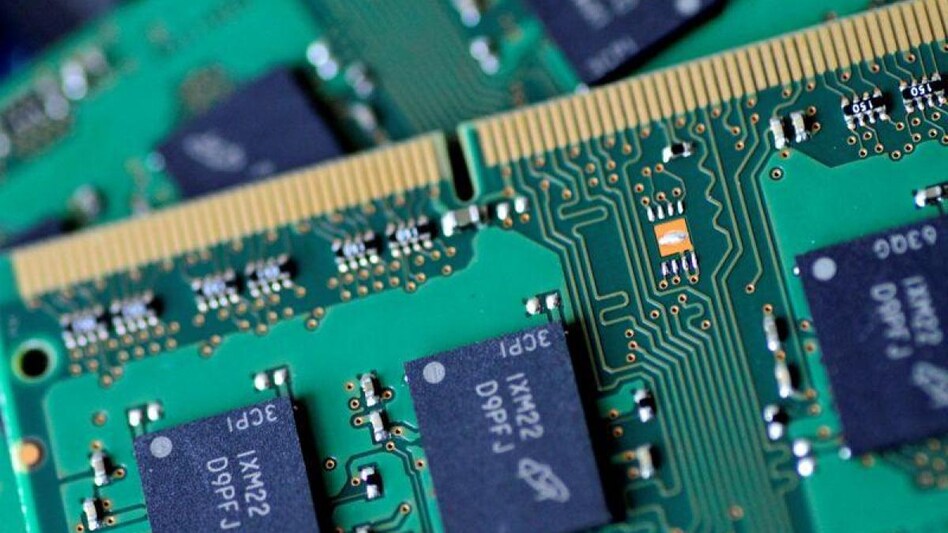
 With 73 international patents to its credit, Saankhya has been developing chips, building software-defined radio (SDRs) chipsets, and it was the only non-telecom service provider to be allotted a 5G spectrum to conduct trials. (Photo: Reuters)
 With 73 international patents to its credit, Saankhya has been developing chips, building software-defined radio (SDRs) chipsets, and it was the only non-telecom service provider to be allotted a 5G spectrum to conduct trials. (Photo: Reuters)
Founded in 2007, Saankhya Labs is one of the few Indian fabless companies that has managed to steer through tough times. With 73 international patents to its credit, Saankhya has been developing chips, building software-defined radio (SDRs) chipsets, and it was the only non-telecom service provider to be allotted a 5G spectrum to conduct trials. And recently, its majority stake (64.40%) was acquired by Tejas Networks, a prominent Indian optical vendor that is a part of the Tata Group, for Rs 283.94 crore in cash.
But, this journey wasn’t an easy one. The company survived its early years of operations with initial funding of $2 million raised from friends and family. After pursuing Intel Capital for years, the venture capital (VC) arm of the world’s largest chipmaker, Intel Corp., Saankhya finally got its backing in 2011, and began expanding its global presence.
Today, Saankhya’s cumulative funding over the past 15 years stands at about $30 million from strategic investors such as Intel, General Motors, and Sinclair Broadcast Group. Hemant Mallapur, Founder and EVP of Engineering at Saankhya Labs in conversation with Business Today talks about things India’s semiconductor design startup ecosystem should focus on that might help them in raising funds.
Win customer orders:
Winning customer business is a challenge, though early stage chip startups see funding or chip design tool access as the biggest hurdle. A large domestic market will validate the business value of your chip, which is the most important input for a local investor. If there is a large domestic market, funding might become easier.
Seek customer validation:
Venture Capitalists always seek customer validation. This was one of the biggest challenges that even Saankhya Labs experienced, as the company did not have a local customer and ecosystem that could vouch for our product. Ultimately, they succeeded because one of the US customers endorsed the product as being crucial to their own business goals, and that enabled investment.
Local marketing teams
To win business in other countries, one needs to have a marketing team based locally and constantly in contact with the customer. The typical gestation (development) period of a medium-complexity chip is over two years, and continuous interaction is essential to ensure that the product remains current and valuable once it has been developed.
Hire Quality Talent
The ability to hire and retain quality talent is another challenge faced by chip startups. Job-hopping to the highest-paying employer (typically MNCs) has crept into the hiring market, making startups that are frugally funded unable to retain them.
The type of person who would join a fabless chip startup usually looks for high-quality, innovative work and is willing to take on the risk/reward ratio of the startup's stock options.
Also read: Canara Bank hikes MCLR by 0.15%; EMIs to go up for new, existing customers
Also read: How to make money amid rising interest rates? Here's what Invesco MF's Vikas Garg has to say
 US' 18% tariff for India: Where Trump’s tariff rate places New Delhi versus China, EU, Southeast Asia
 Adani Enterprises, Adani Power, Adani Green, Adani Energy: Adani Stocks rally up to 13% on India-US trade deal
 India-US trade deal, stock market: Sensex zooms 2,375 pts, Nifty vaults past 25,800 mark
 India-US trade deal impact: Sona BLW, Gokaldas, Bharat Forge, SRF shares gain up to 20%; here's why
 India-US trade deal effect: Rupee opens 111 paise higher amid positive sentiment
  Why Enjoying Golf Leads To A Better Game
 Why FIIs Are Dumping India: Valuations, Earnings & The Budget Signal, Raamdeo Agrawal Explains
 STT Hike: Curbing Excess Or Hurting Markets? Raamdeo Agrawal Speaks
 Union Budget 2026: Why Policy Certainty Matters More Than Populism
 Budget’s Biggest Gorilla: Raamdeo Agrawal On Data Centre Opportunity
 Dixon, Aurobindo, Welspun Living, Avanti Feeds: Axis on India-US trade deal plays
 Apex Frozen Foods, Avanti Feeds, Gokaldas Export shares jump up to 20%; here's why
 'From headwinds to tailwinds': India-US trade deal lifts stocks, rupee
 Adani stocks rally up to 13% after India-US trade deal; time to book profits or hold them?Adani Enterprises, Adani Power, Adani Green, Adani Energy: Adani Stocks rally up to 13% on India-US trade deal