









 Air India plane crash: New theory emerges in ongoing investigation

 Air India plane crash: New theory emerges in ongoing investigation
A new theory is gaining ground in the ongoing investigation into the fatal June 12 crash of Air India Flight 171, with investigators now closely examining the role of the engine fuel control switches on the Boeing 787 Dreamliner. The focus has shifted from mechanical failure to the potential movement – accidental or otherwise – of the cockpit switches responsible for fuel flow to the aircraft’s engines.
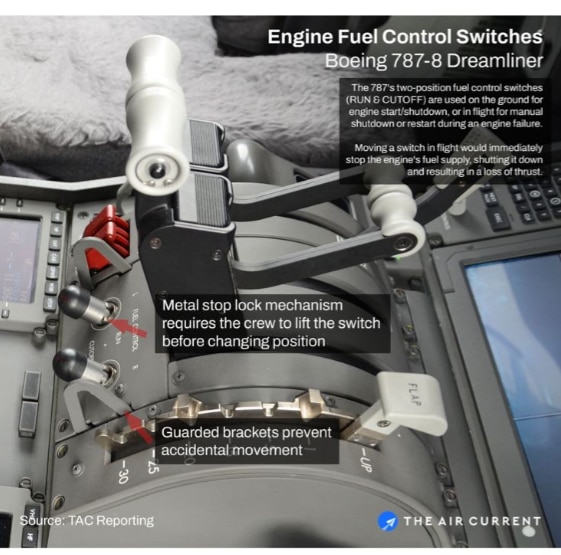
As first reported by Jon Ostrower, of The Air Current, on July 8, 2025, data retrieved from the aircraft’s flight and voice recorders has narrowed investigative attention to the two-position engine fuel control switches (RUN & CUTOFF), which – if inadvertently moved to the CUTOFF position during flight – would have caused an immediate engine shutdown, a loss of thrust, and subsequent cascading failures in onboard systems.
While no mechanical or design fault has been identified with the GE Aerospace GEnx-1B engines or the switches themselves, experts speaking to The Air Current confirmed that the post-crash analysis showed no fuel contamination or flap retraction issues – commonly suspected in such events. The absence of any multi-operator advisory from Boeing or GE and the lack of urgent safety bulletins further points investigators toward a possible cockpit-originated event.
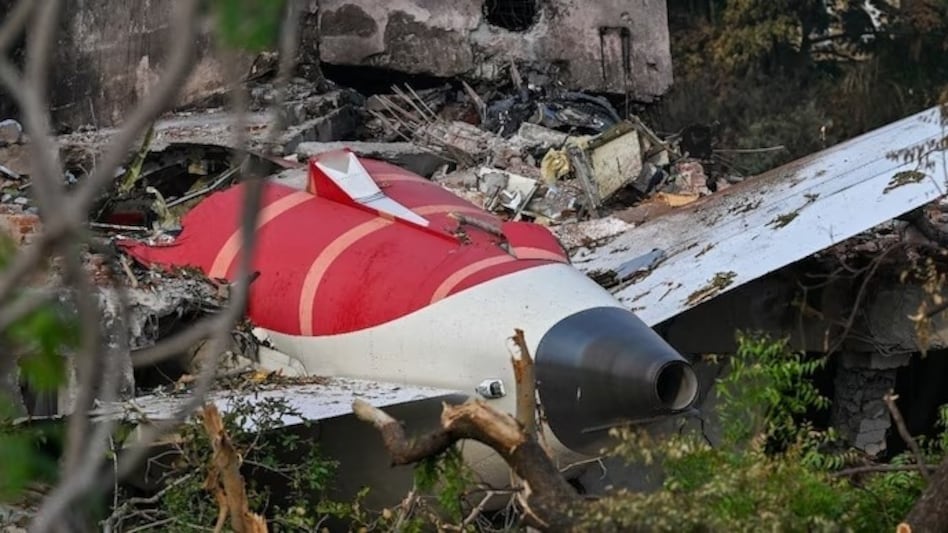
The fatal crash, which killed 241 of 242 people on board and 19 on the ground just 32 seconds after takeoff from Ahmedabad, marks the first-ever fatal accident involving Boeing’s 787 Dreamliner. The aircraft reportedly lost thrust before crashing into a hostel near BJ Medical College, with no evidence yet ruling out improper, inadvertent, or intentional movement of the fuel switches.
The switches are designed to be guarded and require a deliberate lift over a metal stop to engage – making accidental contact unlikely, though not impossible. The Air Current notes that the investigation could take months, and the final report will depend on analysis of the precise timing and sequencing of switch movements captured by the black boxes.
As India’s AAIB prepares to submit its preliminary report to ICAO by July 11, aviation experts worldwide await clarity on whether human action inside the cockpit triggered the tragic chain of events.
 'Positive progress' on Hormuz but no breakthrough: US-Iran indirect talks in Doha conclude
  Adani Group, Abu Dhabi’s IHC to invest $11.5 billion in aluminium plant in Odisha: Report
 5 things to do if a co-owner tries to sell jointly owned property without your approval
 Toddlers put in washing machine, splashed with jet spray: Bengaluru daycare under probe; 5 booked
 Gold, silver prices today (July 2): Check latest rates in Delhi, Mumbai, Kolkata, other cities
 India-U.S. Trade Deal: Only 1% Remains! Why The Final Stretch Is The Toughest For Modi And Trump
 Market Commentary LIVE: Piyush Pandey On Nifty, Sensex & Top Stock Picks
 TN Politics Explodes: 3 Arrested For Alleged ₹35 Cr Plot To Topple Vijay’s TVK Govt!
 Market Master LIVE: Ravi Dharamshi On India's Next Big Investment Opportunities
 Ram Mandir Theft Exclusive: The 'Ram Rajya Kosh' Mystery Box & The Inside Nexus Exposed!
 Adani Ports shares at record high: Firm issues Q1 and June operational updates
  Shakti Pumps, Oswal Pumps: Target prices, Q1 preview, key trigger for solar pump stocks
 Hero MotoCorp shares in focus as firm unveils Rs 3,200-crore investment plan
  Stock to buy: Clean Max shares offer 31% upside, says Antique; initiates with 'Buy'
 Eternal, Hexaware Technologies, RITES: Top stocks to buy — Target prices, stop loss & more